




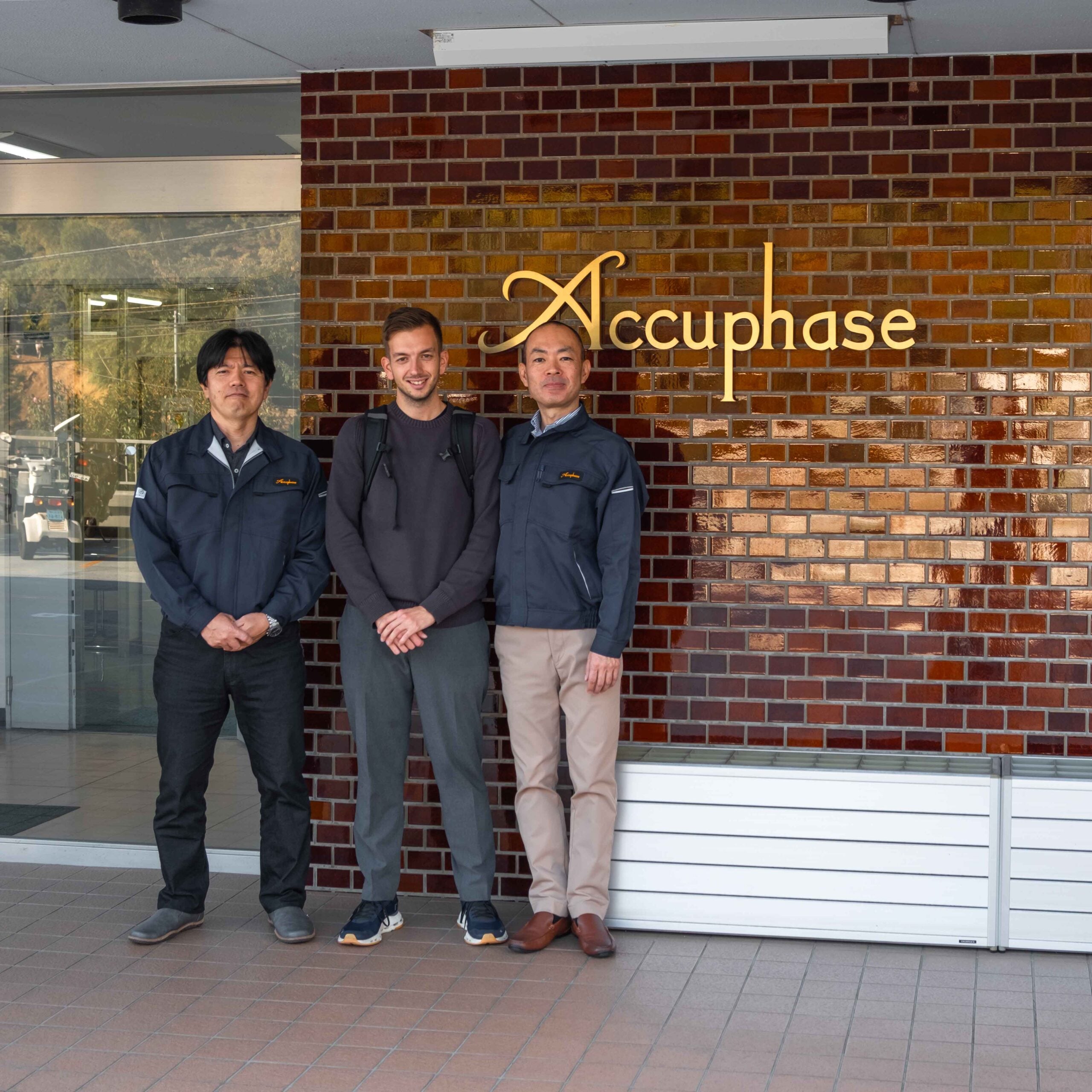
Visiting Accuphase in Yokohama means entering one of the most representative places of Japanese Hi-Fi.
During our trip to Japan, we had the opportunity to visit the company headquarters and see firsthand how an Accuphase product is created: not only from an aesthetic or commercial perspective, but above all from a design, production, and human perspective.
Accuphase is a brand that many enthusiasts know well. It has always been associated with a very specific idea of high fidelity: impeccable construction, reliability, long-lasting consistency, and a recognizable sonic philosophy. Seeing where all this takes shape helps us better understand why these products have such a strong identity.
A company that has remained true to itself
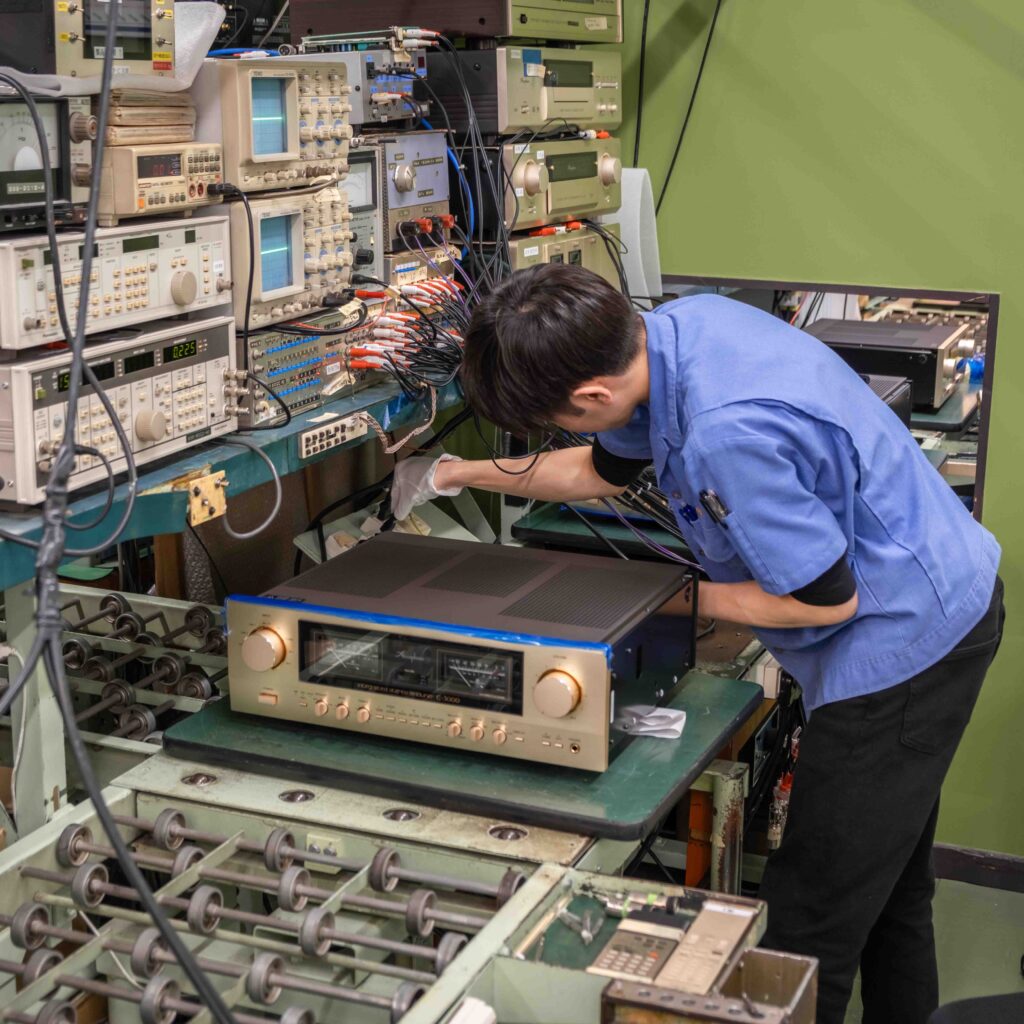
Accuphase was founded in 1972 under the name Kensonic Laboratory, immediately establishing the Accuphase brand. In 1973, the company moved to Yokohama, where it remains today.
This continuity is one of the most interesting aspects of the visit. Accuphase doesn't give the impression of a company constantly chasing the market or the latest trends. On the contrary, everything seems built around a very clear idea: to make solid, precise, repairable, consistent Hi-Fi products, designed to last.
It's an approach that shows in the details. In the production processes, in the organization of spaces, in the way components are checked, and in the care with which each device is assembled and tested.
Production: order, method and control
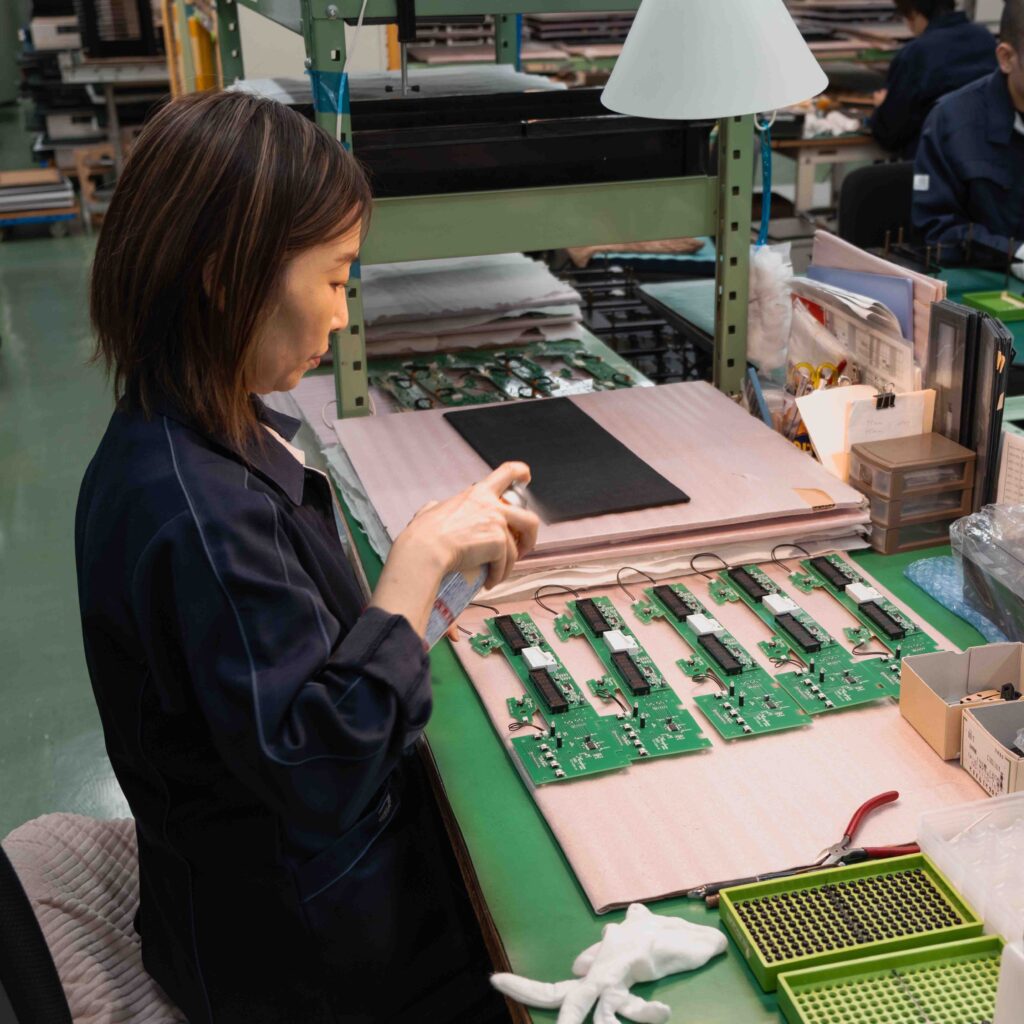
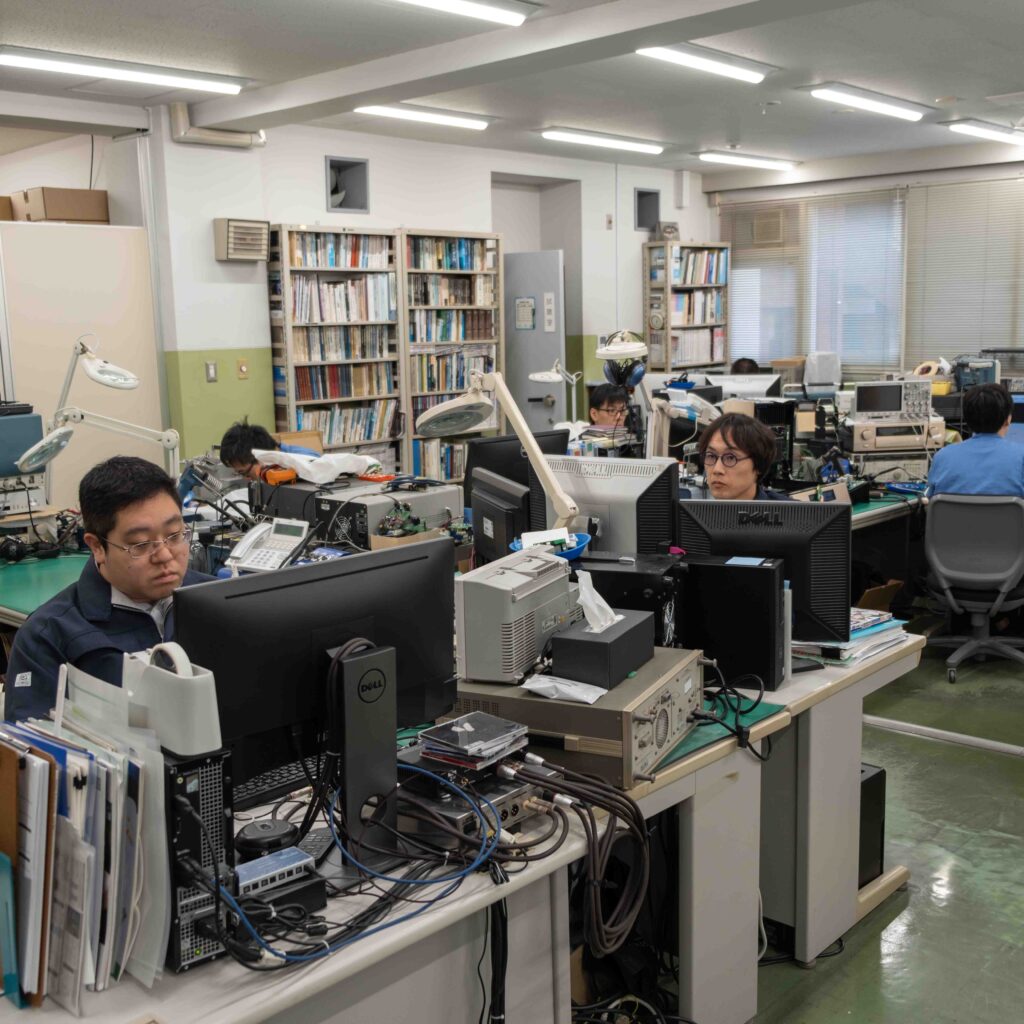
What strikes you when visiting Accuphase is not so much the spectacular nature of the factory, but the level of order and method.
Each fase It seems to have a specific function. There's nothing random about it. Production is organized to maintain high levels of control over every step: assembly, wiring, testing, and final inspections.
It's a type of work that perfectly captures the character of Accuphase products. The brand's amplifiers, players, preamps, and electronics always convey a sense of great solidity, but this solidity doesn't stem solely from their weight or materials. It stems, above all, from the way they're designed and built.
Why Accuphase is different from many other brands
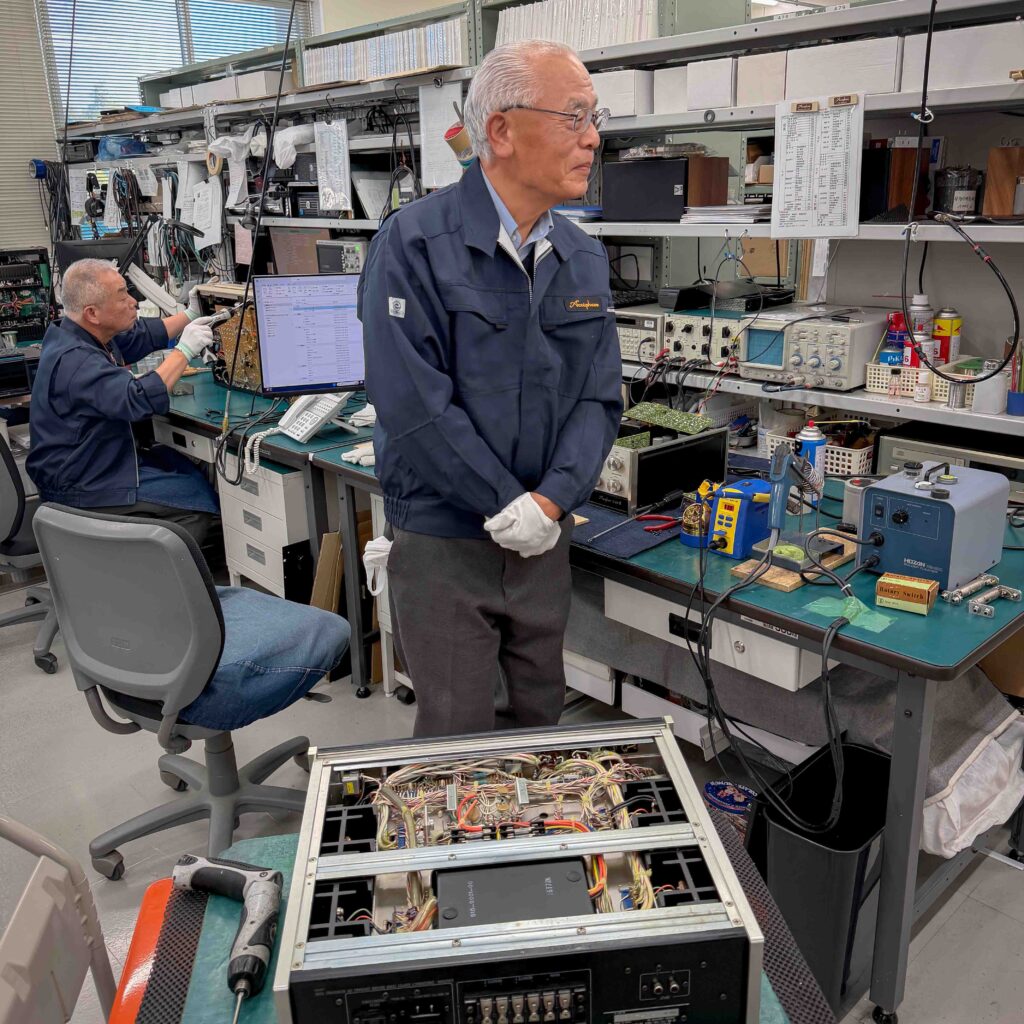
In the world of Hi-Fi, we often talk about innovation, design, power output, or new features. Accuphase, however, communicates differently.
The key isn't to impress at all costs, but to maintain a consistent standard. Products change, update, and improve, but they always remain recognizable. Those familiar with Accuphase know what to expect: meticulous construction, a classic aesthetic, meticulous attention to components, and an overall sense of control.
This doesn't mean they're "static" or nostalgic products. On the contrary, behind a very traditional aesthetic lies ongoing technical work. Accuphase simply doesn't seem interested in changing its language every season. It prefers to evolve slowly, maintaining a very precise line.
The value of internal control
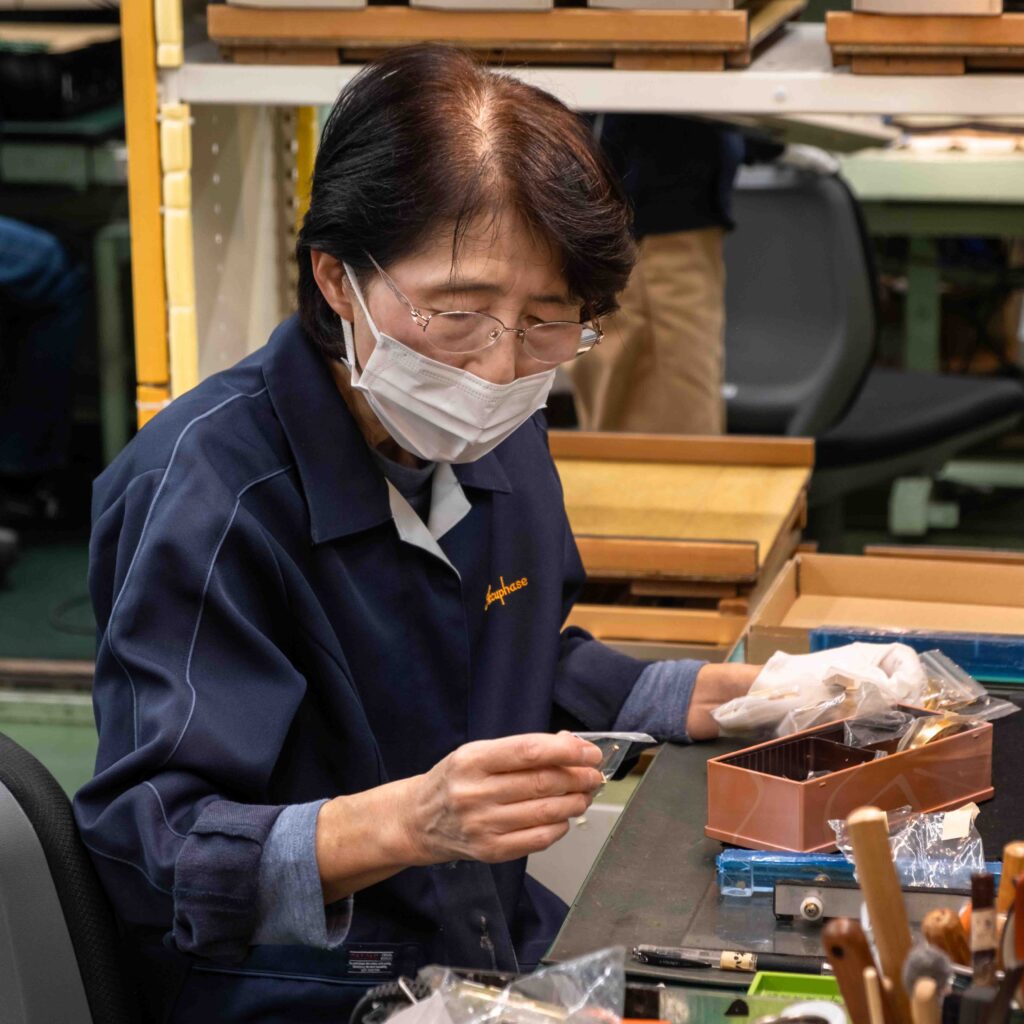
One of the most important aspects of the visit was seeing how much Accuphase values direct control over its work.
In an industry where many companies outsource part of their production, Accuphase maintains a very rigorous approach. This allows for better quality control, while also maintaining strong consistency across the range.
It's something you also notice when listening to an Accuphase system: there's no sense of products assembled just to fill a price range. Each electronic component seems to be part of a larger concept, with a precise technical and sonic identity.
Care for care and durability over time
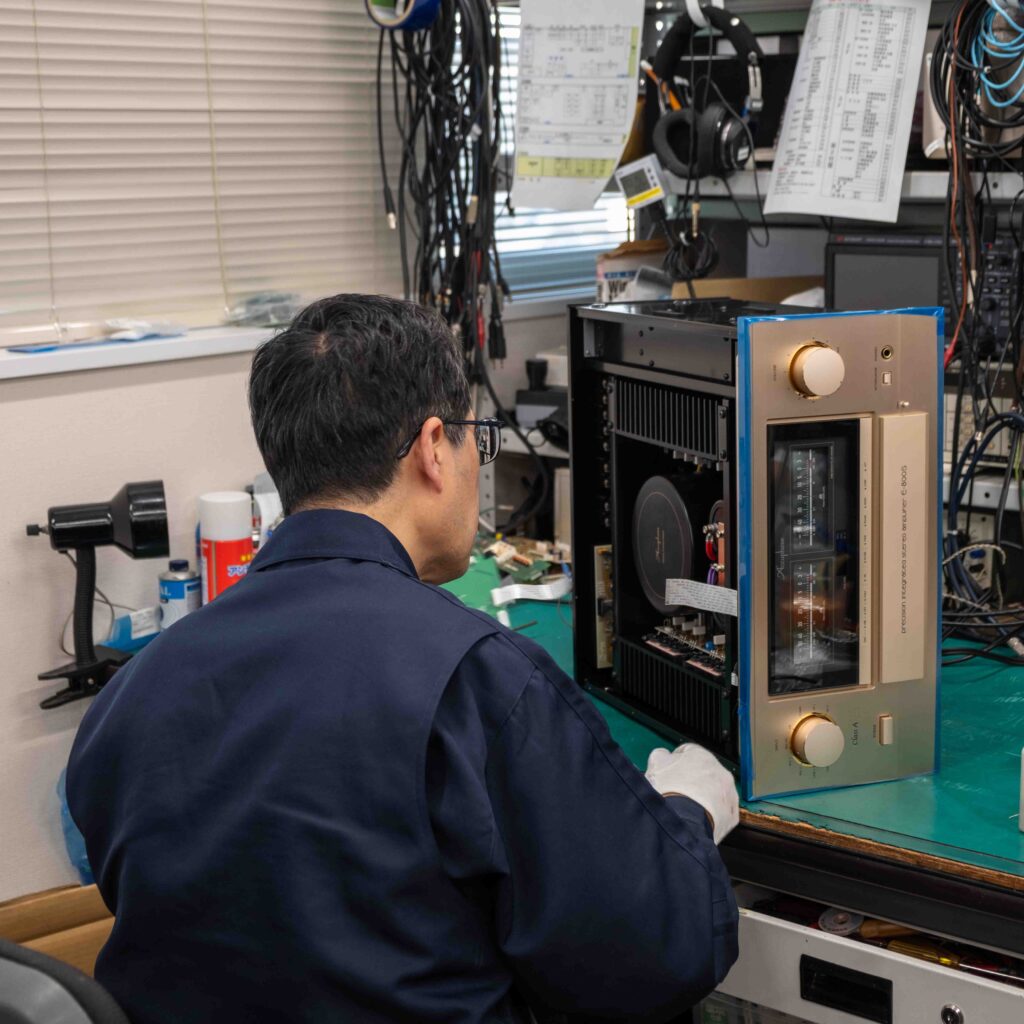
Another important issue is duration.
Accuphase is one of those brands that shouldn't just be evaluated at the time of purchase, but also for years to come. The products are designed to remain usable, serviceable, and desirable over time.
This is a very practical aspect, especially for those who buy high-end Hi-Fi. An amplifier or player isn't something that should become obsolete after a few years. It must continue to function well, be maintained, repaired if necessary, and retain its value.
From this point of view, the visit to Yokohama confirms something that many enthusiasts already perceive when using these products: Accuphase works with a long-term logic.
What we took home from this visit
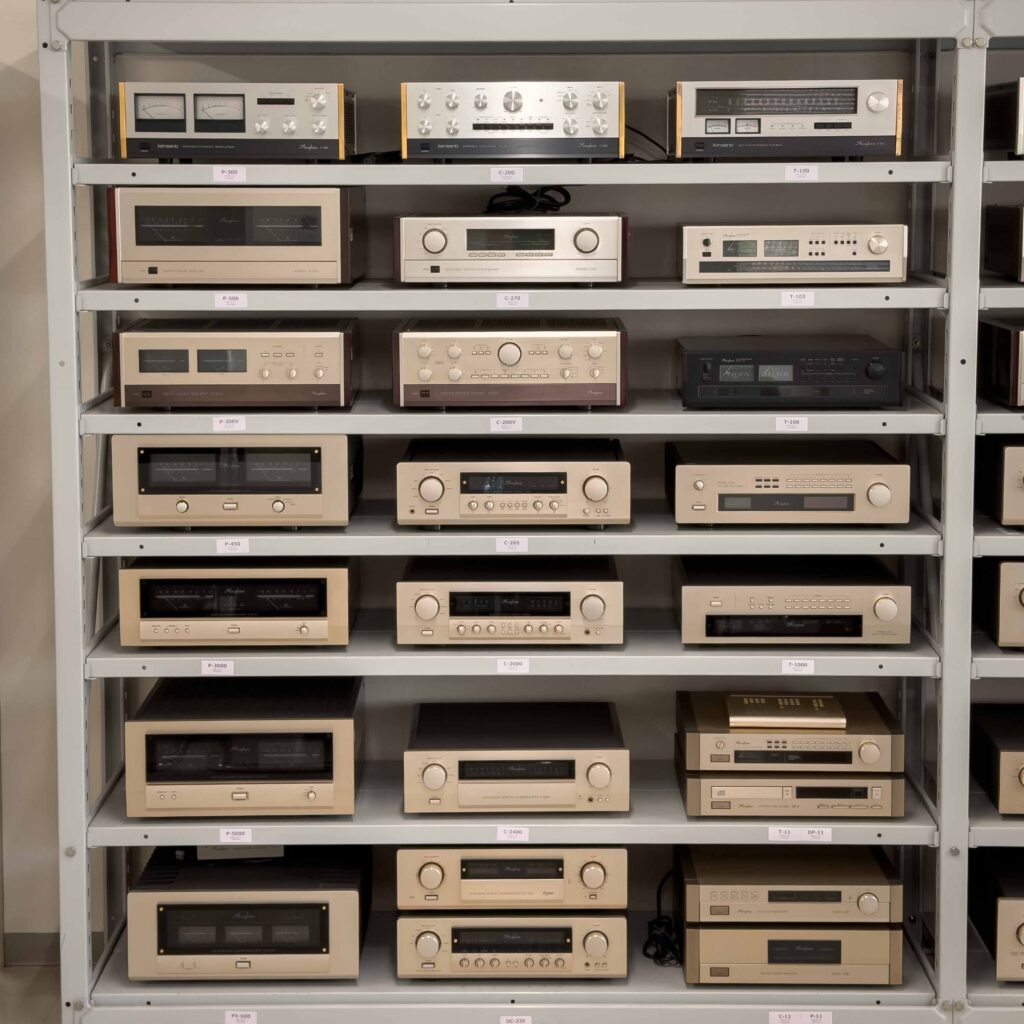
Our visit to Accuphase didn't give us the impression of a brand built on marketing. Rather, it gave us the impression of a company extremely focused on its own way of working.
Few special effects, plenty of substance. Orderly processes, attention to detail, a focus on quality, and a very clear philosophy: to create high-end Hi-Fi electronics, without losing consistency over time.
For those who sell, listen to, and talk about these products every day, seeing firsthand how they're designed and built has been incredibly valuable. It helps explain why Accuphase has such a loyal following and why, even after so many years, it continues to be considered one of the leading companies in Japanese hi-fi.
A brand that speaks above all to enthusiasts
Accuphase is a special brand for another reason: it doesn't try to please everyone.
Its products have a highly recognizable design, both aesthetically and technically. The champagne-colored front, the VU meters, the physical controls, the feeling of mechanical precision: these are elements that are part of the brand's identity and have changed little over the years.
This approach may seem conservative, but it's actually one of the reasons Accuphase is so respected. Those who buy an Accuphase product often aren't looking for the flashiest or most "new" item in a commercial sense. They're looking for carefully crafted electronics that are stable over time and capable of integrating into a major system without becoming the weak link in the chain.
This philosophy is clearly evident during the visit. There's no desire to convey speed, aggression, or spectacle. Rather, there's a constant focus on precision, repeatability, and the quality of the work.
The difference is in the details
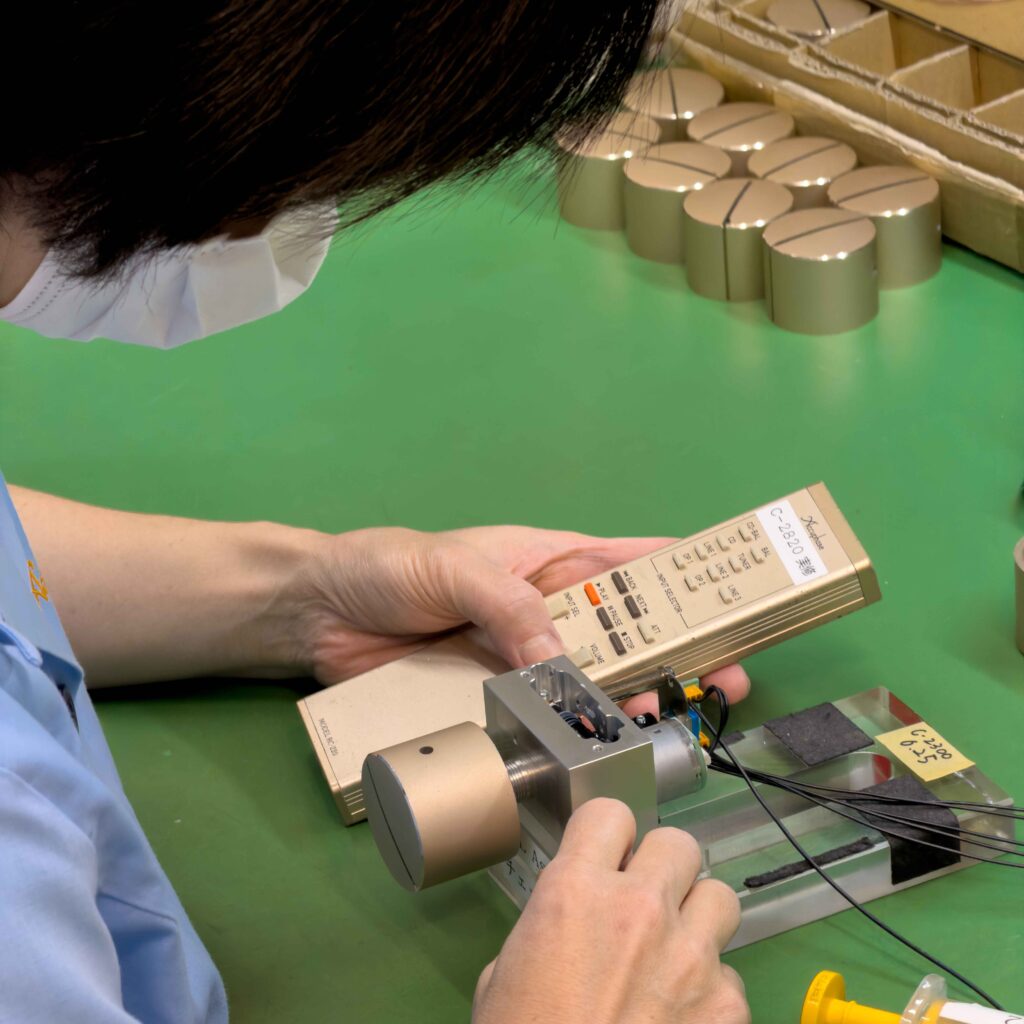
When talking about high-end Hi-Fi electronics, the first thing we often look at is the spec sheet. Power, signal-to-noise ratio, distortion, weight, inputs, outputs, and compatibility.
This is important data, but it doesn't tell the whole story.
In the case of Accuphase, a key part of the value lies in how that data is obtained and maintained over time. Component selection, assembly, wiring, quality control, and consistency between design and implementation are all aspects that make a huge difference.
Visiting the Yokohama headquarters helps you better understand why an Accuphase product often feels very solid compared to many other electronics. It's not just a matter of aesthetics or weight. It's the result of a process in which every detail is treated with great attention.
Even the parts the user normally doesn't see have a logic of their own. The interior of the devices, the arrangement of the components, the clean construction, and the accessibility for any future interventions reveal a very concrete approach to design.
A type of Hi-Fi designed to last
Today, many technological products are designed with very short life cycles. They change rapidly, are replaced frequently, and after a few years, they may seem outdated.
High-end Hi-Fi should follow a different logic. A good amplifier, a good preamplifier, or a well-built source should be able to accompany the enthusiast for many years, without losing its relevance after a season.
Accuphase is working precisely in this direction. The models are updated, but not completely overhauled. The construction remains consistent, support remains central, and the brand identity remains stable.
This is also a very important value for buyers. It means having a product that isn't just designed to be sold today, but to continue to function and be relevant tomorrow.
A useful visit also to better explain the products

For us, this visit was also important from the point of view of our daily work.
Selling a Hi-Fi product isn't just about listing technical features or comparing prices. It also means being able to explain the brand's credentials, why certain products cost more, what design choices make them different, and what type of enthusiast they're best suited for.
Seeing Accuphase up close allows us to talk about these products with greater awareness. Not more emphatically, but more precisely.
When a customer asks us why they choose Accuphase, the answer can't just be "because it sounds good." It must also include all the work that goes into it: the design, quality control, brand continuity, careful assembly, durability, and the ability to have electronics built with a very clear philosophy.
An experience consistent with what Accuphase represents
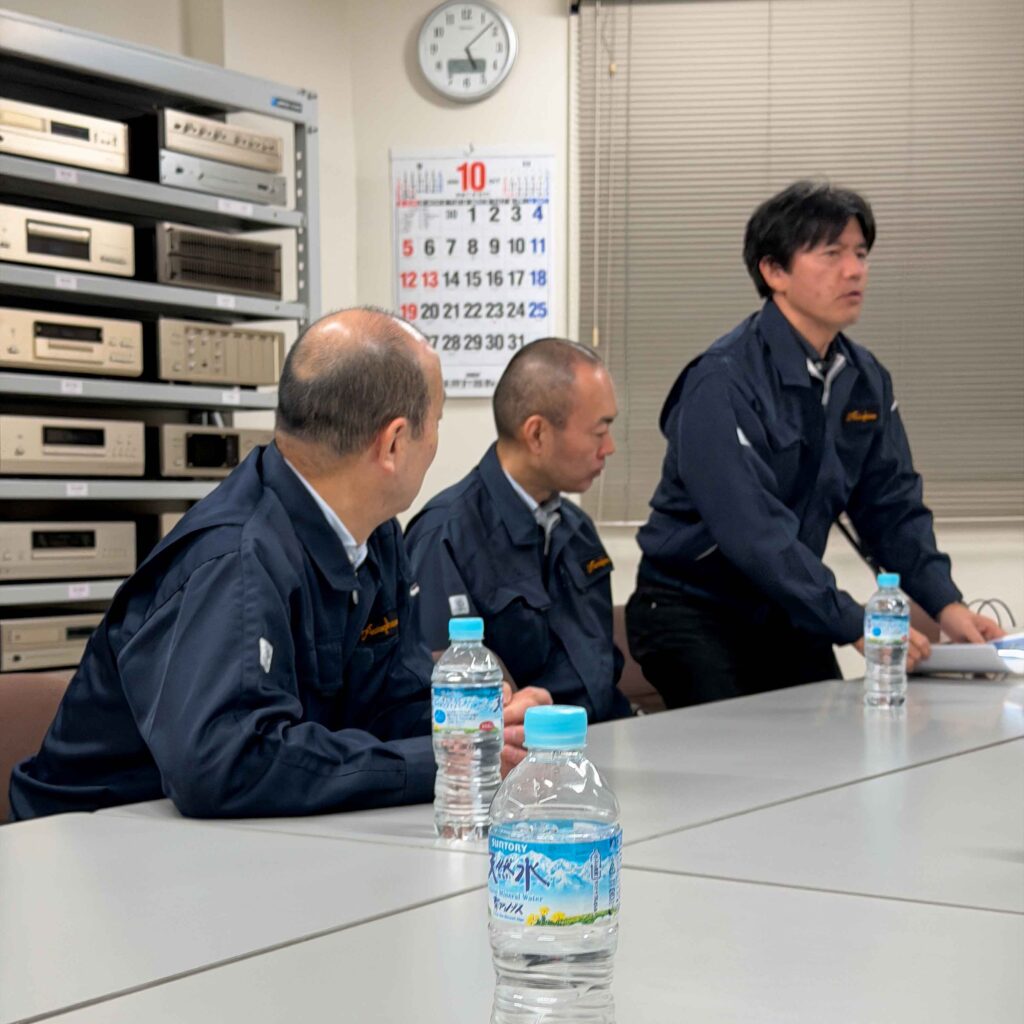
The most interesting thing, in the end, is that the visit to Accuphase was perfectly consistent with the image the brand conveys through its products.
Nothing felt forced. We didn't find a company different from what you'd imagine from listening to and using its electronics. We found order, precision, attention to detail, and a very Japanese way of working, in the truest sense of the word.
This is probably the point: Accuphase doesn't just build recognizable Hi-Fi equipment. It builds a method. And this method is reflected in every product that ends up in enthusiasts' homes.
Watch the video of our visit
We also covered the visit in a YouTube video, with images and details taken directly during our tour of Yokohama.
The video shows some moments of the visit, the context in which Accuphase works and the impressions gathered on site.
This content is designed for those who want to go beyond the technical specifications and better understand what's behind these products.