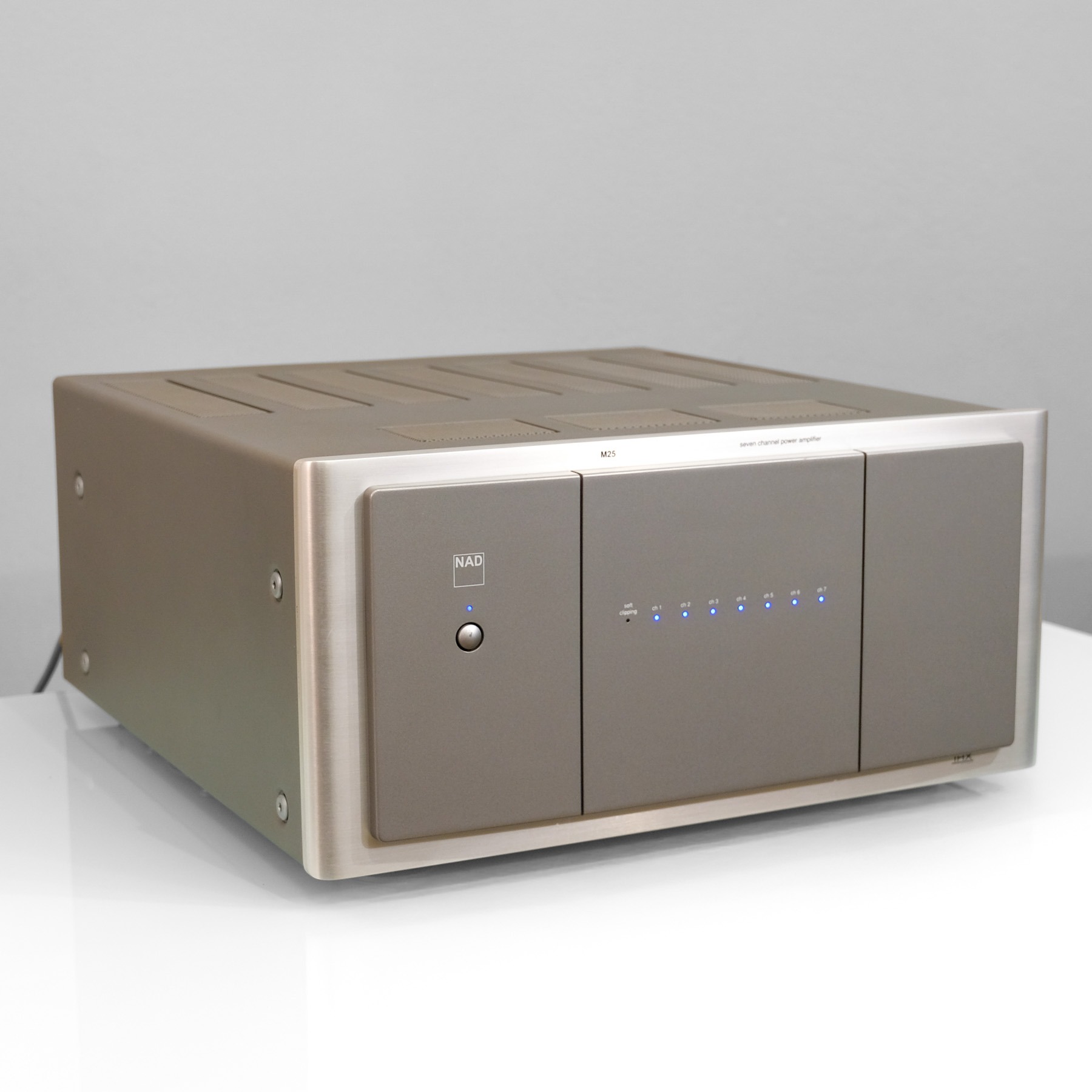
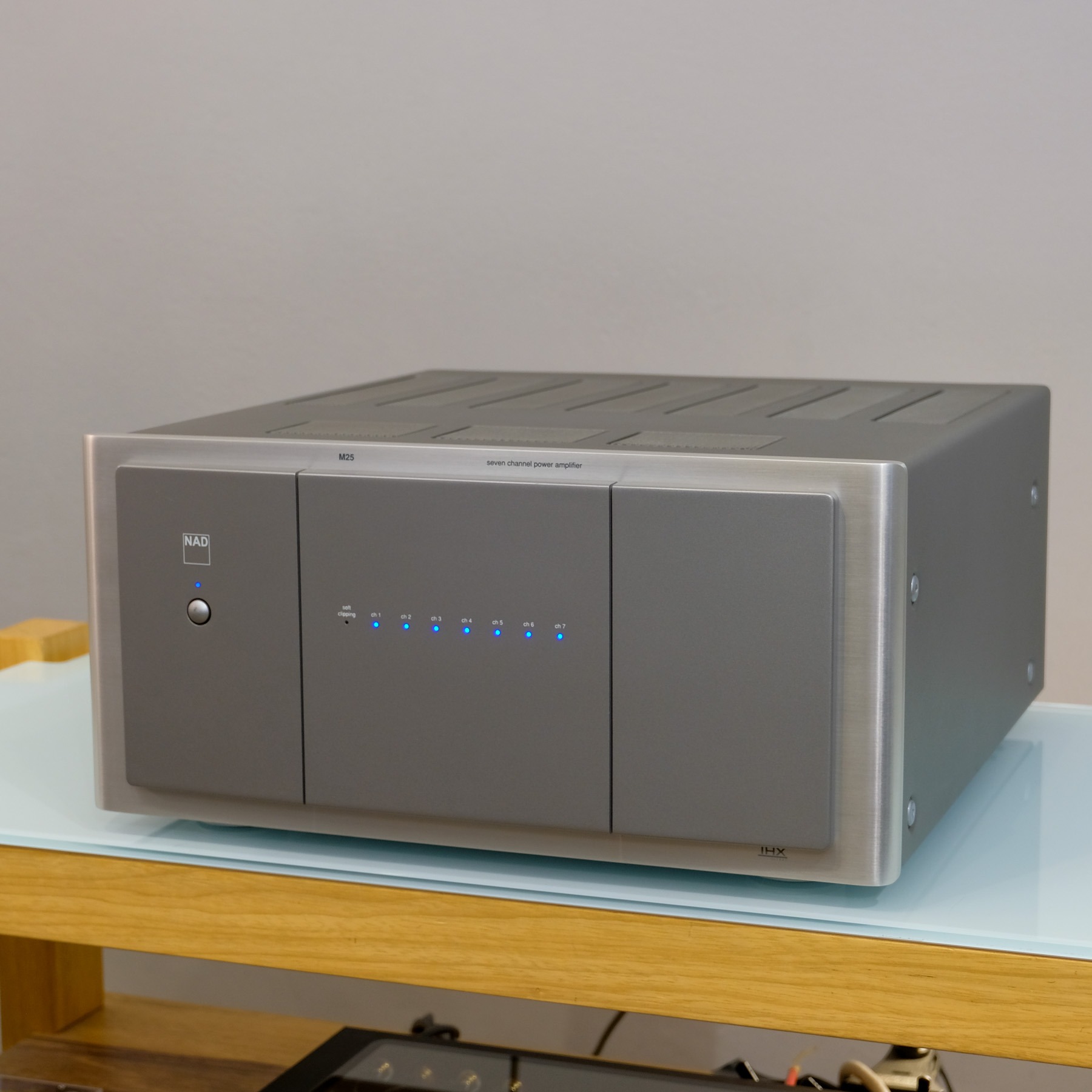
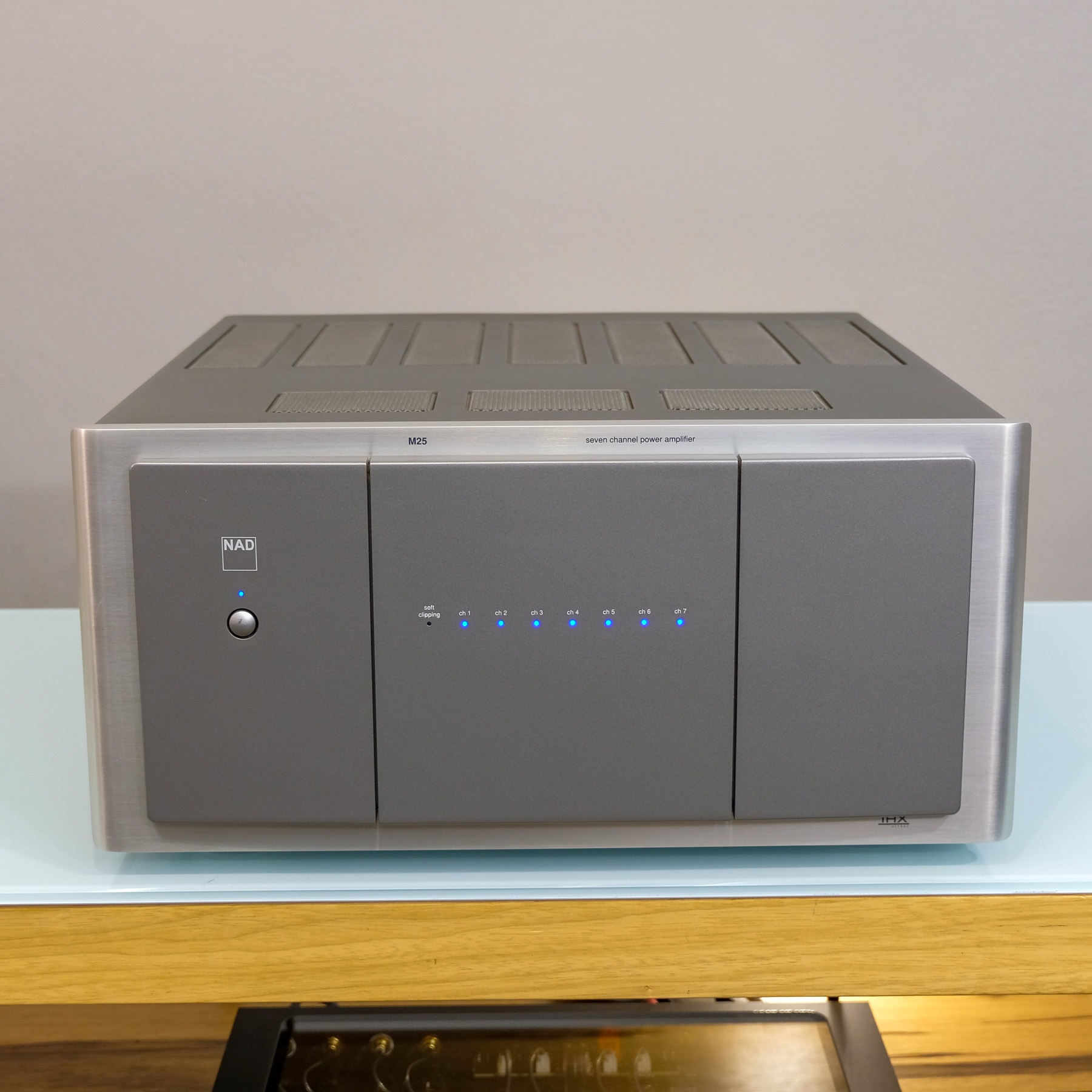
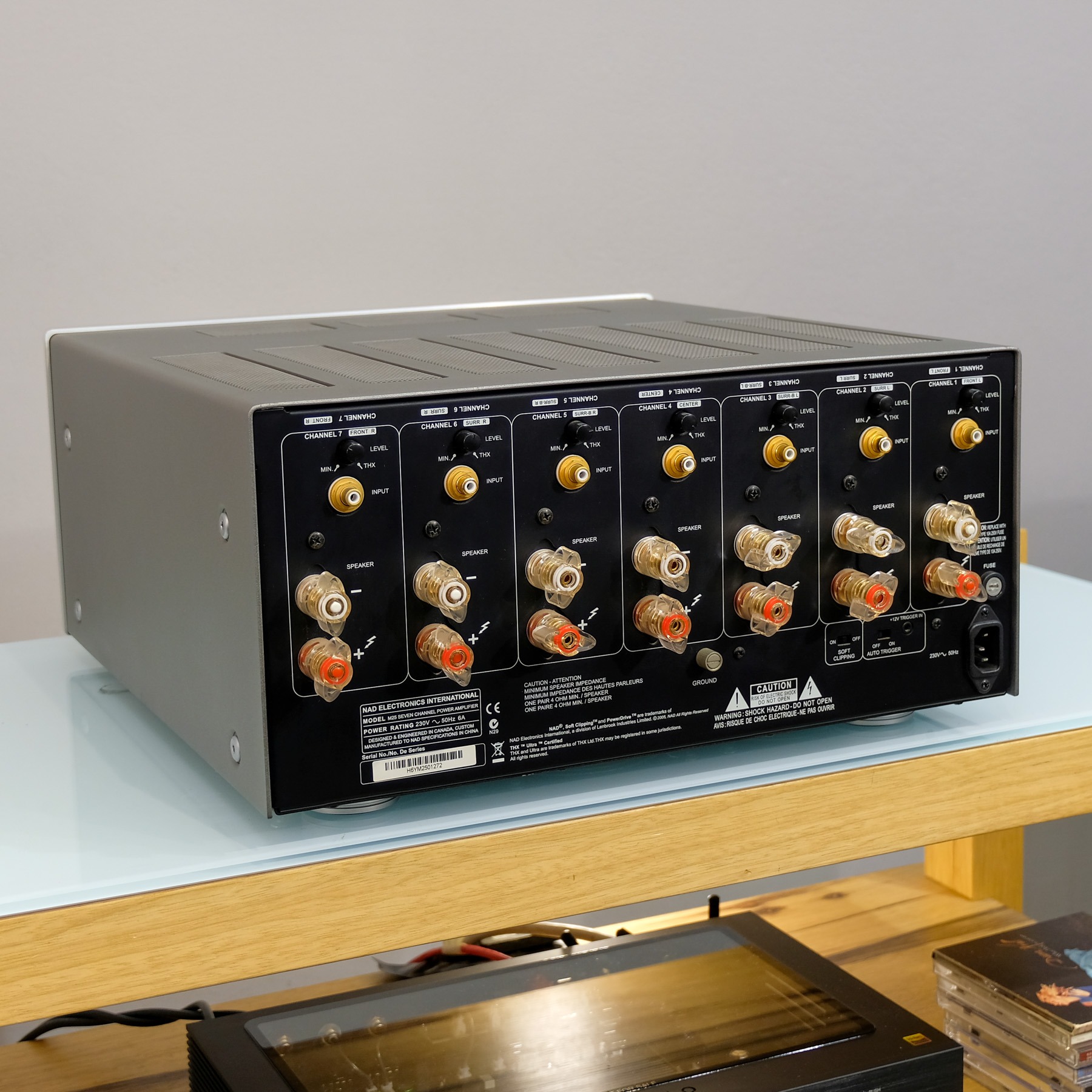
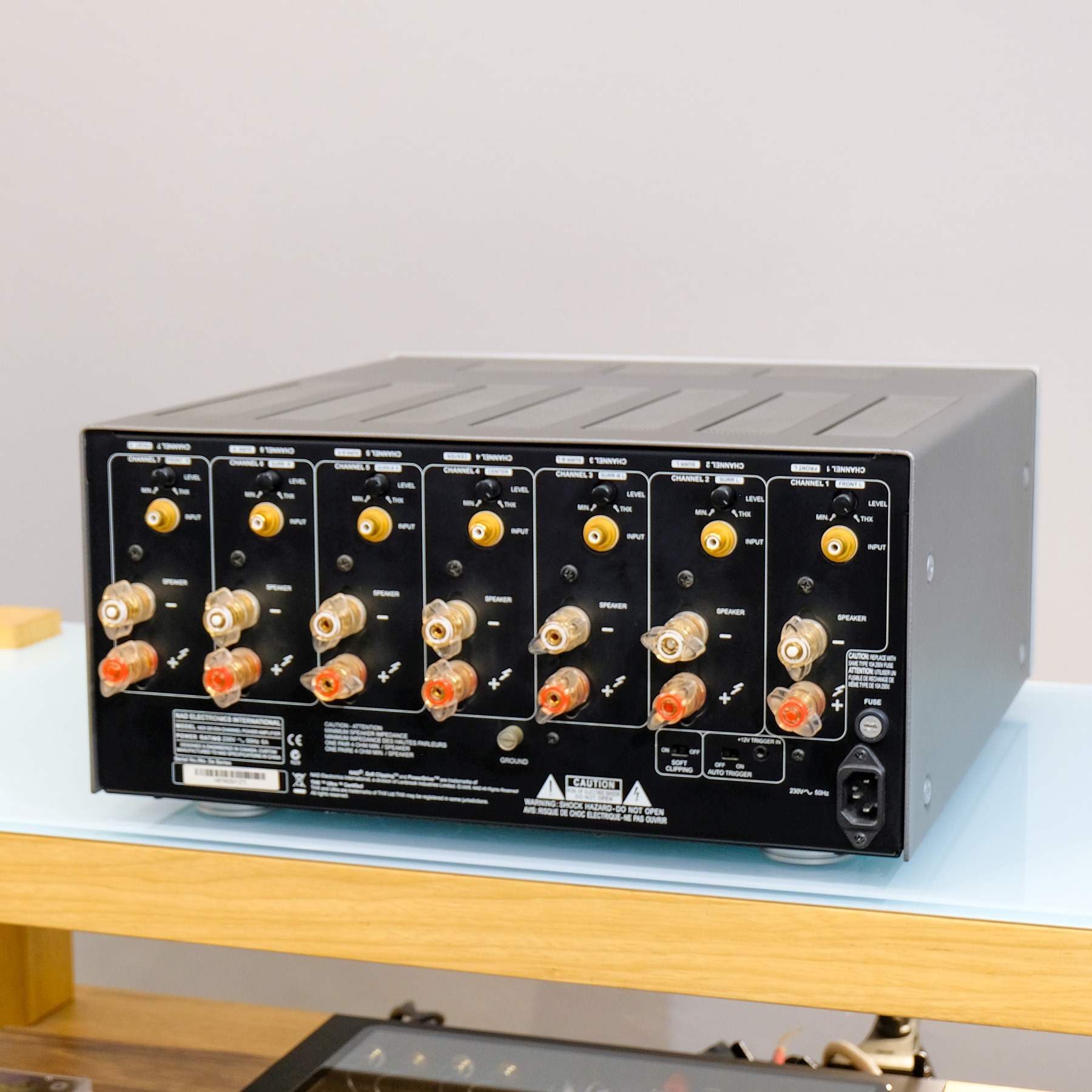
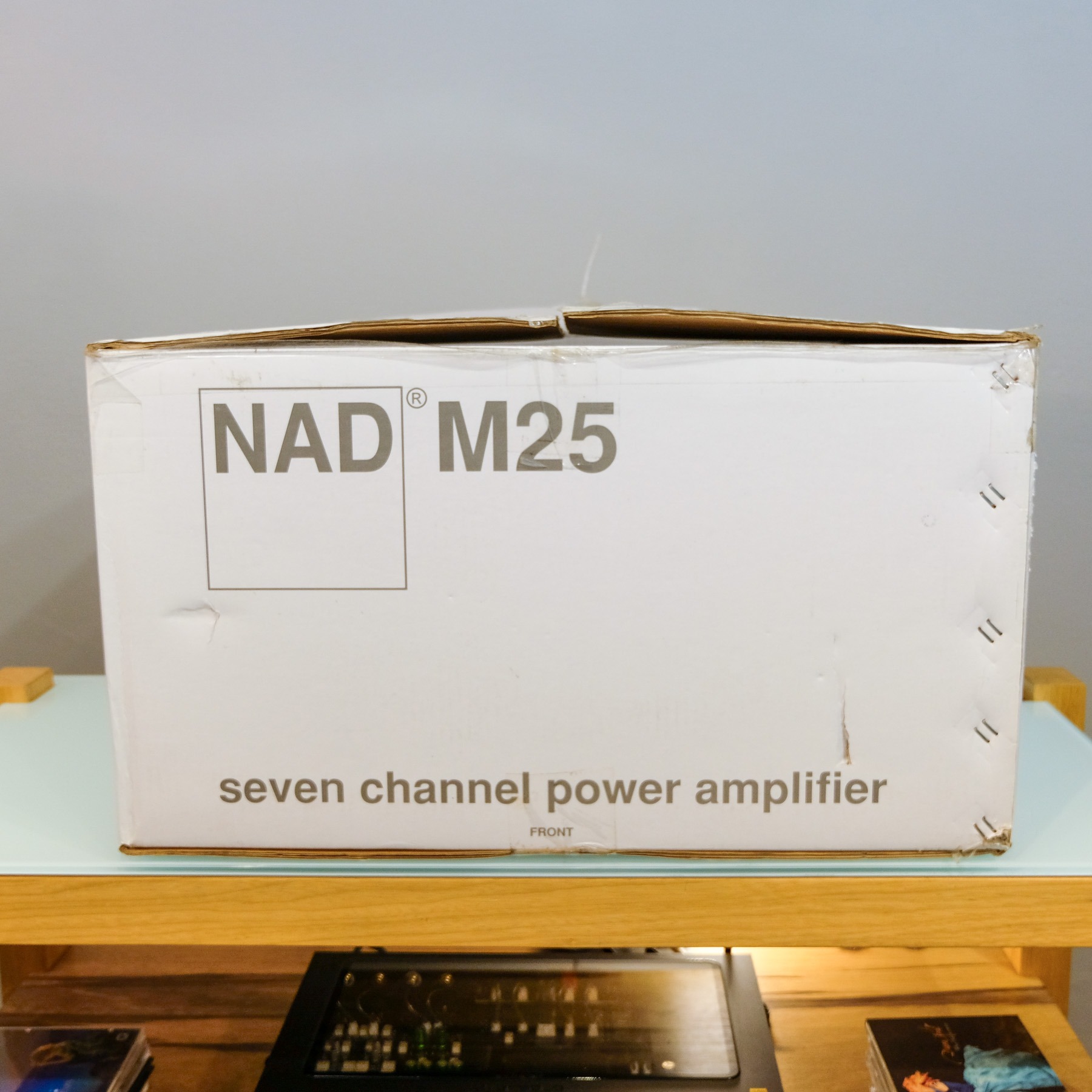
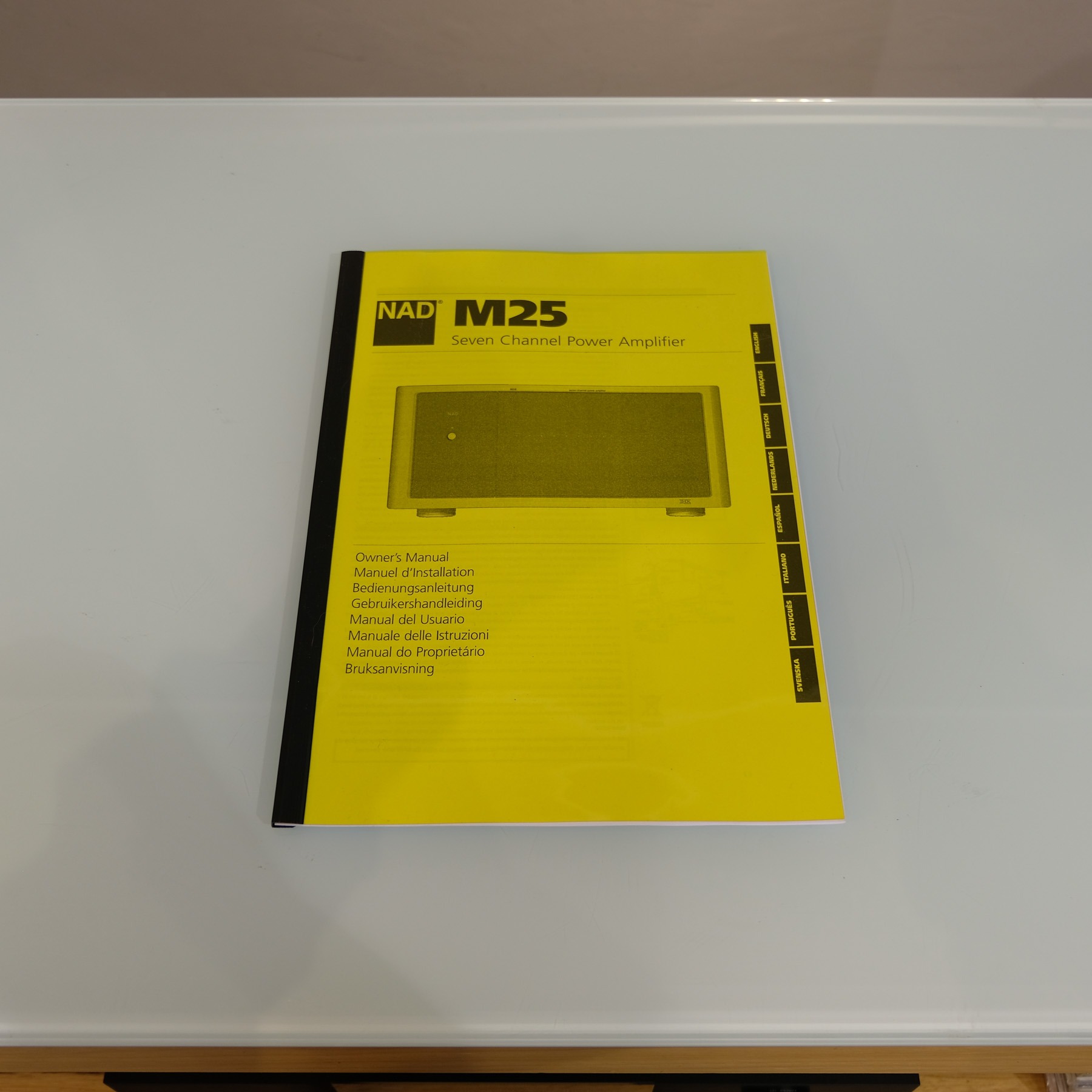
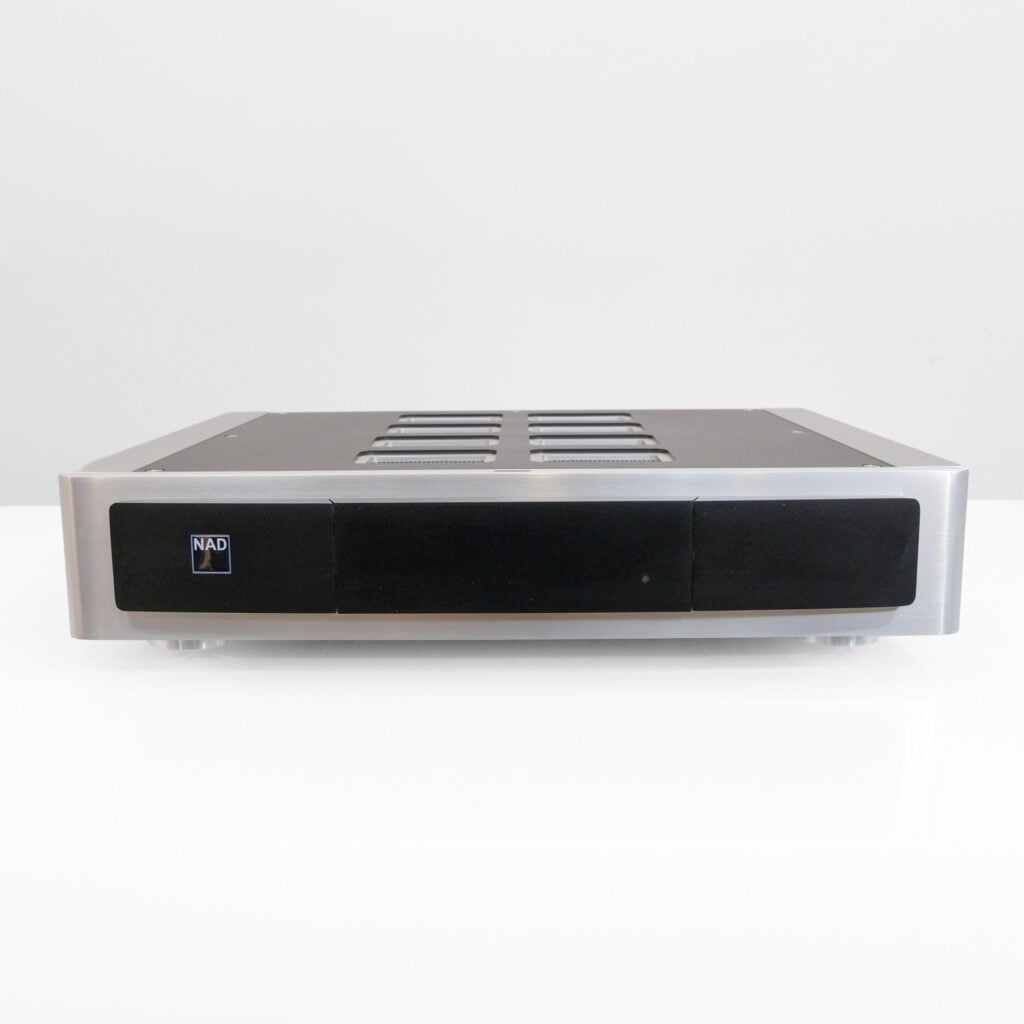
The NAD M25 is a 7-channel power amplifier designed for those who want to transform their home theater into a true cinema, without compromising on control, dynamics and clarity of sound. With 7 x 160 W continuous into 4/8 ohms, all channels driven from 20 Hz to 20 kHz with only 0,03% distortion , the M25 is designed to maintain authority and transparency even at high volumes.
Unlike typical AV receivers, which claim peak power with only a few active channels, the M25 delivers its power truly simultaneously across all seven channels , ensuring coherence and impact even in the most complex soundtracks. THX Ultra 2 certification ensures the amplifier meets the most stringent standards for large home theater installations.
Each channel is designed as a true independent “monoblock ,” with a balanced, ultra-low-noise FET input and a Class A voltage stage with cascode push-pull output, capable of driving a robust triple emitter-follower final stage. The result is a rare combination of low distortion and ultra-high current capacity , ideal for demanding speakers and difficult impedances.
Proprietary PowerDrive™ technology dynamically measures each channel's impedance and adjusts the supply voltage to always deliver maximum power with minimal distortion. In practice, the M25 manages to guarantee remarkable headroom: 220 W into 8 ohms, 385 W into 4 ohms, and up to 485 W into 2 ohms —perfect for handling sudden peaks and cinematic explosions without compression.
The large Holmgren toroidal transformer , combined with 100.000 μF low-ESR capacitors and ultra-low-impedance copper busbars, creates an oversized, quiet, and stable power supply. Variable-speed, thermostatically controlled, signal-level-controlled fans run only when necessary, turning off during quieter passages to avoid mechanical noise.
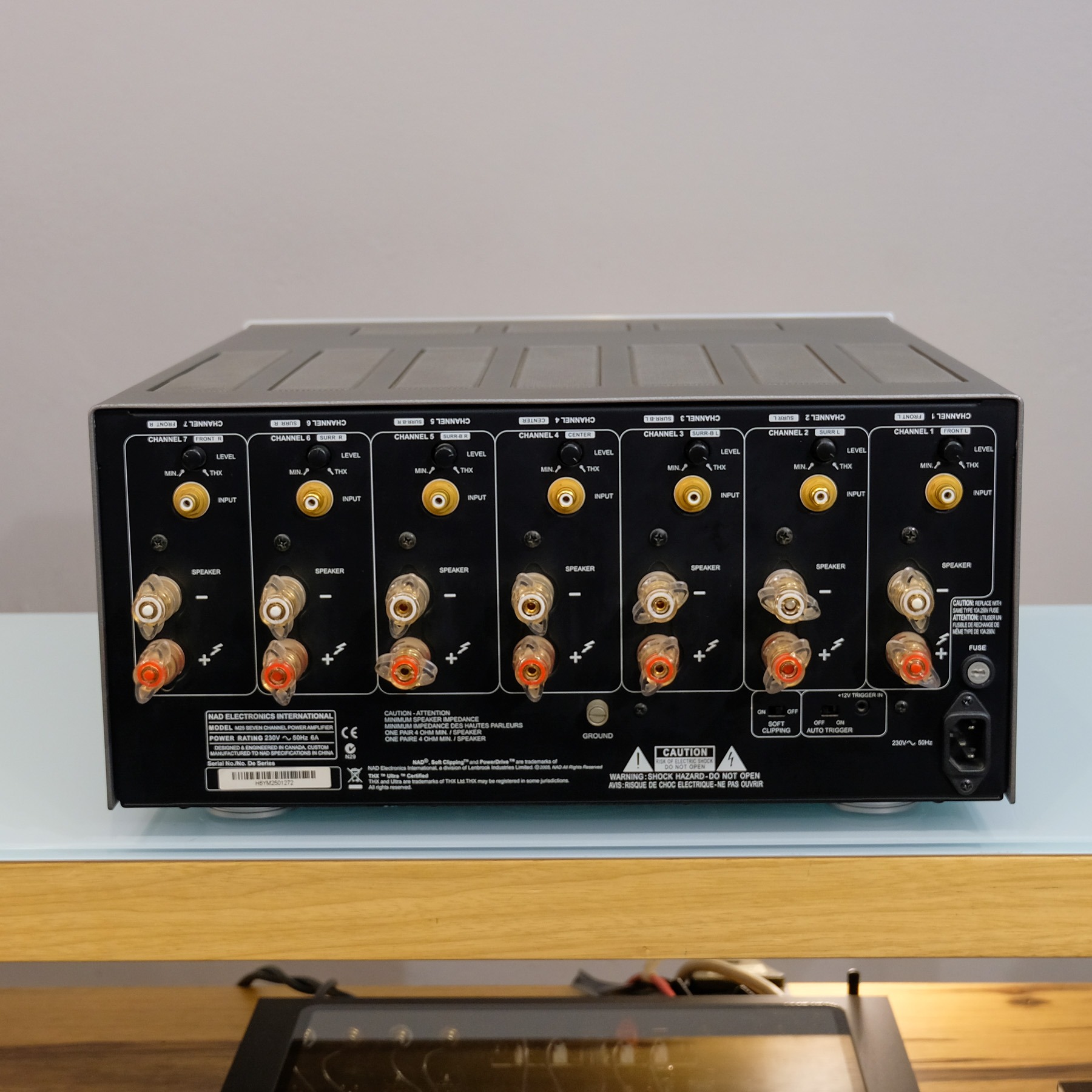
On the practical side, the M25 offers low-noise level controls for each channel for precise system alignment, robust 5-way gold-plated binding posts for each speaker, a 12V trigger input for automatic power-on, and a detachable power cable for easy installation in racks or dedicated cabinets. Ground isolation circuitry helps prevent ground loops, a common problem in complex multi-channel installations.
The resulting sound is powerful yet refined : explosive dynamics when the soundtrack demands it, but at the same time capable of conveying micro-detail, instrumental texture and three-dimensional spatiality with great naturalness. Whether it's a purely home theater system or a hybrid music/cinema system, the NAD M25 is a reference power amplifier for those seeking Master Series-level performance.
FAQ
1. Can the NAD M25 drive 4Ω speakers or demanding loads?
Yes, thanks to PowerDrive™ technology and high current capacity, the M25 delivers over 385 W dynamic into 4 Ω and up to 485 W into 2 Ω, maintaining control and stability even with difficult speakers.
2. What is the difference between the NAD M25 and a classic AV receiver?
The M25 is a pure power amplifier: it does not handle video decoding or switching functions, but focuses exclusively on quality amplification, delivering 160 W of real power for each of the 7 channels with all channels active, which is rare in integrated receivers.
3. Is the NAD M25 suitable for large home theater rooms?
Absolutely yes: the certification THX Ultra 2 and high continuous power make it ideal for large rooms, ensuring cinematic listening levels without fatigue or compression.
4. Can I also use the NAD M25 for hi-fi stereo listening?
You can dedicate two channels to a main pair of speakers and use the others for surround sound or bi-amplification. Its monoblock architecture, Class A voltage stage, and low noise make it suitable for even high-end music listening.
5. How much ventilation space does the NAD M25 require?
The M25 features large heatsinks and variable-speed fans, but it's recommended to allow for sufficient airflow above and to the sides, especially in closed racks, to ensure long-term reliability.
6. Does the NAD M25 have speaker covers?
Yes, each channel has dedicated protection for overcurrent, DC, infrasonic and ultrasonic overloads, as well as a switchable Soft Clipping™ function, which helps prevent harsh distortion and potential speaker damage in the event of an overload.