












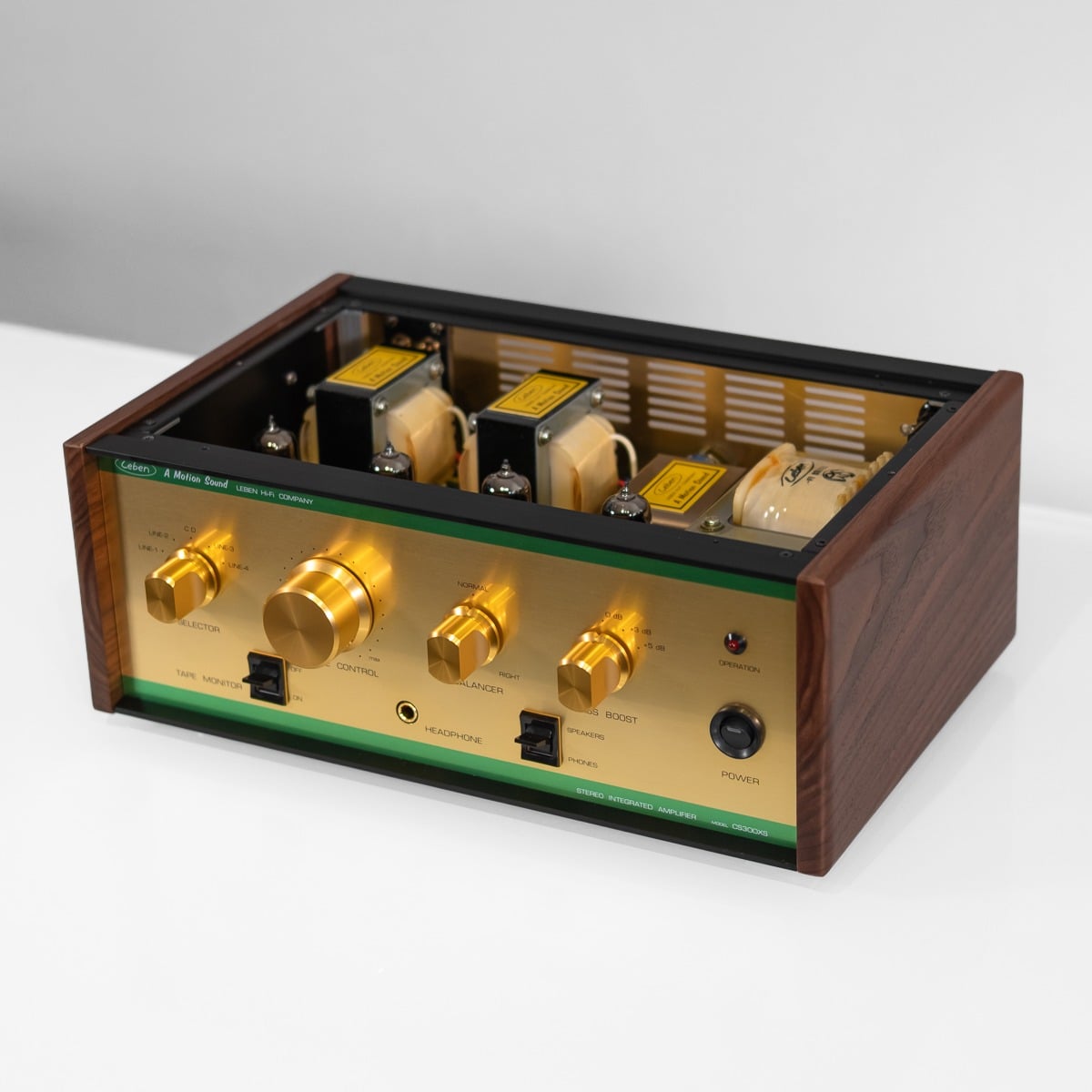
If there's one myth that dies hard in Hi-Fi, it's the myth of watts. More power equals better sound, right? Wrong. The reality is much more interesting and, once understood, allows you to make smarter choices while also saving a lot of money. A 50-watt amplifier can play louder than a 150-watt one, and a well-balanced 30-watt system canempire A room is better than a 200-watt monster. How is that possible? Because watts alone say almost nothing. It's the balance between power, speaker sensitivity, and listening environment that makes the difference. Let's see how it really works.
What Watts Really Measure
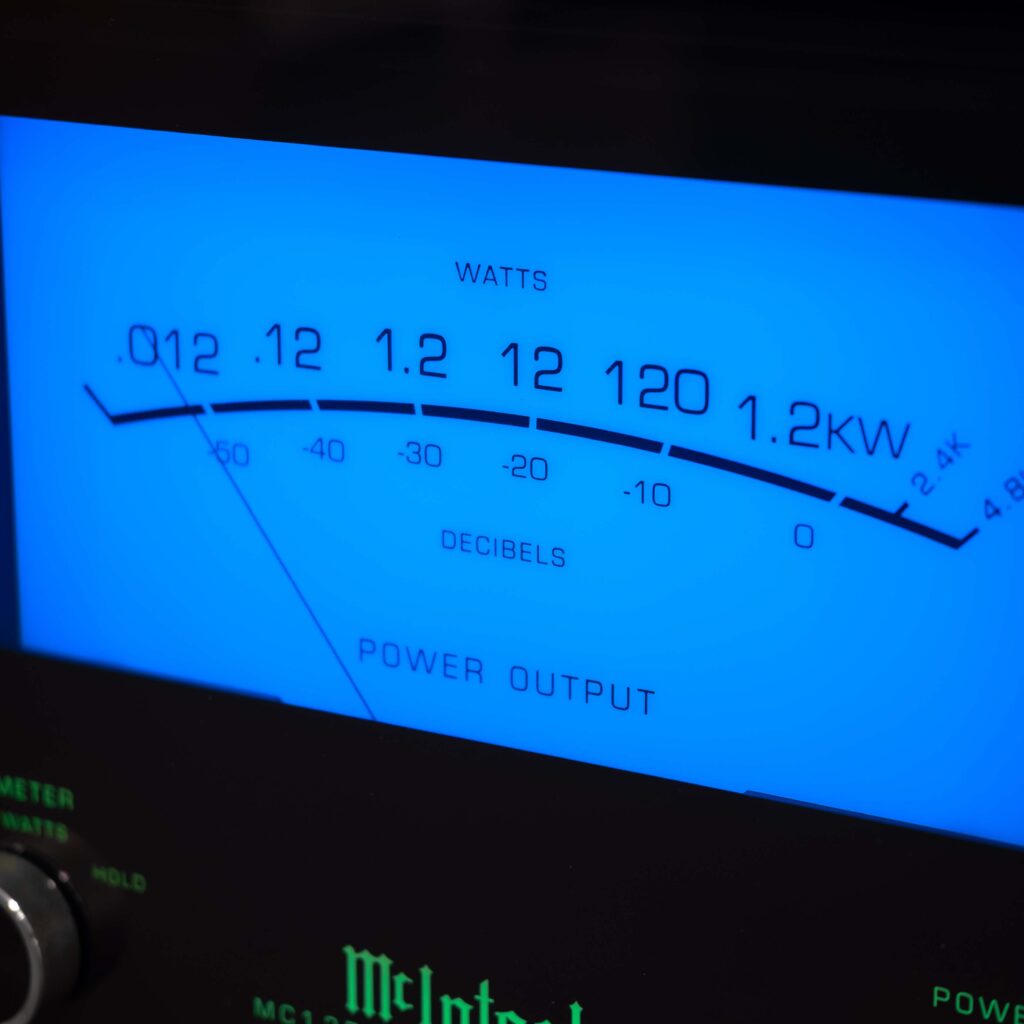
Let's start with the basics. Watts measure the electrical power an amplifier can deliver to the speakers. That's it. They don't measure volume, they don't measure sound quality, they don't measure how loud the system is. They only measure how much electrical power reaches the speakers.
Think of the amplifier as an engine. Watts are horsepower: important, sure, but they don't tell you how fast the car goes. That also depends on weight, aerodynamics, and tires. In Hi-Fi, it's the same: the 'speed' (the perceived volume) depends primarily on how the speakers convert that power into sound pressure.
A technical note: when a manufacturer claims "100 watts RMS," it's referring to the continuous power output into a specific load (typically 8 ohms, but sometimes 4 ohms) with acceptable distortion. It's crucial to check the exact specifications, because that "acceptable" distortion can vary greatly: some measure 0,1%, others 1%. Already here, the numbers begin to tell different stories.
RMS, Peak, Musical: Which Really Matters?
If you look at the data sheets, you will often find three different values:
- RMS (or continuous) power: the real one, the one the amplifier can consistently deliver without overheating. It's the number that counts.
- Peak power: how much it can give for a few moments. Useful for violent transients (a bass drum hit, a piano attack), but not for evaluating the system.
- Musical power: marketing term with no precise standard. Ignore it.
When comparing amplifiers, always use RMS. And make sure it's measured on the same impedance: 100 watts into 8 ohms is not the same as 100 watts into 4 ohms (at 4 ohms the amplifier works harder, often delivering more power but under more stress).
The Factor That Changes Everything: Speaker Sensitivity
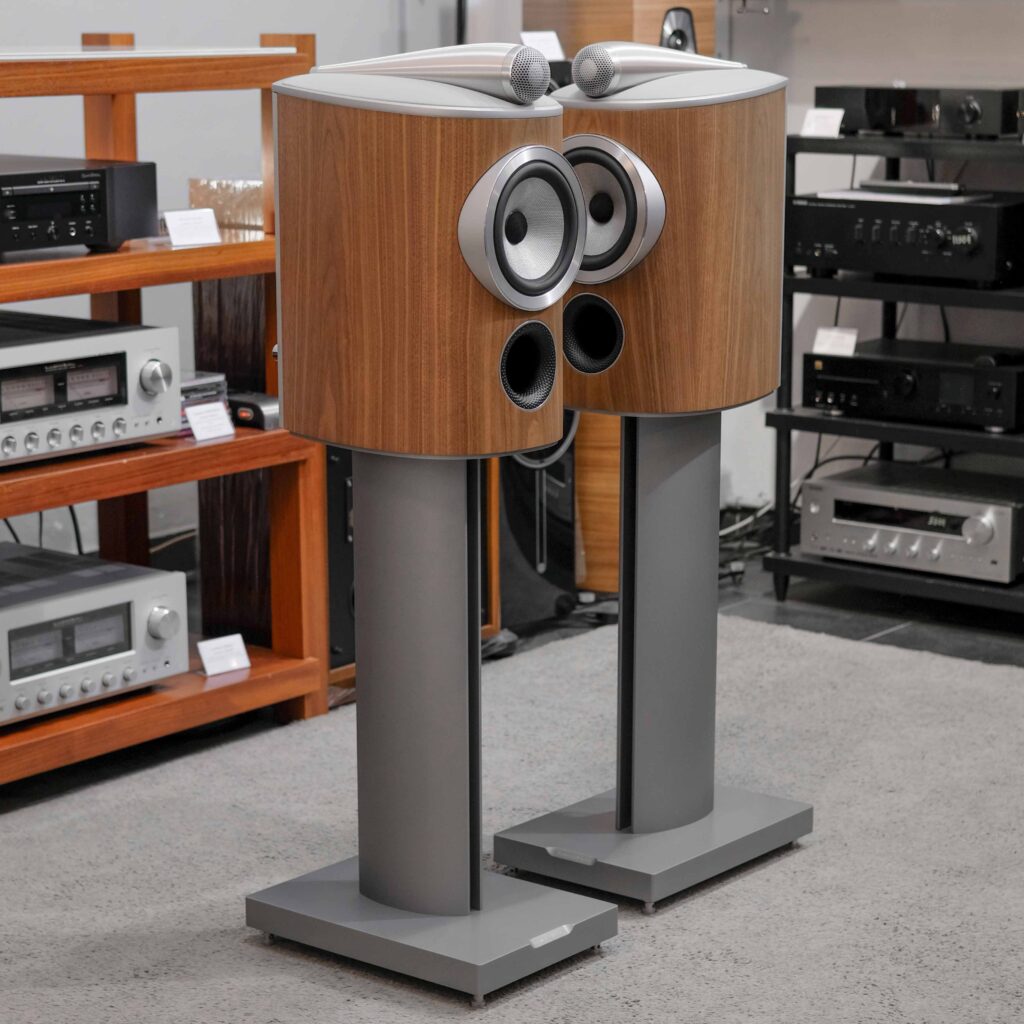
This is where the math becomes magic. A speaker's sensitivity indicates how much sound pressure (measured in dB SPL) it produces at one meter's distance when you feed it one watt of power. And this is where the real challenge comes in.
A speaker with a sensitivity of 90 dB/1W/1m produces 90 decibels with just one watt. An 85 dB speaker produces 85. It may not seem like much, but a 5 dB difference means that to get the same volume from the less sensitive speaker, you need more than triple the power . Not double: triple. Because decibels are a logarithmic scale.
Let's take a concrete example. You have two speakers: a Klipsch with a sensitivity of 98 dB (typical of their horn-loaded speakers), and a generic bookshelf speaker with 86 dB. To achieve 98 dB of sound pressure in the room, the Klipsch only needs 1 watt. The 86 dB speaker needs about 16 watts. Sixteen times as much.
This explains why some enthusiasts use 8-10 watt tube amplifiers with highly sensitive speakers and achieve concert-level volumes. And why others, with insensitive floorstanding speakers, need 150-200 watts to reproduce the sound.empire the same room.
The Doubling Rule
Here's a helpful mental chart: every time you double the power, you gain about 3 dB in volume. It seems like a lot, but in human perception, 3 dB is barely perceptible as "a little louder." To hear double the volume, you need +10 dB, which means multiplying the power by ten.
Then:
- 10 to 20 watts: +3 dB (barely audible)
- From 10 to 40 watts: +6 dB (clearly louder)
- From 10 to 100 watts: +10 dB (perceived volume doubled)
Do you see why going from a 50-watt amplifier to a 100-watt one isn't the revolution many expect? A gain of 3 dB. Useful, but not dramatic.
The Room Is the Third Protagonist
The amplifier and speakers are only two-thirds of the equation. The third is the environment. A 15-square-meter room with close walls and a little furniture requires much less power than a 40-square-meter open space with high ceilings and few reflective surfaces.
Why? Because sound propagates in all directions, and energy is dispersed. In a small space, the walls reflect the sound back at you, "helping" the speakers. In a large space, a lot of energy is lost before reaching you. And if the room is acoustically "dead" (carpets, curtains, sofas that absorb), even more power is needed to achieve the same perceived volume.
Then there's the issue of listening distance. Every time you double the distance from the speakers, the sound pressure level drops by 6 dB. So if you listen at 4 meters instead of 2 meters, you need four times the power to get the same volume. It's not a detail: it's physics.
This explains why in hi-fi shops (small rooms, close listening) even modest systems sound powerful, while at home, with the speakers 3-4 meters from the sofa in a large living room, the same system can seem weak. It's not the system's fault: it's geometry.
How Much Power Do You Need in Practice: The Real Numbers
Well, theory aside: how many watts do you really need? It depends, but we can give concrete advice based on typical scenarios.
Small room (10-15 m²), listening at medium-low volume, speakers with a sensitivity of 88-90 dB: 20-40 watts is more than sufficient. Even 15 watts from a good tube integrated amplifier works wonders. This is where brands like Advance Paris or Rotel come in with their affordable integrated amplifiers.
Medium-sized room (20-30 m²), varied listening, speakers with a sensitivity of 86-88 dB: 50-80 watts is the comfort zone. They cover all musical genres, from string quartets to rock, without ever running out of steam. This is the classic territory of quality transistor integrated amplifiers .
Large room (35+ sq m) or open space, speakers with low sensitivity (84-86 dB), listening at high volumes: 100-150 watts are starting to become necessary. Not for the volume itself, but to maintain control and dynamics even in complex passages. Here we're talking about dedicated power amplifiers or high-end integrated speakers.
Highly sensitive speakers (95+ dB), such as the Klipsch Heritage: 10-25 watts are enough for any room in the home. This is the realm of single-ended tube amplifiers, where 8 watts of Class A sound like 80 watts of Class AB on normal speakers.
An often overlooked fact: most home listening occurs between 75 and 85 dB SPL. To reach this level, with medium sensitivity speakers (87-88 dB) in a typical room, you'd typically use 2-5 watts. Dynamic peaks can require 20-30 watts for a few moments. This is why a well-designed 50-watt amplifier is already overpowered for 90% of applications.
When More Power Really Makes Sense
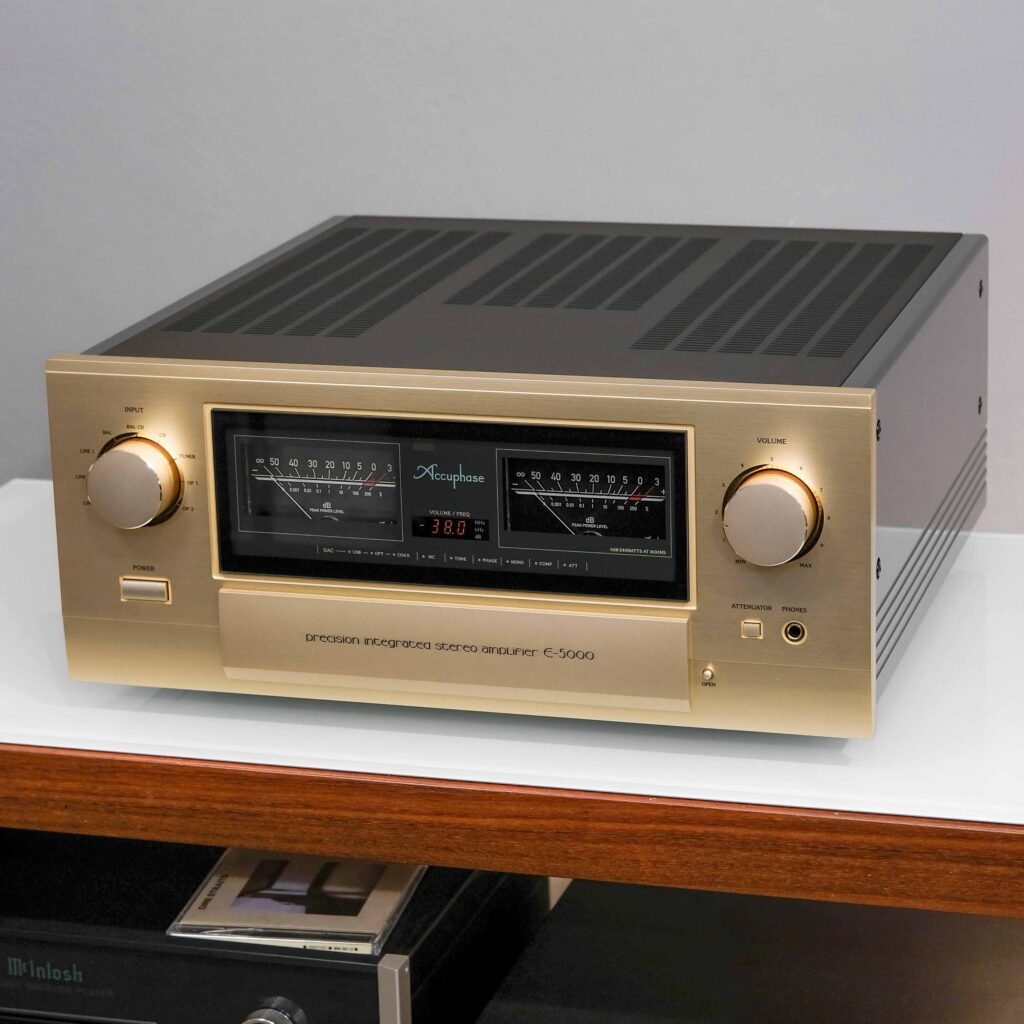
However, there are situations where extra power isn't a waste, but rather a necessity or a concrete advantage. Let's see which ones.
Low impedance speakers (4 ohms nominal, with 3 ohms dip): These speakers 'ask' for more current from the amplifier. A 100-watt amplifier into 8 ohms could deliver 150-180 watts into 4 ohms, but only if the transformer and power supply are robust. Here, the declared power is an indirect indicator of the driving capacity. Brands like Rotel or Musical Fidelity They often design with difficult loads in mind.
Listening to orchestral or electronic music at realistic volumes: The transients of a symphony orchestra or the sub-bass of electronic music require headroom. Not so much for the average volume, but for those sudden spikes that go from 70 to 100 dB in an instant. An underpowered amplifier will clip (overload distortion), and the sound will become harsh, compressed, and annoying.
Complex multi-way speakers: A three-way tower with an elaborate crossover can have impedances that vary greatly with frequency. A powerful amplifier (and therefore a robust power supply) handles these variations without breaking a sweat, maintaining control and stability.
Furthermore, there's a psychoacoustic aspect: an amplifier running at 20-30% of its maximum power often sounds more relaxed, open, and natural than one cranked to 80%. It's not magic: it's just that the power supply, transistors, and heatsink are operating in a zone of maximum linearity, far from the limits. For this reason, many enthusiasts prefer to slightly overpower the amplifier.
The Most Common Mistakes (and How to Avoid Them)
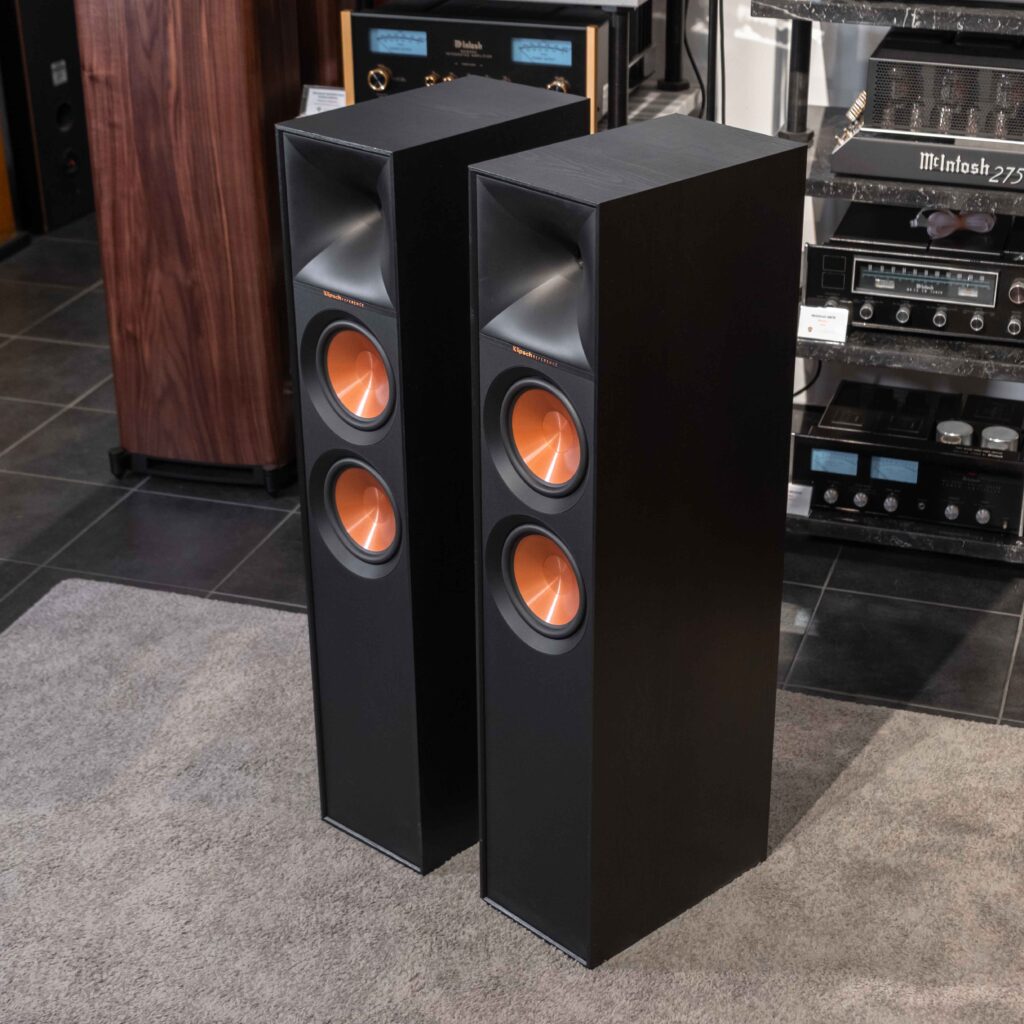
After years of shopping, I still see the same mistakes. First: buying a 200-watt amplifier for sensitive bookshelf speakers in an 18-square-meter room. It's like using an SUV to go to the supermarket: it works, but it's a waste of resources (and budget you could have invested better elsewhere).
Second mistake: underestimating sensitivity. Many people choose beautiful speakers with low sensitivity (84-85 dB) and then pair them with a 40-watt amplifier because "I don't listen to loud music anyway." The result: compressed sound, lack of dynamics, and frustration. Those speakers needed at least 80-100 watts, or they needed more sensitive speakers.
Third: ignore impedance. A nominal 4-ohm speaker with a 2,8-ohm dip switch at some frequencies can overwhelm an amplifier not designed for low loads, even if it has "enough wattage" on paper. The result is a sound that "closes up" in complex passages, loses bass, and becomes twitchy.
Fourth, believe that more watts automatically mean better sound. A well-designed 12-watt tube integrated amplifier , with suitable speakers, sounds more engaging, natural, and dynamic than a mediocre 100-watt transistor amp. The quality of the components, design, and power supply matters much more than raw power.
Finally: ignore headroom. If your amplifier routinely operates at 70-80% of its available power, you're at the limit. A few extra dB (an orchestral passage, a crescendo) is enough to trigger clipping. It's better to have 30-40% headroom: you'll sound comfortable, and so will the amplifier.
How to Choose: The Practical Checklist
Let's recap with a checklist you can use when choosing an amplifier or evaluating whether the one you have is adequate.
- Speaker sensitivity: Below 86 dB, you need at least 60-80 watts. Between 86-90 dB, 30-60 watts are sufficient. Above 92 dB, even 15-25 watts are sufficient.
- Room size: A small space (under 20 m2) halves the requirements. A large space (over 35 m2) increases them by 50-100%.
- Nominal impedance: 4 ohm speakers require robust amplifiers, capable of double (or almost double) the power compared to 8 ohm speakers.
- Musical genres: Classical, jazz, and acoustic instruments are more forgiving. Rock, electronic, and metal require extra headroom.
- Usual listening volume: If you listen at medium-low volumes, you can tone it down. If you like to "feel" the music, you'll need more headroom.
- Budget: A quality 50-watt amplifier (with a solid power supply and good components) is better than a cheap 150-watt one. Power doesn't make up for a mediocre design.
And a golden rule: if possible, listen before you buy. Technical specifications are useful for screening, but your ear is the final judge. A well-balanced system is immediately noticeable: it sounds relaxed, natural, and effortless even at high volumes. If you perceive harshness, compression, or fatigue, something is wrong—it's often a problem of insufficient or poorly managed power.
Finally, remember that Hi-Fi is a system. Amplifier, speakers, cables, source, room: everything matters. Investing €2000 in a very powerful amplifier and pairing it with inadequate speakers or a problematic room is a waste. It's better to balance the budget across all elements, starting with a coherent speaker-amplifier pairing.
Conclusion
Ultimately, the question "how many watts do you need" has a simple yet complex answer: it depends. But now you have the tools to accurately answer your specific case. Speaker sensitivity, room size, music genres, listening volume: put these factors together and you'll find the right number. Which is often lower than you thought. Remember: in Hi-Fi, as in life, it's not the more you have, but the right amount that wins. A well-balanced 30-watt system beats a poorly matched 200-watt monster. Always. And the best part is that it often costs less, leaving you with the budget to invest where it really matters: quality speakers, room acoustics, a worthy source. Watts are important, sure. But they're just one ingredient in the recipe. Now that you know how to dose them, you can cook up extraordinary sound.