




Description
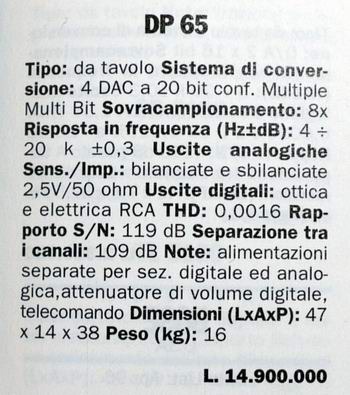
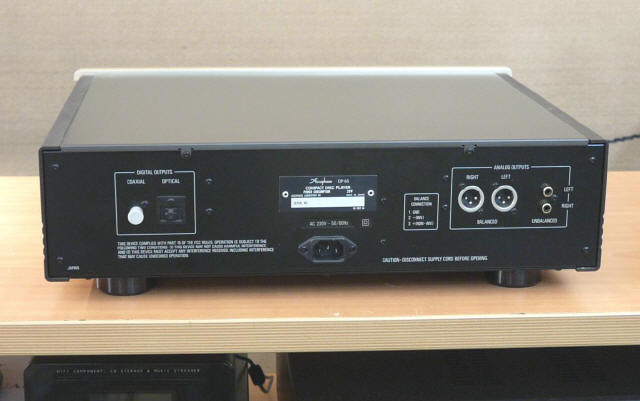
The Accuphase DP-65V, although it could be considered an integrated CD player, is actually a CD transport and a separate digital processor combined into a single component. The transport has digital outputs (Toslink and coax) and the digital processor section has digital inputs and analog outputs (Toslink in, coax in, unbalanced RCA out, balanced XLR out). In addition, there are two "slots" on the back of the unit for installing optional digital input/output boards (BNC, HPC, AES/EBU). I don't have any experience with these optional boards, which cost several hundred dollars each and seem to be intended for professional applications.
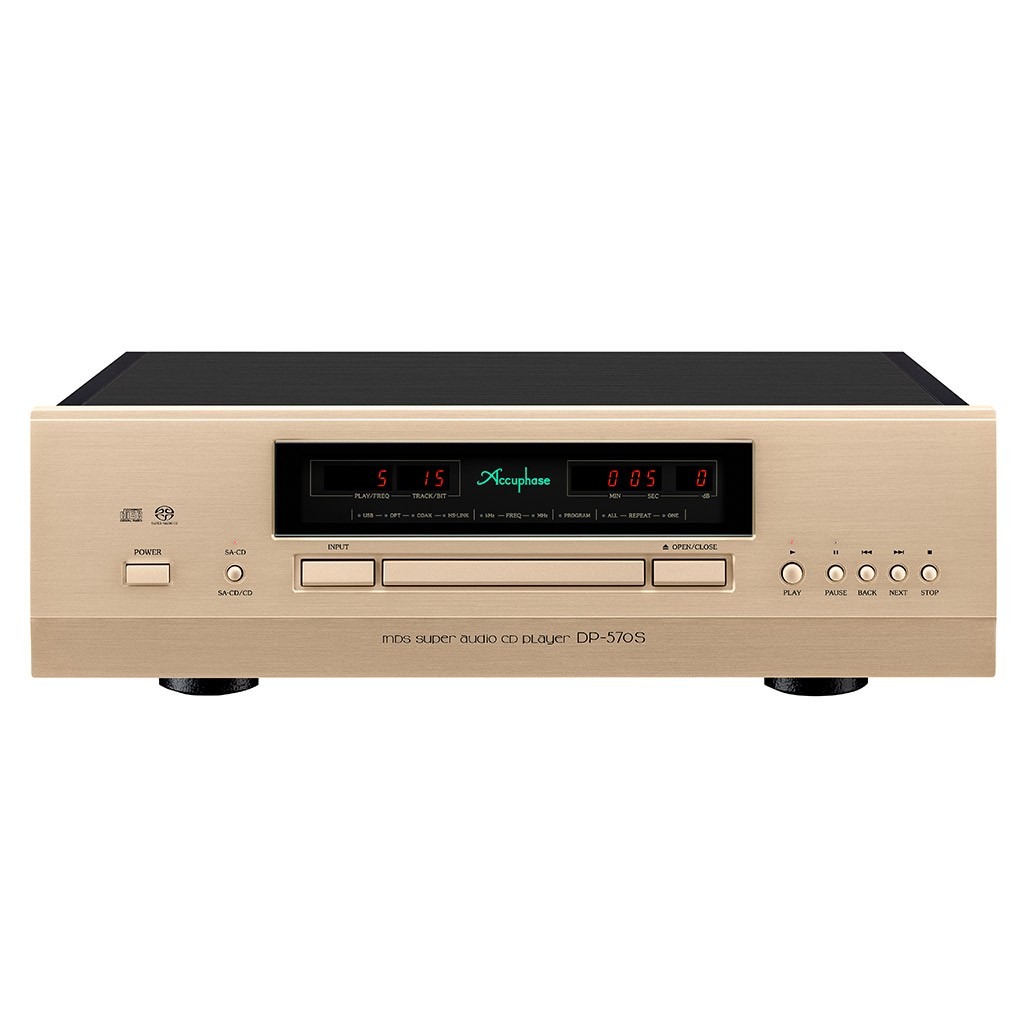
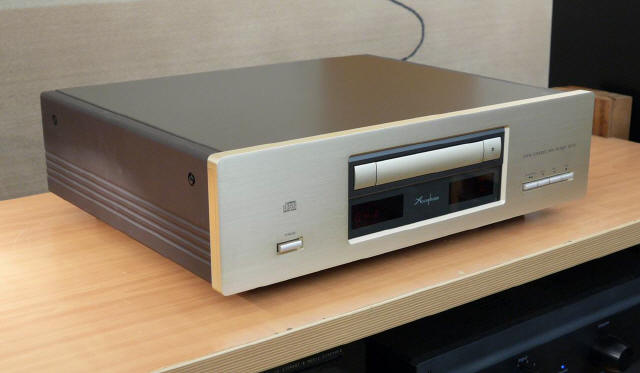
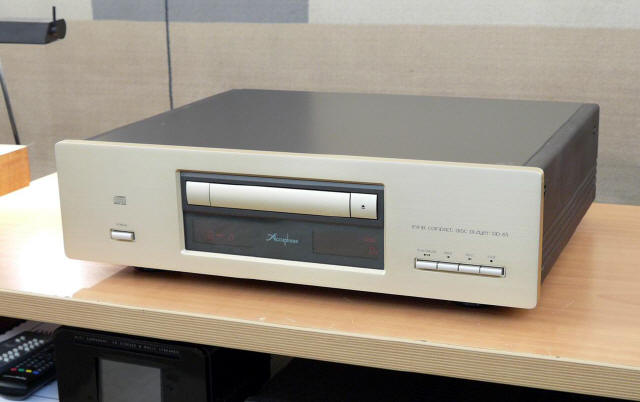
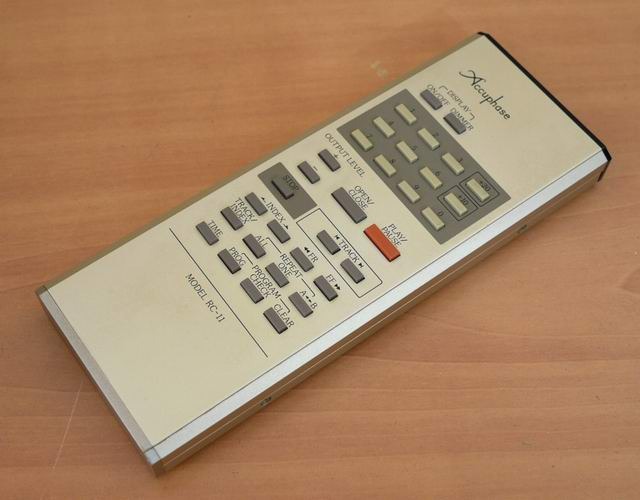
Physically, the unit matches other Accuphase components. It is quite large, rather heavy, and has a strikingly beautiful, champagne-finished front panel. The disc tray is rock solid and opens/closes smoothly and quickly. There are only seven buttons on the front of the unit -- a power switch and disc transport controls. The supplied remote control has many more buttons to control less frequently used functions (direct track access, repeat play, program play, time display, etc.) The remote control can also be used to adjust the volume, which is varied (from 0 to -40 dB in 1-dB steps) in the digital domain using the extra bits of the 20-bit DA converters. (Four DA converters are used in parallel to minimize low-level nonlinearities.) The remote also allows switching between the transport and any other digital sources connected to the digital processor. This means that the DP-65V can actually serve as a digital preamp for an all-digital system (although I prefer to use a preamp), with remote control of volume and source selection. (I have a Sony ES CD player connected to the coax input and a Sony MD deck connected to the optical input. The Sony CDP is also connected directly to the MD deck via a Toslink cable, and finally, the DP-65V is connected to the MD deck via another Toslink cable. This is an extremely flexible setup for digitally dubbing MDs -- from the Sony CD player if I want to dub in the background [with the ability to listen to the CD player or MD deck as desired], or from the Accuphase if I want to dub what I'm listening to.)
I have directly compared the sound of the Accuphase DP-65V against my previous main CD player (a Sony CDP-XA50ES, which is the CDP that I now use for dubbing MDs). I was extremely happy with the sound of the Sony -- until I compared it against the Accuphase. Frankly, I wasn't expecting to hear a big difference between the two units ("All CD players sound the same", after all ;-), but the Accuphase sounded completely different from the Sony playing the same discs in the same system. The difference was NOT subtle! My initial impression was that the Accuphase had a more subdued or recessed treble response than the Sony, but it soon became apparent that this impression was due to a total absence of high-frequency hash or grundge. The treble of the DP-65V is extremely open, transparent, extended, and airy, but also very liquid and smooth, with no grain or harshness. Instruments and voices appear to be placed in front of a thick black velvet curtain, rather than a sheet of Formica. In comparison, the Sony sounds hard or brittle -- mechanical even. The midrange of the Accuphase has the same clean, detailed, but natural character. Imaging is precise and soundstage width and depth are impressive. The bass is less full-sounding or lush [bloated?] than that of the Sony, but seems more extended and powerful at the extreme low end.
In summary, the Accuphase DP-65V is a beautifully built and very attractive CD player. It provides extremely detailed and transparent sound without any hardness or digital nasties. Its overall sonic character is probably best described as organic or natural, in contrast to mechanical or relentless. It somehow magically combines crystal-clear, high-resolution sound with a relaxed, effortless, and unfatiguing presentation.
What it is: CD Player
Manufacturer: Accuphase
Specifications
| Integrated DAC | sì |
|---|---|
| Digital outputs | Toslink, coax |
| Trim | champagne |
| Digital inputs | Toslink, coax, optional BNC, HPC, AES/EBU |
About the brand
Accuphase was founded in 1972 in Tokyo as Kensonic Laboratory, founded by brothers Jiro and Nakaichi Kasuga after leaving Trio-Kenwood, with the goal of manufacturing exclusively audio equipment; Jiro Kasuga also brought in engineers from Marantz and Luxman. The products were already being marketed under the Accuphase brand, from the words "accurate" and "phase," and on its tenth anniversary, the company also took the name, becoming Accuphase Laboratory. Its headquarters have been in Yokohama since 1973; Kenwood remained part-owner until the mid-1990s.
The catalog stands out for its long technical continuity. The AAVA volume control replaces the potentiometer with a voltage-to-current conversion: the signal is divided into 16 weighted currents, activated or excluded by a microprocessor depending on the knob's position, so the impedance does not change with the volume and the noise and frequency response remain constant. In the higher-end models, the Balanced AAVA version operates in a balanced configuration from input to output. Many integrated amplifiers and preamplifiers have slots for optional boards such as the DAC-60 converter, with USB, optical, and coaxial inputs, or the AD-60 phono stage, switchable between MM and MC; the amplification range is divided between class A and class AB.
Among the integrated amplifiers, we have the E-800S and the E-700 in class A, the latter 35 watts into 8 ohms with MOS-FET amplifiers, and the class AB series with the E-3000, 100 watts into 8 ohms, the E-4000, E-5000 and E-6000, the most powerful of the range. For those who prefer separate electronics, there are the C-2300, C-2900 and C-3900S preamplifiers, the C-57 balanced phono stage, the A-48S, A-80 and A-300 class A power amplifiers and the P-4600 class AB, 150 watts into 8 ohms, and the P-7500, 300 watts. The sources are the DP-450 CD player, the DP-570S and DP-770 SACD players and the DC-500 converter; the catalogue is completed by the DF-75 digital crossover, the DG-68 equalizer, the PS-550 and PS-1250 Clean Power Supply power supplies and the DAC-60, AD-60 and Line-10 cards.
The first choice is between class A and class AB. The E-700 and E-800S integrated amplifiers and the A-series power amplifiers deliver fewer watts but still operate in class A, and are recommended for high-sensitivity speakers and listening at home volume; with more demanding speakers or large rooms, the E-5000 and E-6000 or the P-4600 and P-7500 power amplifiers offer a larger power reserve. Those starting with an integrated amplifier can later add the DAC-60 or AD-60 cards instead of buying an external converter or phono stage, while those with a hybrid disc collection should look at the DP-570S or DP-770, as the DP-450 only plays CDs.
For already complete systems, the DG-68 equalizer measures the room acoustics and compensates for them, automatically or manually; the DF-75 digital crossover is instead useful for those who want to multi-amplify multi-way speakers, with a power amplifier for each section.
In our showroom in Carpi, you can listen to Accuphase products in the listening room, compare them with your speakers, and receive advice on matching them. The same models can be ordered online at audiocostruzioni.com with shipping, asking us for advice first by email if necessary.
FAQ
This product is in the Archive section and is no longer available for sale. Visit our catalog to discover current models or contact us for personalized advice on a similar product.
When a model goes out of production, is sold permanently, or is no longer available from our suppliers, we move it to the Archive section. We maintain the page online for informational purposes: users and collectors can continue to consult specifications, descriptions, and reference images.
Probably. Visit our product catalog to discover equivalent models currently on sale: you can filter by category, brand, and price range to find the best alternative for your system.
We do not carry used or vintage products. To discover currently available alternatives, click the "Go to catalog" button at the top right of the page, or go directly to our product catalog to browse the models for sale.
We do not directly handle technical assistance or spare parts. On our support page , you'll find tables with direct contact information for service centers and specialized repairers: you can contact them directly to discuss repairs or spare parts availability.