




Description
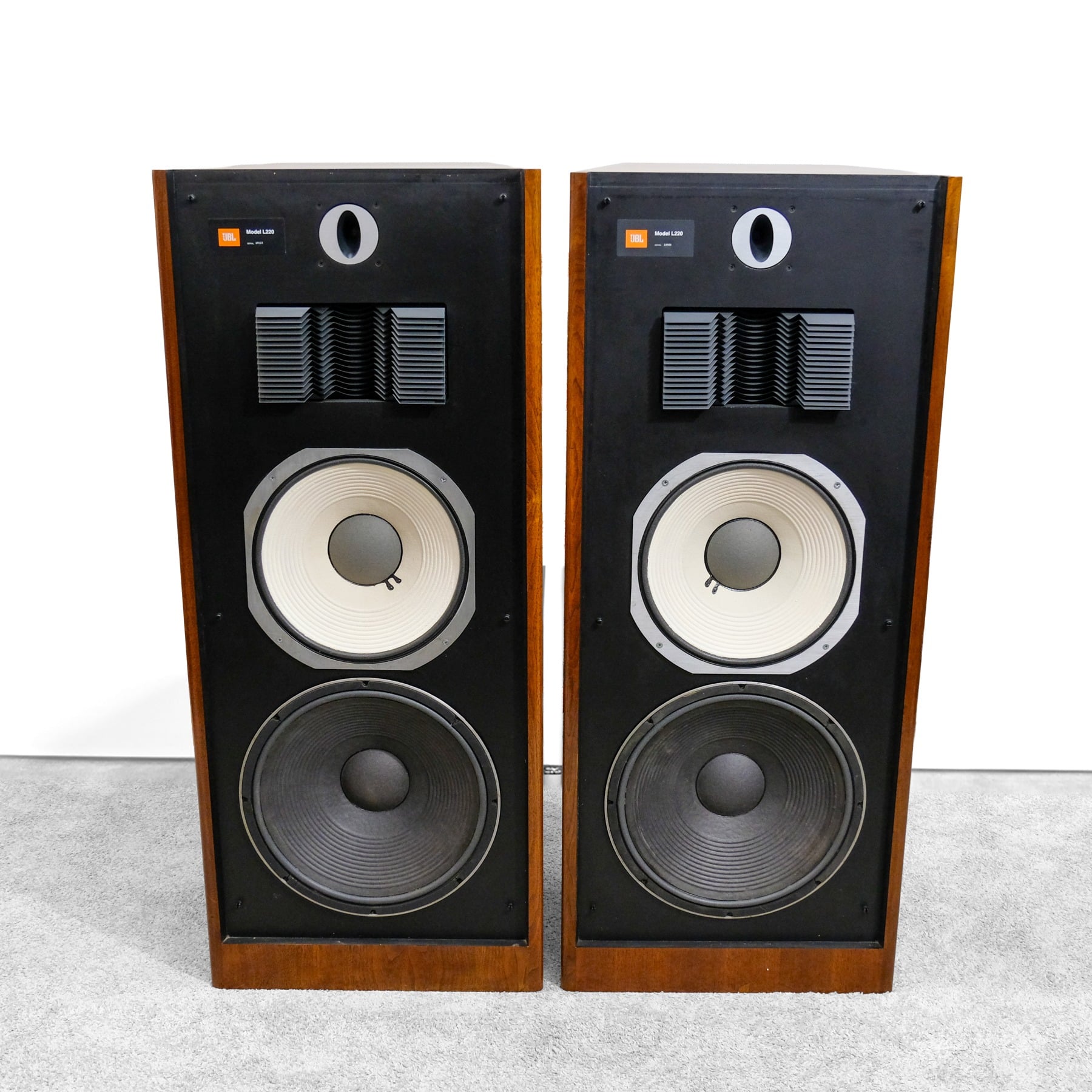
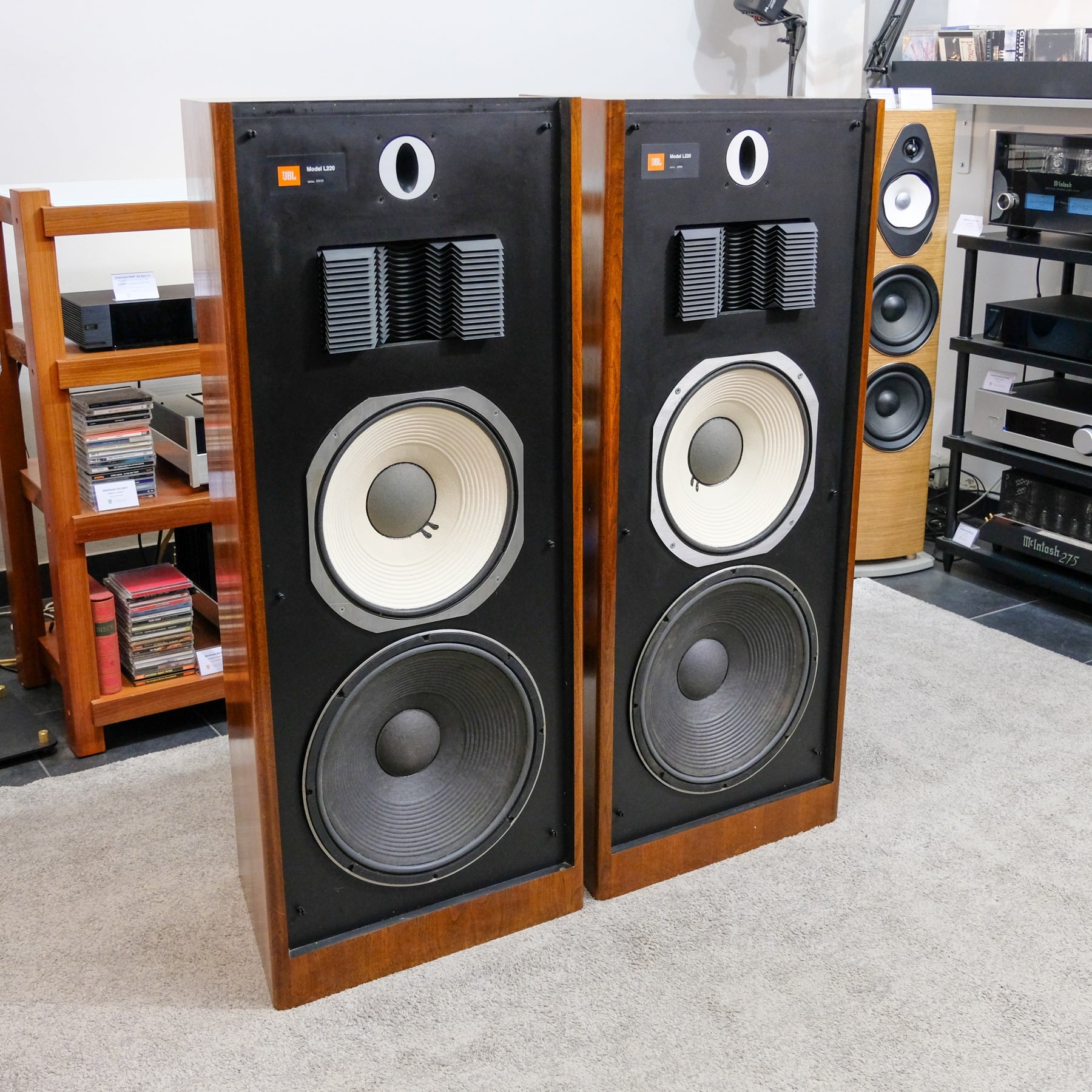
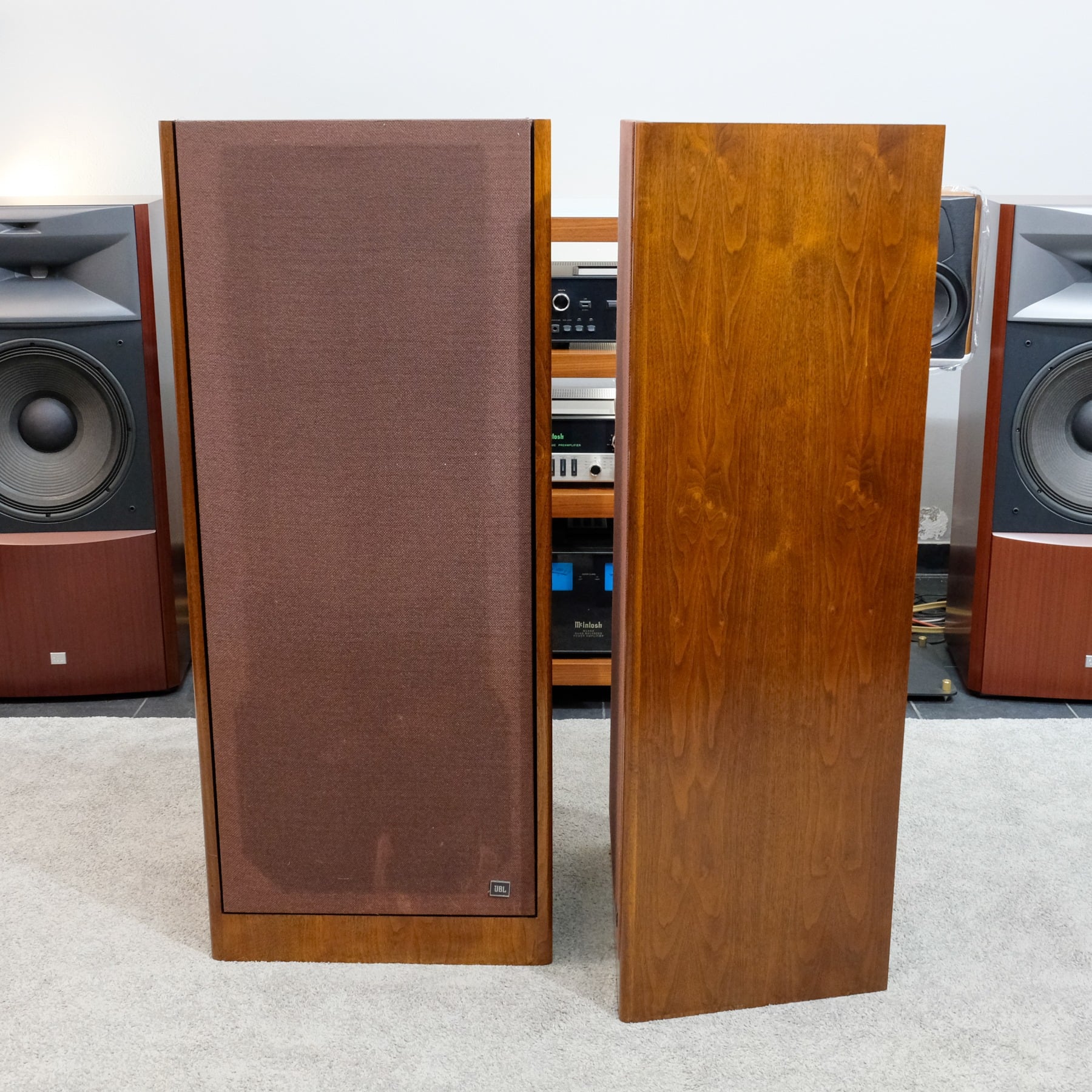
The JBL L220, also known as the Oracle , is one of the most recognizable floorstanding hi-fi speakers of the late 1970s. It was born from the direct transfer of JBL studio monitor technology to home listening, in a column just over four feet tall with vertical baffles.
The configuration is a 3-way with a passive radiator . The low range is driven by the 36 cm LE14A woofer, the same one mounted on the L101, with an Alnico V magnet and a 10,2 cm voice coil wound with edgewise copper tape: a solution that prioritizes transient response and efficiency. It is flanked by the 38 cm PR15C passive radiator , derived from the Olympus S508 and approximately 30% larger in diameter than the woofer. It is this pair that extends the low range without resorting to a traditional reflex port, with a full and articulated bass that many users still describe today as fully extended down to the 30 Hz region.
The medium frequency is entrusted to the cone LE5-9 13cm, housed in a separate chamber and mounted on a recessed sub-baffle, with acoustic lens front that leads back to the emissionand on the plane of the main baffle and spreads it at a controlled angle. Above opera the horn tweeter 076, the elliptical nicknamed Cat's Eye, with annular diaphragm, phasing plug and exponential horn with elliptical section for directivity control. All the e centersmissionand are aligned vertically: the stated goal was the equalization of the arrival times at the baffle and a more stable image localization. The dedicated crossover integrates impedance equalization and correction networks fase around the 800 Hz and 5 kHz crossover points.
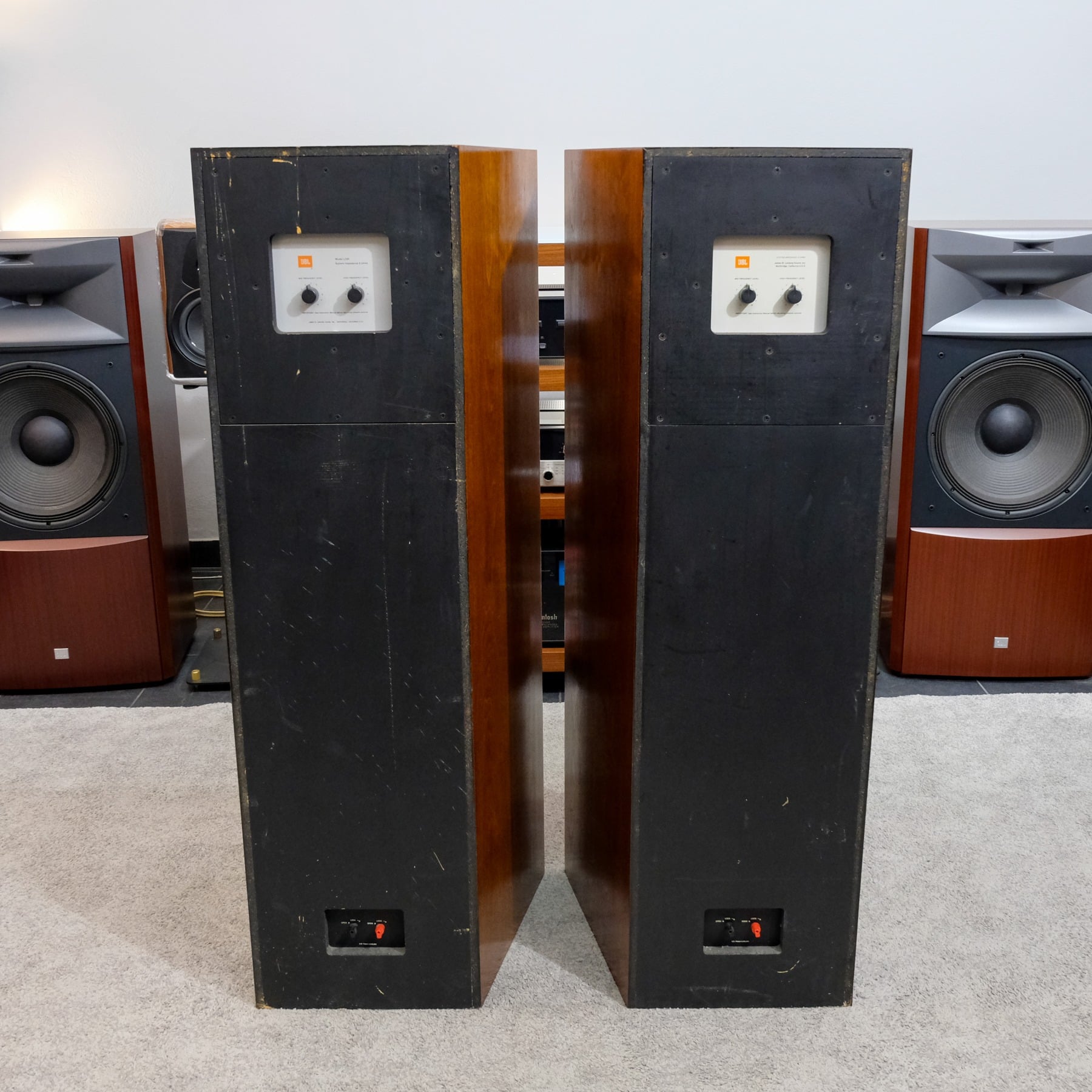
With 90 dB of sensitivity and 8 ohm impedance, the L220 is not a critical load and is compatible with moderately powered amplifiers, provided they are of good quality: a well-sized integrated tube amplifier or a classic solid-state amplifier from the same years are suitable pairings. Anyone wondering what amplifier is needed to drive vintage JBL 3-way speakers will find a reassuring answer here, as the high efficiency reduces the current draw compared to many modern speakers. The mid and high level controls on the front panel allow you to tailor the balance to the room acoustics, a valuable feature in reflective environments.
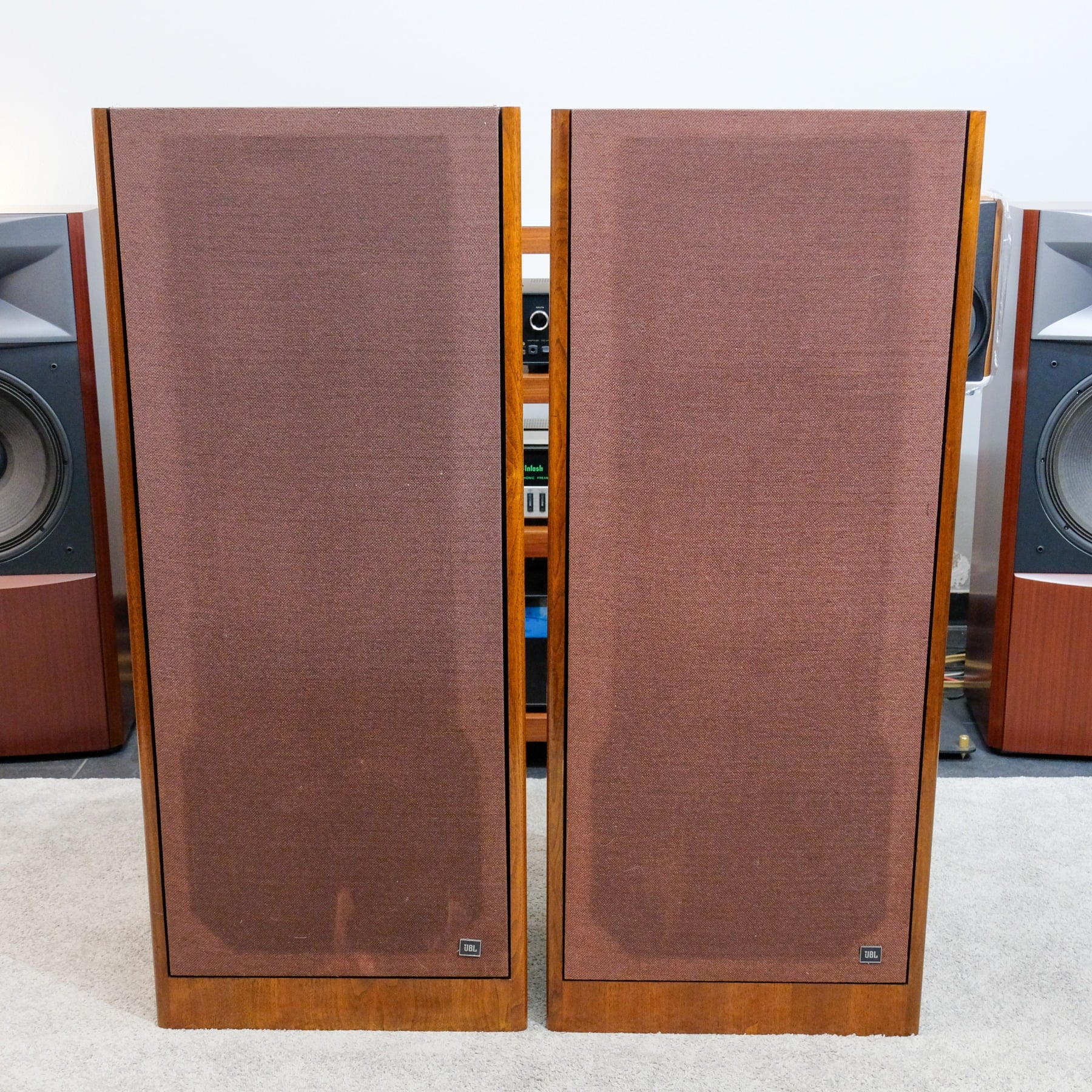
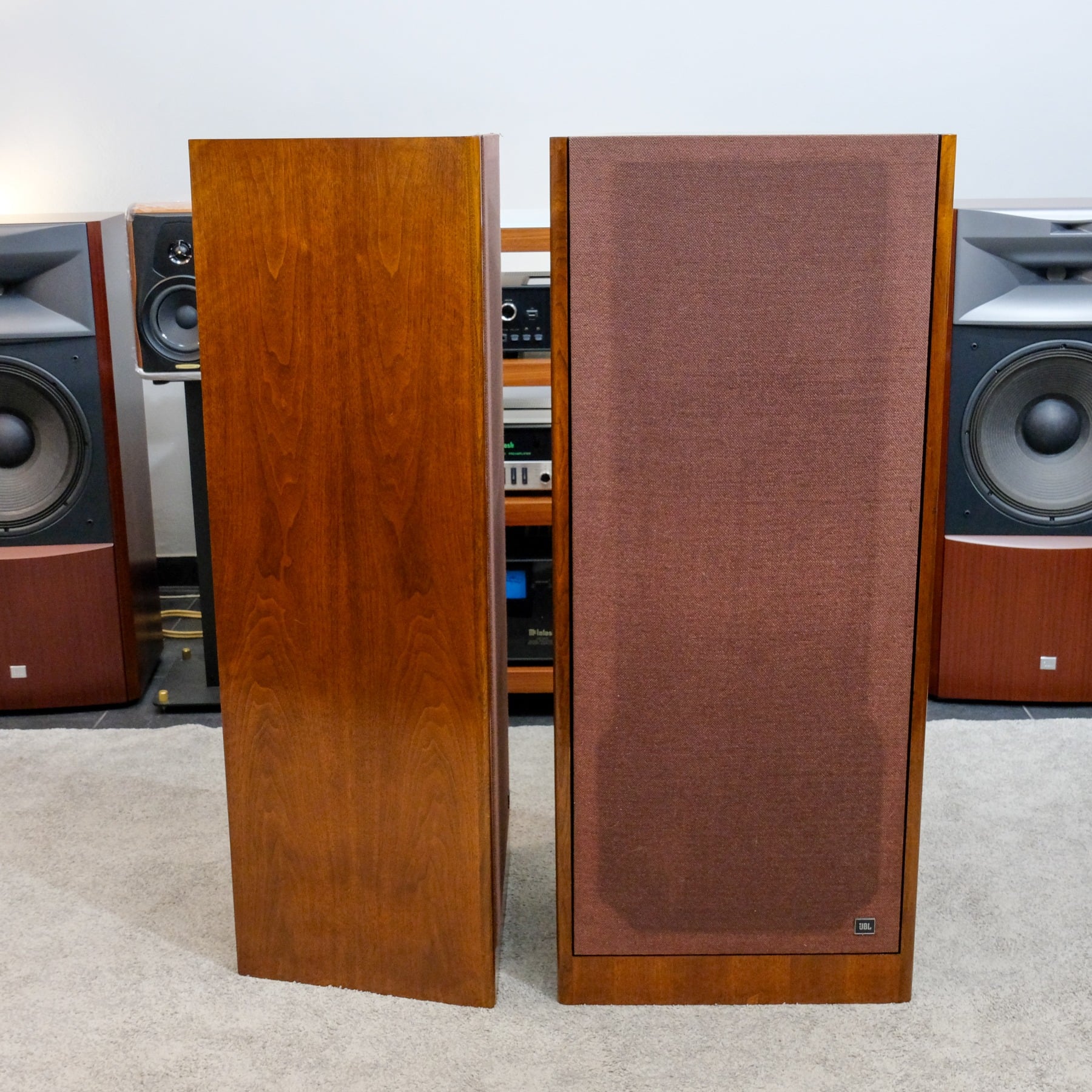
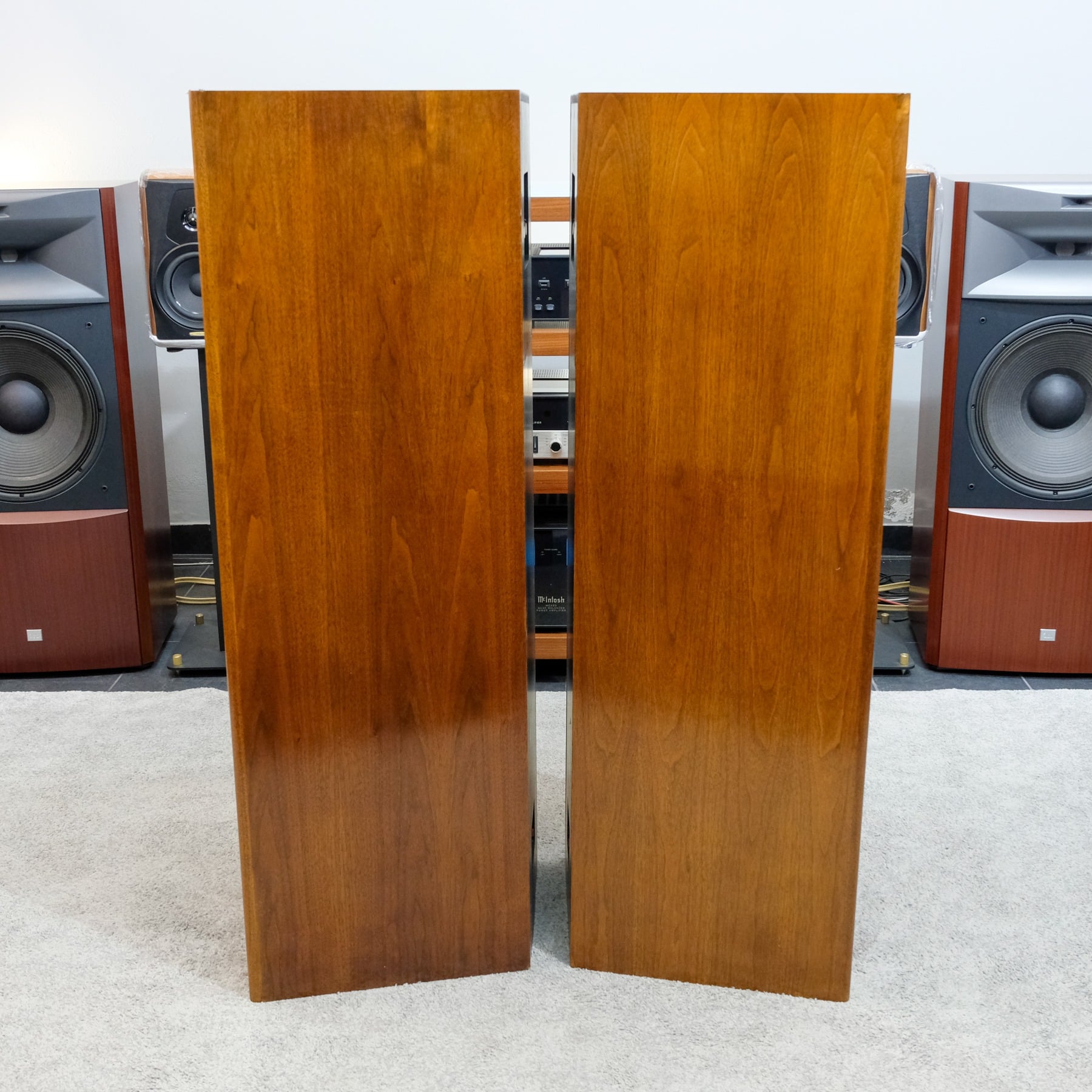
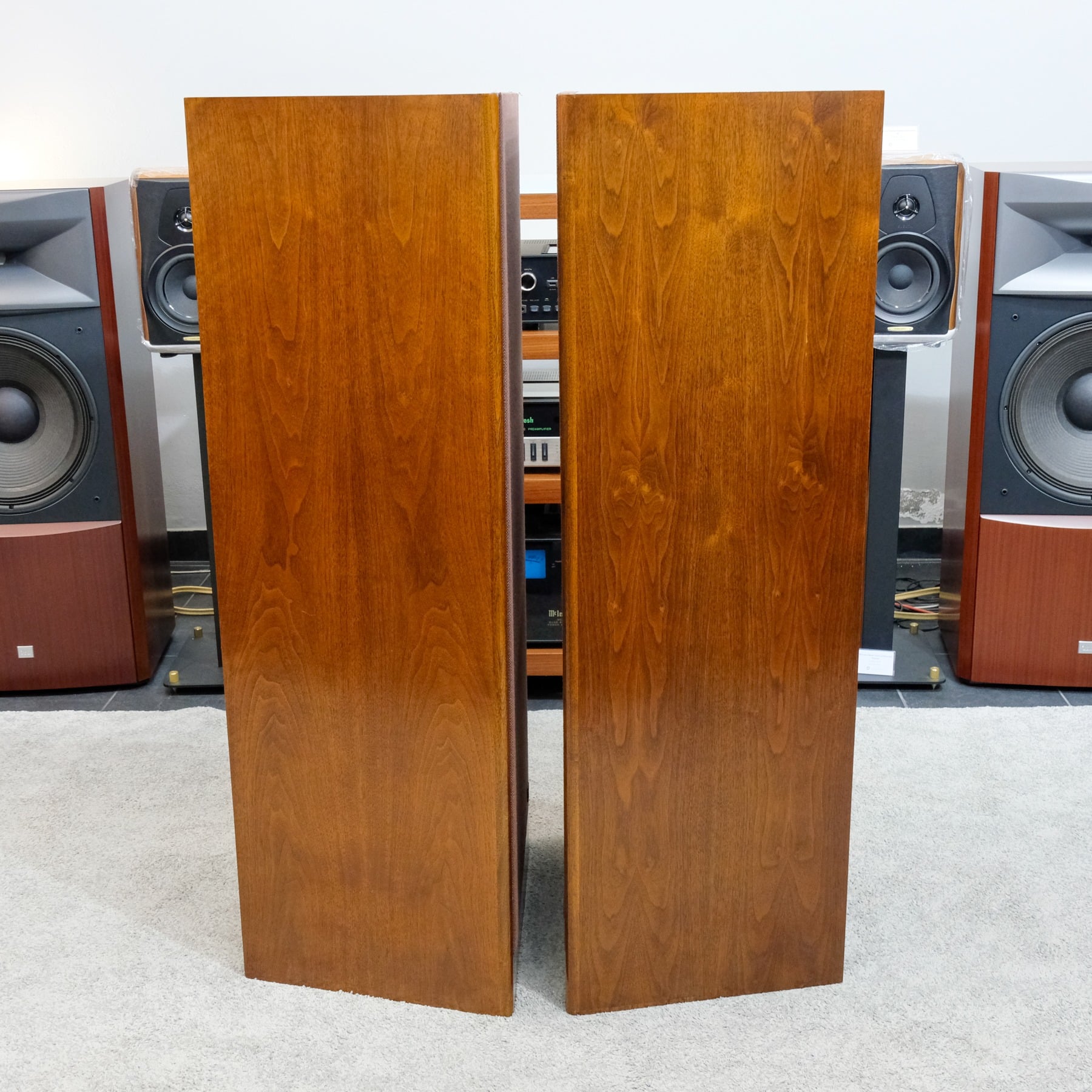
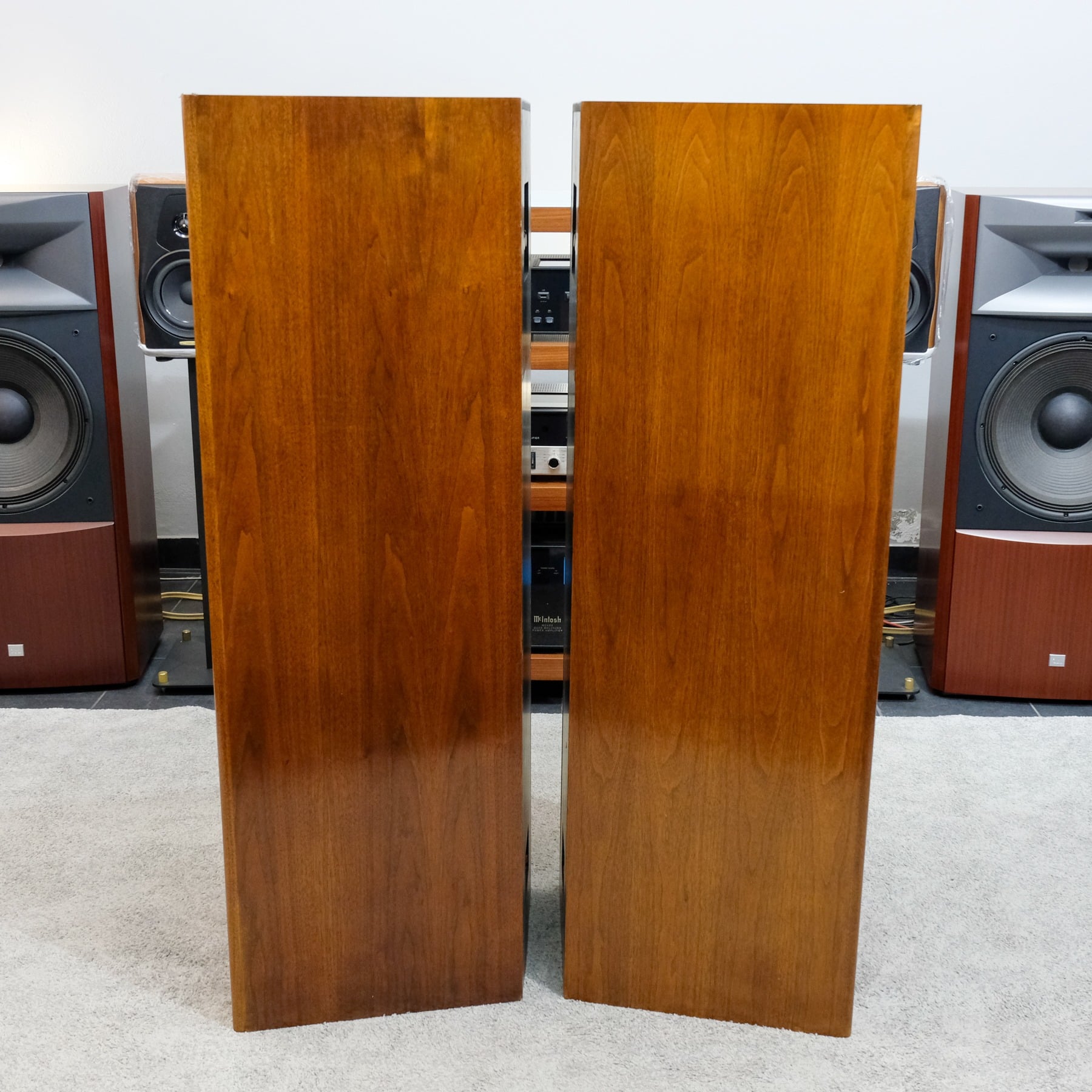
The cabinet has a trapezoidal cross-section, a choice that reduces floor space while maintaining rigidity, with a traditional hand-polished black walnut finish . At 48 kg and over 1.2 m tall, the L220 requires space and a medium to large room to express itself: on orchestral music, acoustic jazz, and big analog rock, it delivers scale, body, and dynamics that are difficult to find in contemporary products of the same price range. This product is no longer in production and is now a popular collector's item on the used market , particularly sought-after in versions with original components.
Specifications
| Diffuser type | passive |
|---|---|
| Sensitivity | 90 dB |
| Nominal impedance | 8 ohm |
| Route configuration | 3 |
| Cabinet type | bass reflex |
| Woofer | 1 x 36cm cone (LE14A), Alnico V magnet, 10,2cm voice coil |
| Midrange | 1 x 13cm cone (LE5-9) with acoustic lens |
| Tweet | 1 x elliptical horn (076) |
| Cabinet material | hand-polished black walnut |
| Crossover frequency | 800 - 5.000 Hz |
| Maximum manageable power | 75 |
| Dimensioni | W 51,2 × H 122,5 × D 39 cm |
| Weight | 48 kg |
| Year of production | 1978 |
| Trim | hand-polished black walnut |
About the brand
JBL was founded in 1946 in Los Angeles by James Bullough Lansing, an engineer and speaker designer, after leaving Altec Lansing. After his death in 1949, the company was led by William Thomas, who shortened the name to JBL; in 1969, it was acquired by Sidney Harman, co-founder of Harman Kardon. Harman International has been part of Samsung Electronics since 2017. The American brand operates in both professional audio and home hi-fi.
From the professional world, JBL has brought compression drivers combined with horns and waveguides into the home. In the 4300 Series monitors, the compression driver works with the patented HDI (High-Definition Imaging) horn. The 4367 is the most complete example: a 15-inch 2216Nd dual-coil woofer, derived from the M2 studio monitor, and the 3-inch D2430K dual-annular diaphragm compression driver, mounted on the HDI horn, with a declared sensitivity of 94 dB.
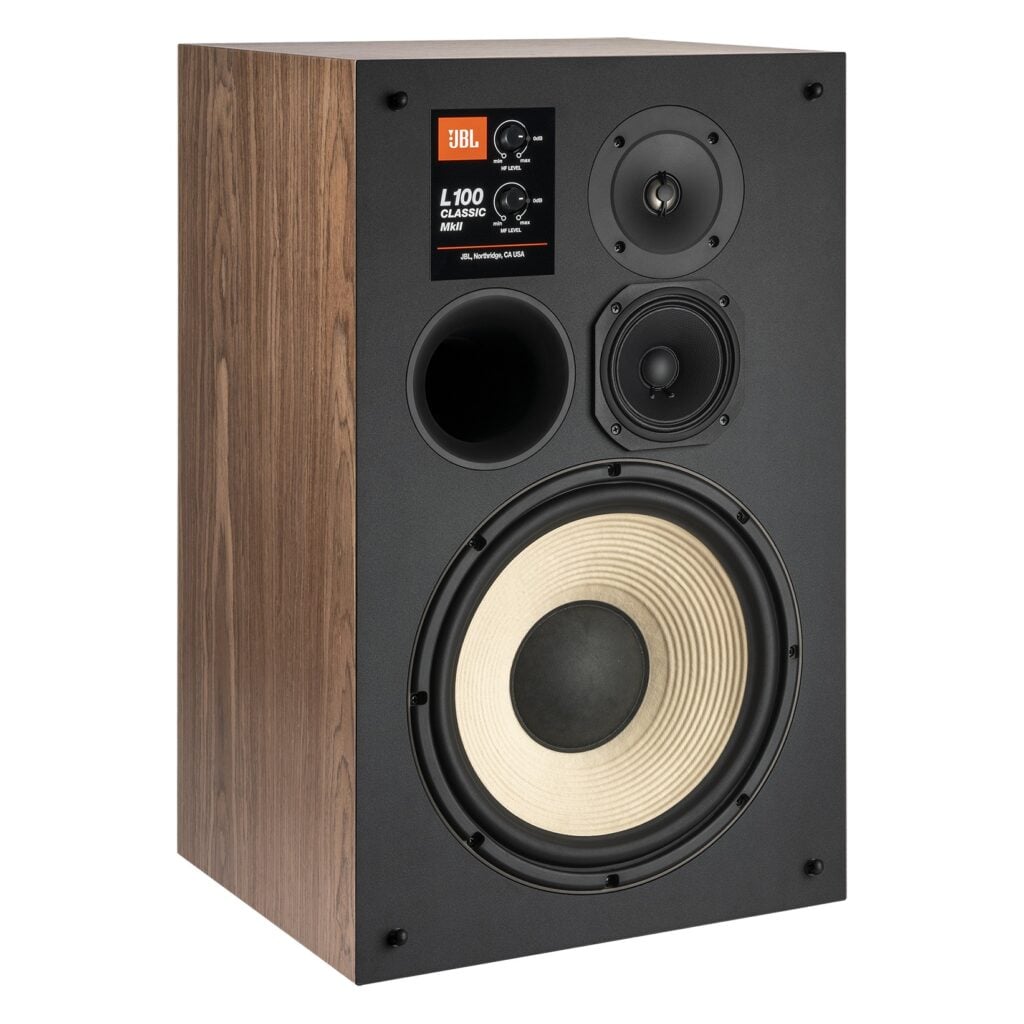
The Studio Monitors range includes the passive 4309, 4349, and 4367 models, and the active 4305P and 4329P speakers. The Classic Series echoes the aesthetics of the historic models: the L100 Classic MkII, inspired by the L100 Century from the 1970s, features a 25mm titanium dome tweeter, a revised crossover with user-adjustable midrange and treble attenuators, and dual binding posts for bi-wiring and bi-amping. It also features the L82 Classic MkII, the L52 Classic, the L10cs subwoofer, and the L42ms, an integrated music system with streaming and HDMI ARC input. The MP350 Classic streamer, Roon Ready and compatible with Spotify and Tidal Connect, AirPlay 2, and Chromecast, and the CD350 Classic player complete the lineup.
For stereo listening and home theater, there are the Stage 2 and Studio 6 series. In the Stage 2, the 25 mm anodized aluminum dome tweeter operates in a second-generation HDI waveguide; the 260F and 280F towers, with two 6,5-inch and one 8-inch woofers, are ready for Dolby Atmos 240H modules. In the Studio 6, the three-way Studio 698 uses a 1-inch compression driver behind the HDI waveguide. They are driven by the MA series audio-video receivers, from the MA310 to the MA9100HP.
The choice depends primarily on space. In a small or medium-sized room, the 4309 and the L82 Classic MkII are the most manageable monitors, best used on dedicated stands like the JS-80, JS-120, and JS-150. Moving up to the 4349 and the L100 Classic MkII, more space is needed, and the L100's attenuators help adapt the response to the room. The 4367 is designed for large rooms and, thanks to its high sensitivity, can also handle low-power amplifiers.
For those seeking simplicity, the 4305P and 4329P offer solutions without an external amplifier; the L42ms, with its HDMI ARC input, can also be connected to a TV. For a multichannel system, it's best to start with a pair of Stage 2 or Studio 6 towers and complete with a center speaker, surround speaker, and subwoofer from the same series, for a coherent sound, connecting everything to an MA receiver.
In our showroom in Carpi, you can listen to JBL speakers in the listening room and receive advice on matching them with your electronics. The same models can be ordered online at audiocostruzioni.com with shipping, asking us for advice first by email if necessary.
FAQ
This product is in the Archive section and is no longer available for sale. Visit our catalog to discover current models or contact us for personalized advice on a similar product.
When a model goes out of production, is sold permanently, or is no longer available from our suppliers, we move it to the Archive section. We maintain the page online for informational purposes: users and collectors can continue to consult specifications, descriptions, and reference images.
Probably. Visit our product catalog to discover equivalent models currently on sale: you can filter by category, brand, and price range to find the best alternative for your system.
We do not carry used or vintage products. To discover currently available alternatives, click the "Go to catalog" button at the top right of the page, or go directly to our product catalog to browse the models for sale.
We do not directly handle technical assistance or spare parts. On our support page , you'll find tables with direct contact information for service centers and specialized repairers: you can contact them directly to discuss repairs or spare parts availability.
It might interest you
-
Nuovo


-
Nuovo

ProAc Response DT8
da 3.790 €Diffusori da pavimentoColors: White, Black Ash, Cherry, Ebony, Mahogany, Walnut, Oak, Rosewood -