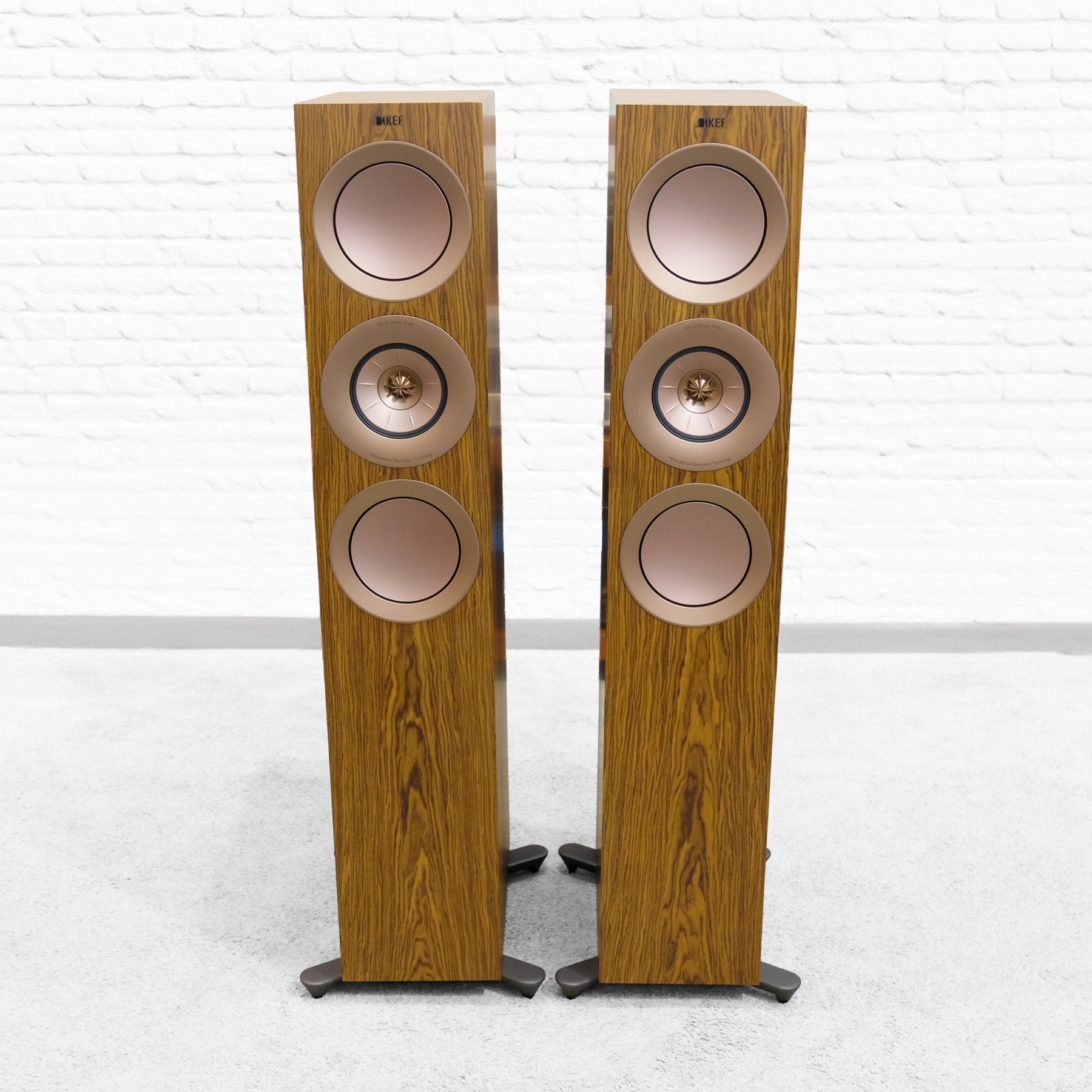
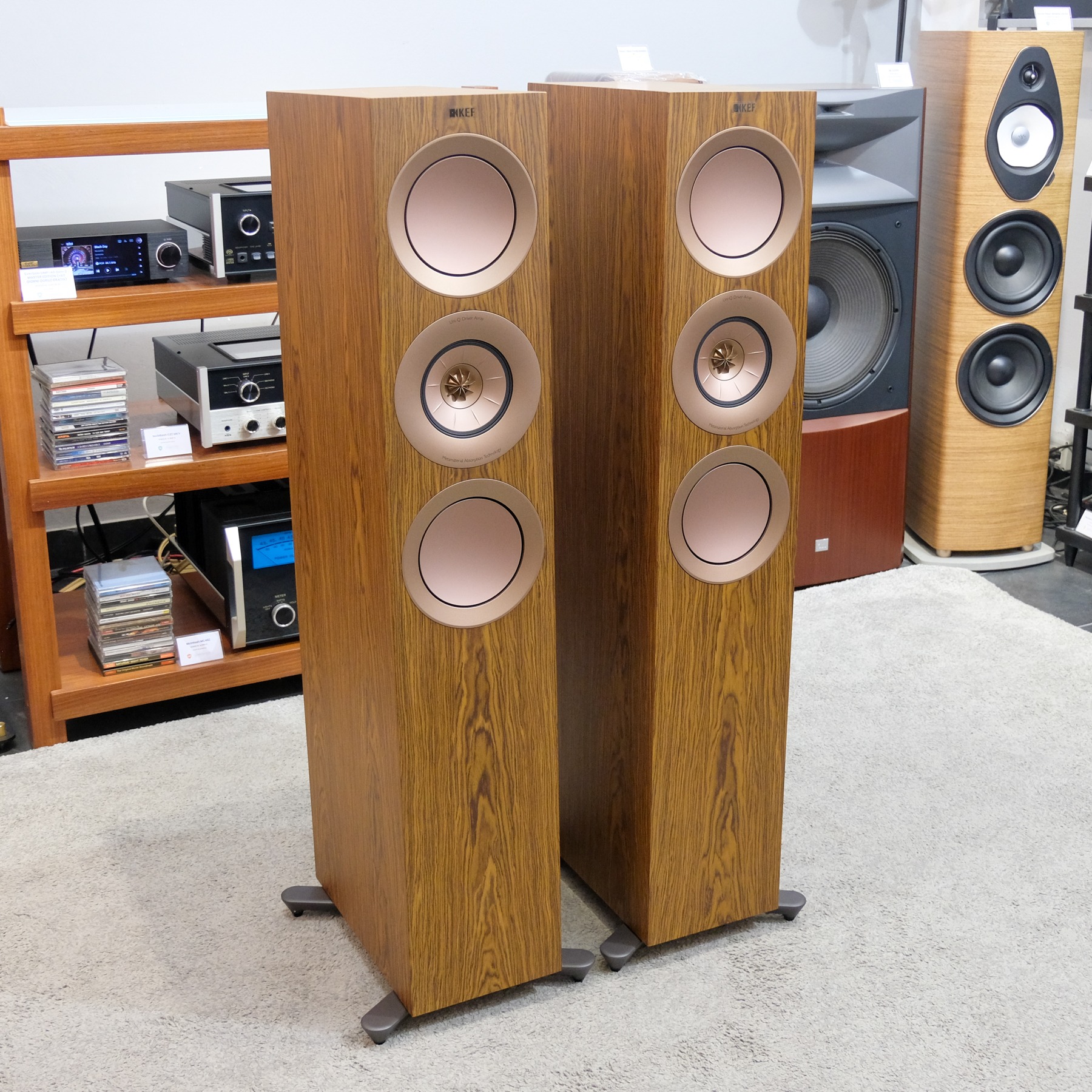
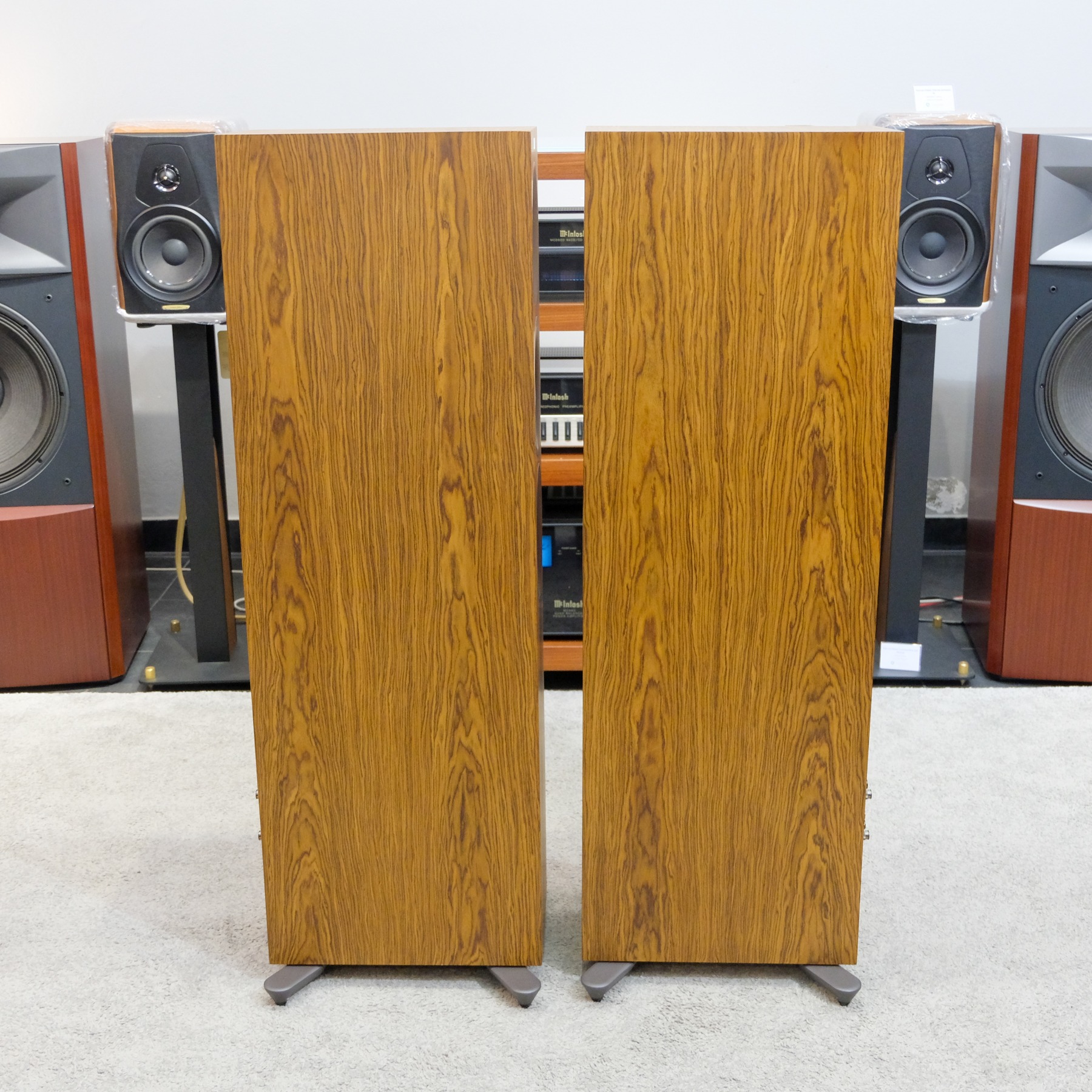
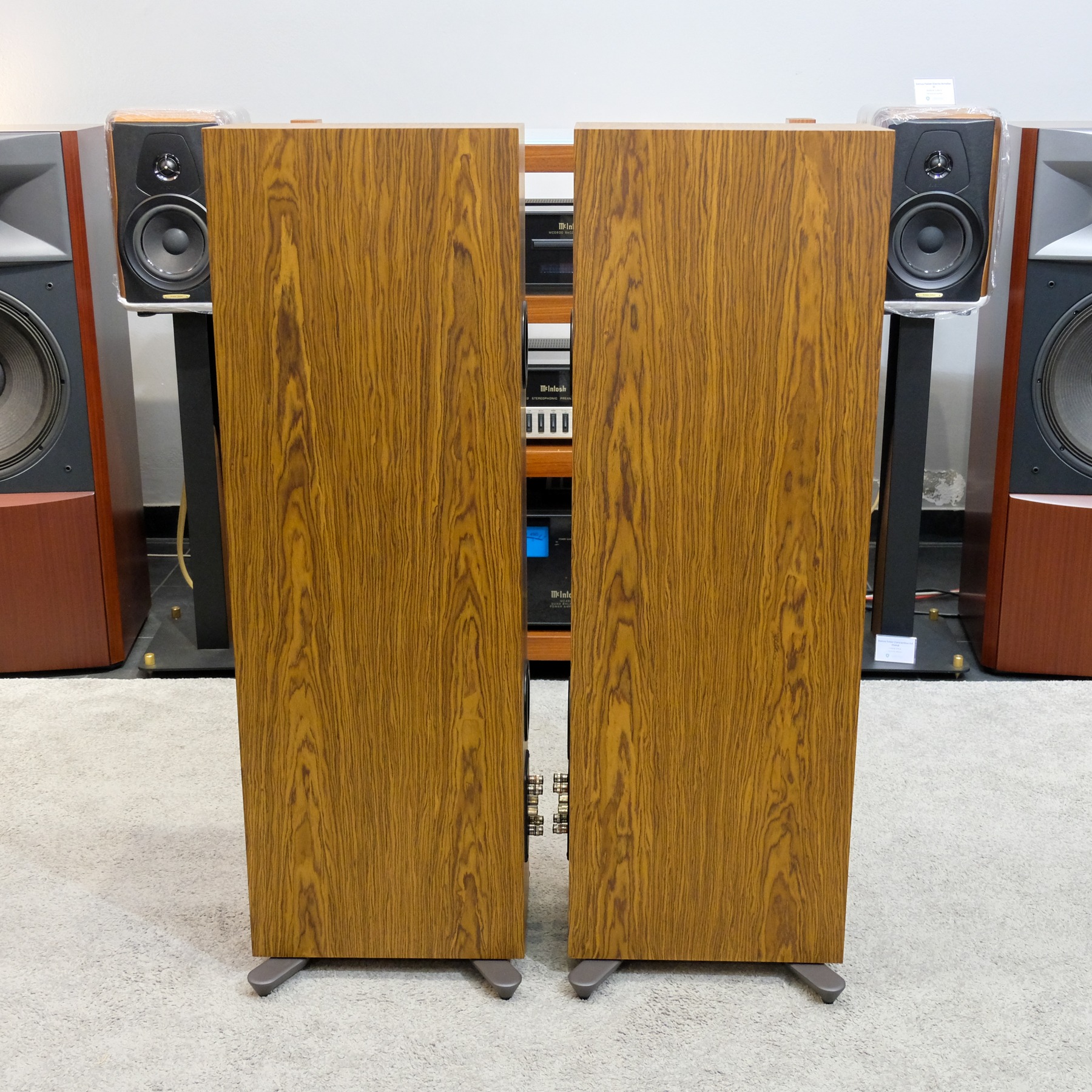
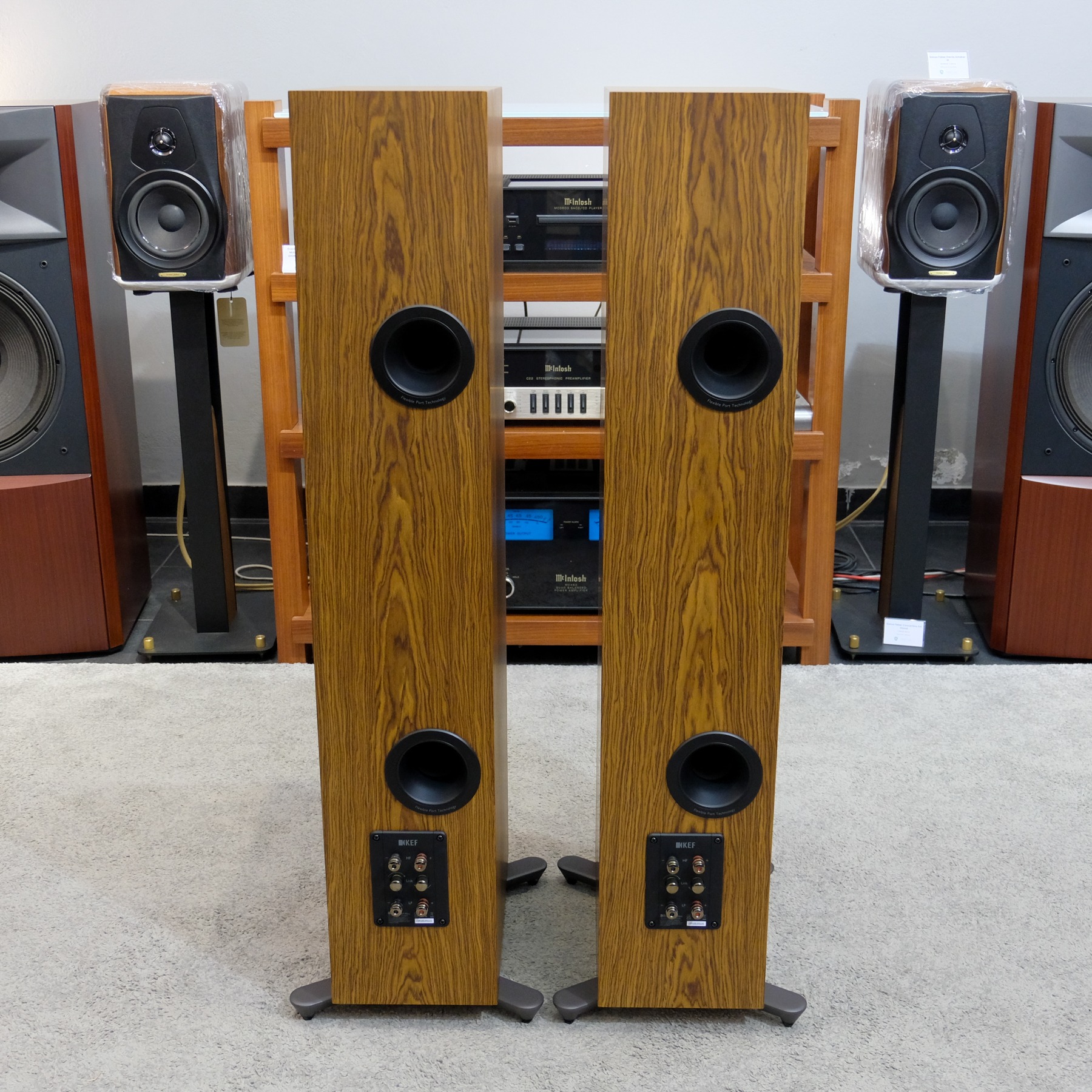
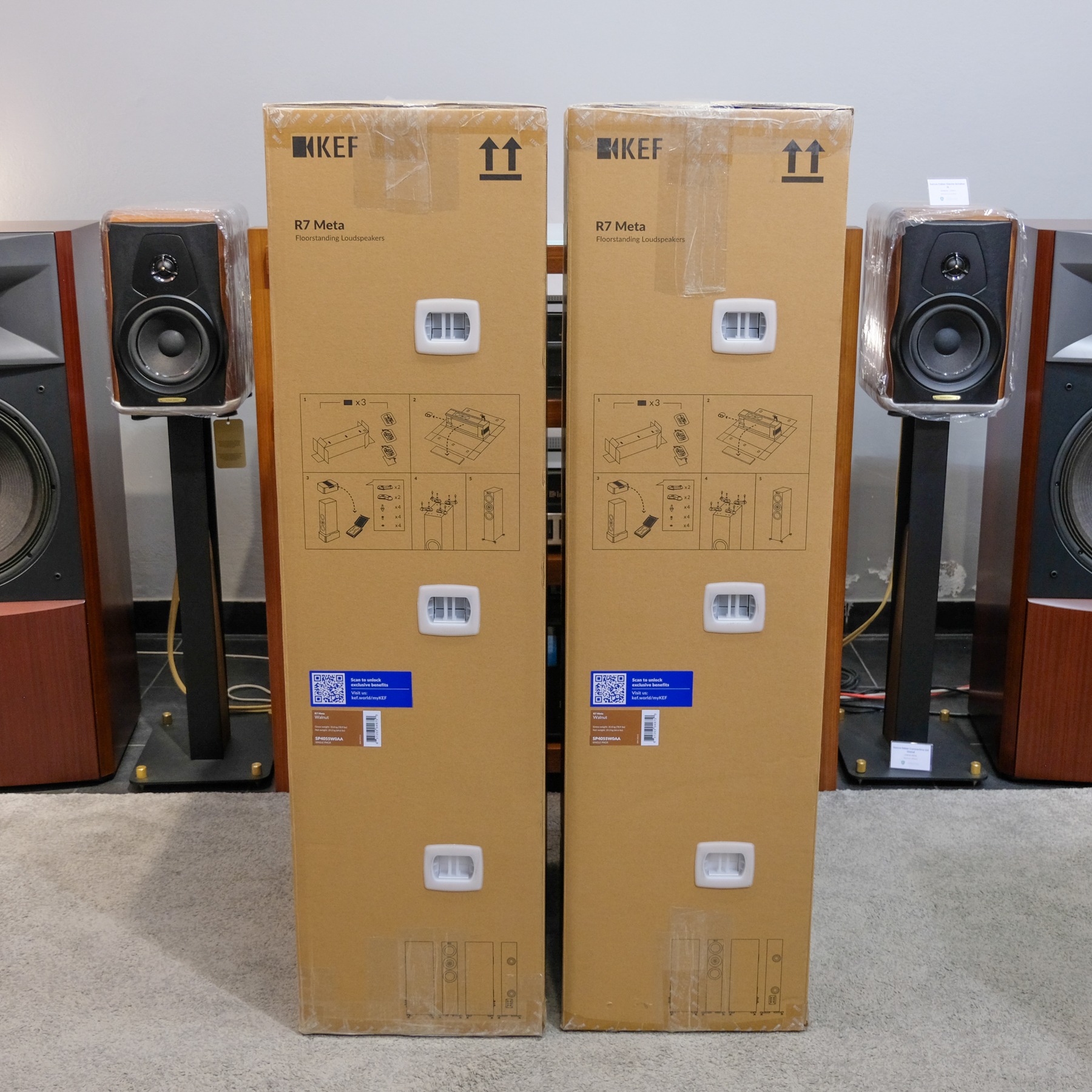
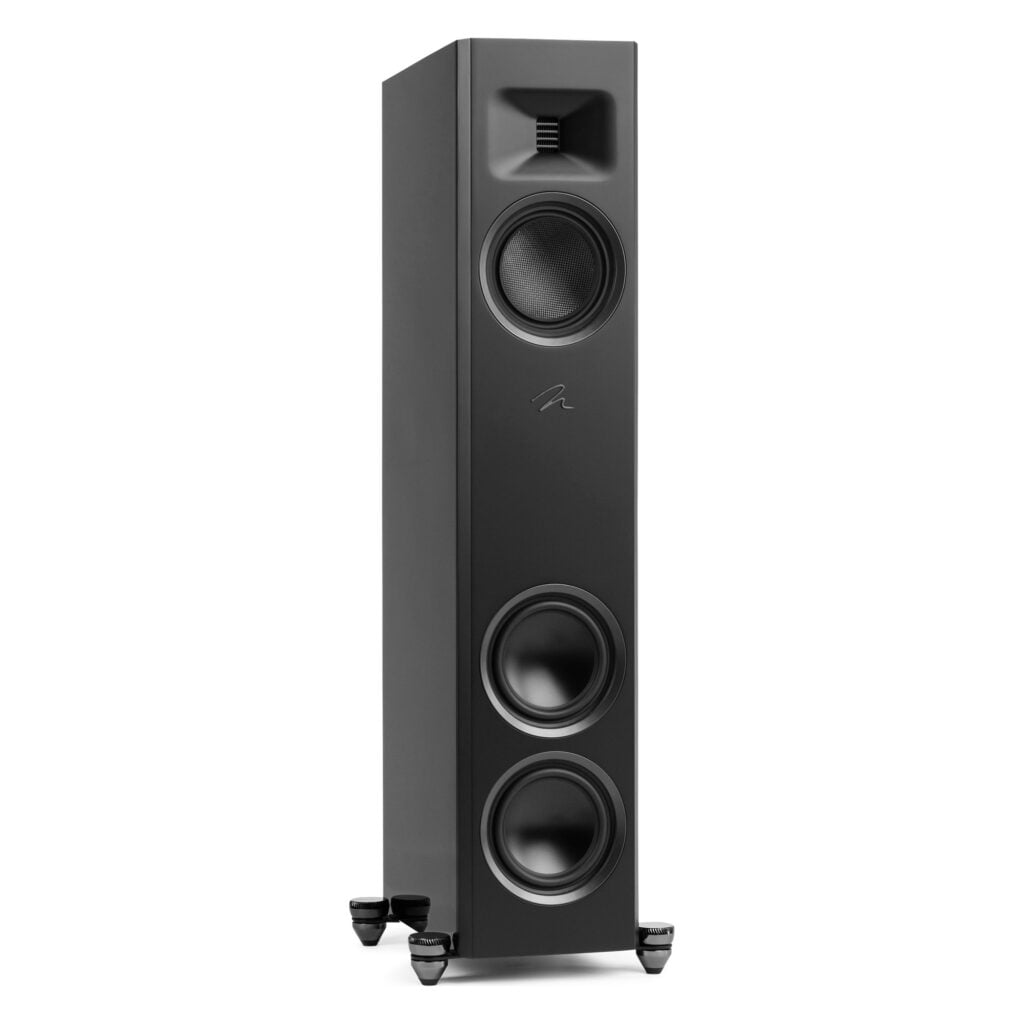
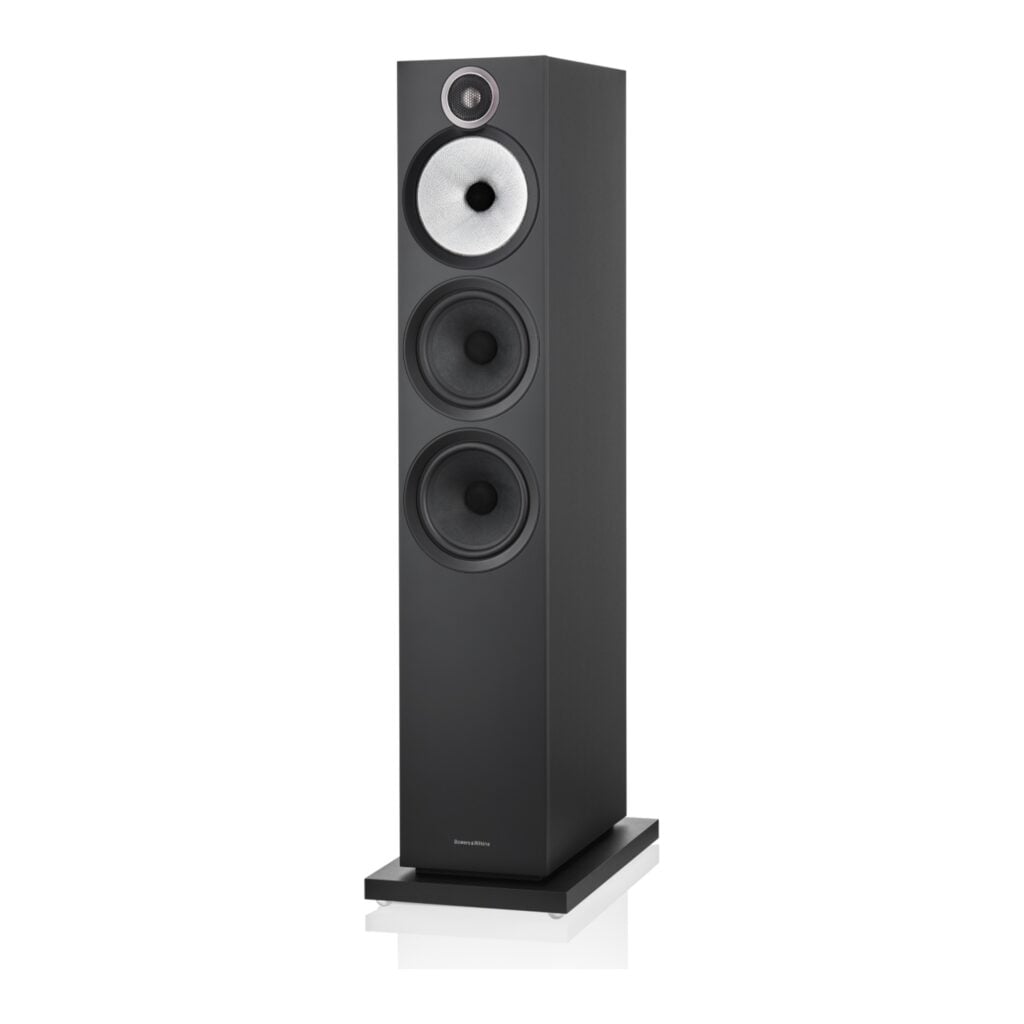
The KEF R7 Meta are the mid-sized floorstanding hi-fi speakers in the R Series, sitting between the more compact R5 Meta and the flagship R11 Meta. The three-way bass reflex design is built around the 12th generation Uni-Q driver , with the 25mm ventilated aluminium dome tweeter positioned at the acoustic centre of the 125mm midrange cone. The two units therefore work as a single point source: dispersion remains uniform even off-axis and the ideal listening point is significantly widened, a real advantage in living rooms where there is never just one sitting position.
Behind the Uni-Q is the Metamaterial Absorption Technology (MAT), the acoustic labyrinth developed by KEF that absorbs 99% of the emissionand rear of the tweeter. Compared to traditional damping solutions, which stop at around 60%, the result is a high range free of that residual resonance component that creates harshness at sustained levels. On cymbals, female vocals, and strings, the difference is especially noticeable during extended listening sessions, where fatigue is significantly reduced.
The bass section relies on two 165 mm hybrid aluminum woofers, with increased excursion and rear reflex loading, a declared response up to 48 Hz at ±3 dB and a typical extension in room of 27 Hz at -6 dB . In practice, in a medium-sized room the speaker works well even without a subwoofer, while remaining ready to integrate with a KC92 in 2.1 configurations. The crossover frequencies are set at 400 Hz and 2,4 kHz.
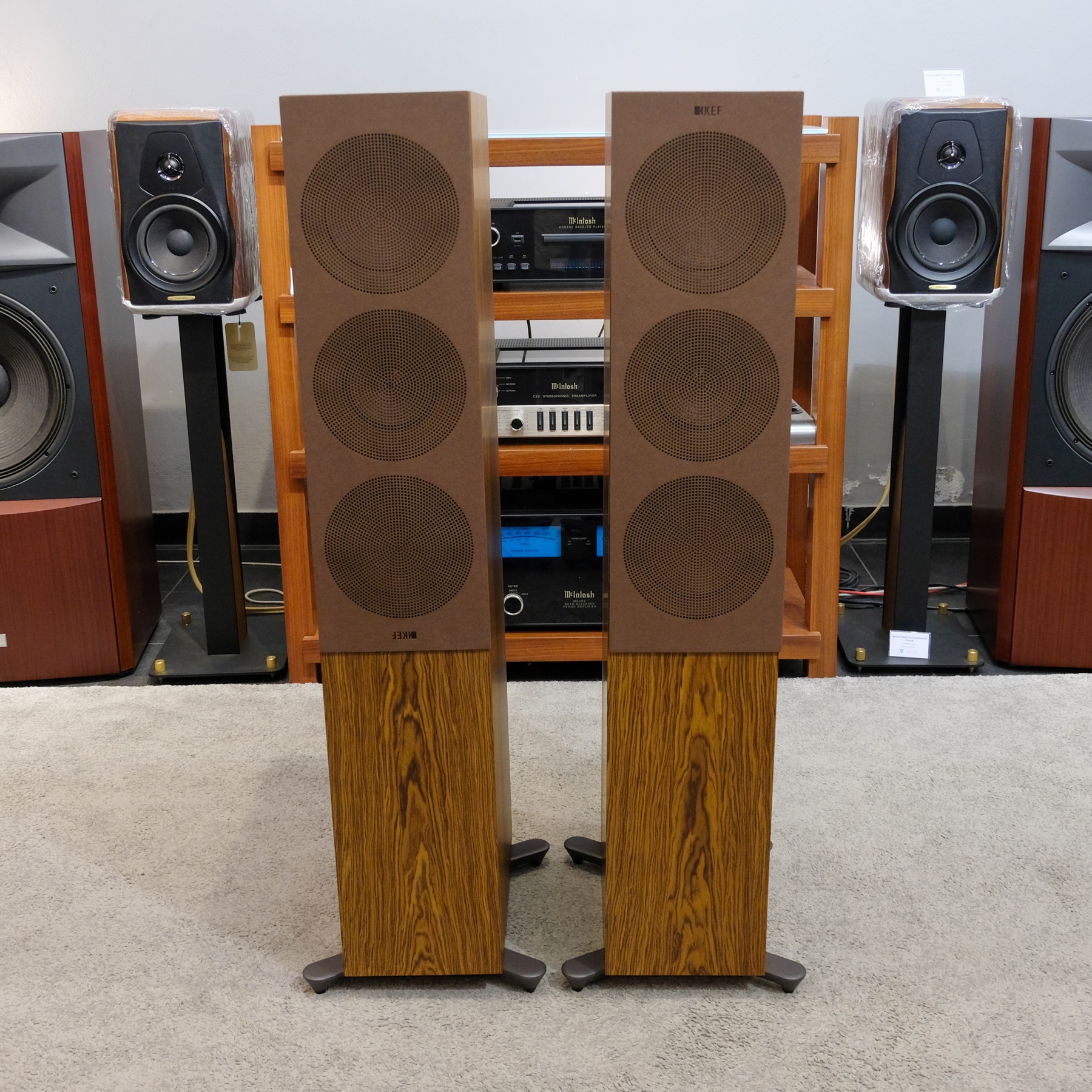
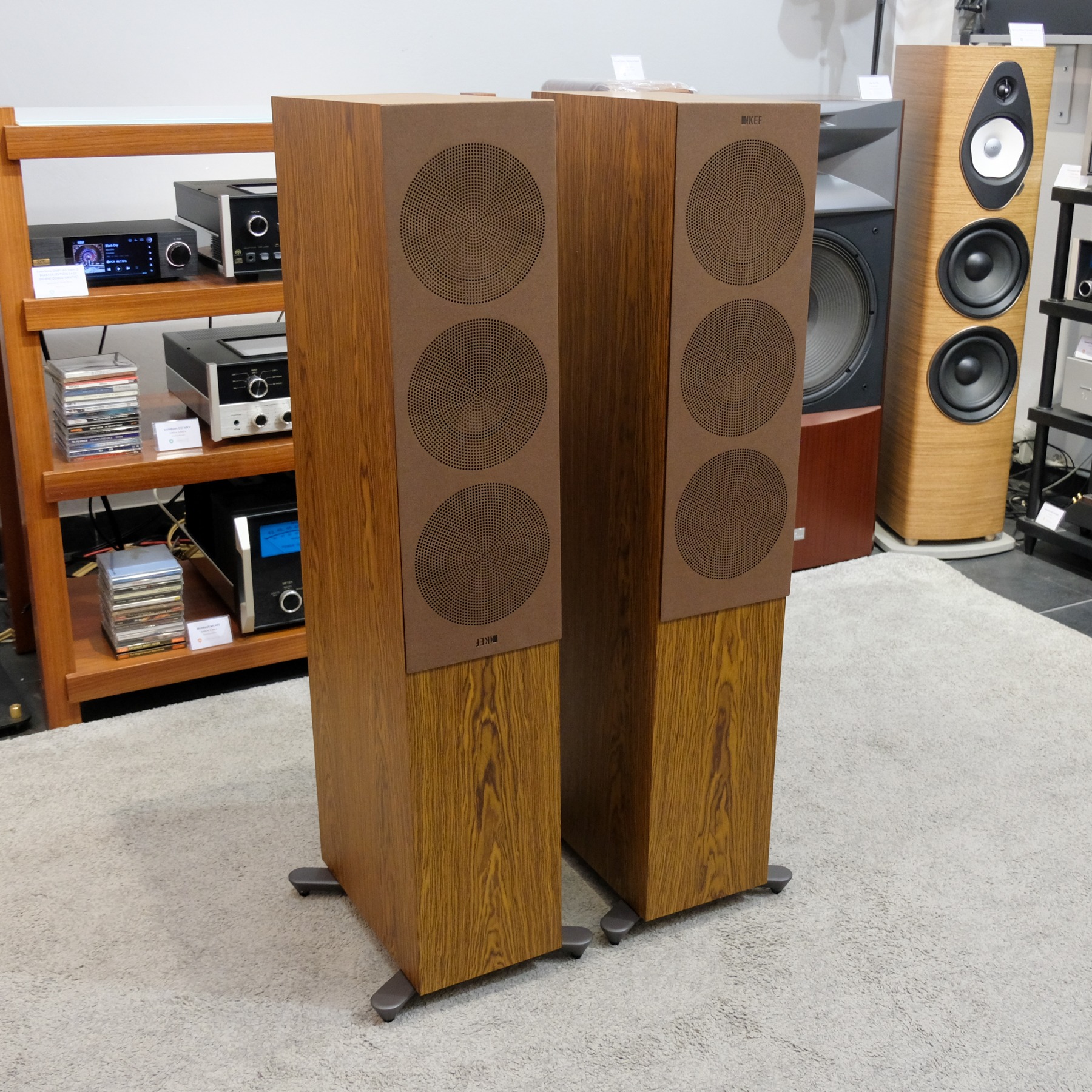
What's the real difference compared to the old KEF R7? In addition to the MAT, the Meta Series introduces a revised crossover , a stiffened cabinet, the Flexible Decoupling Chassis derived from the Reference and Blade series, and new microfiber grilles with 1.801 laser-cut holes for each driver, so they don't alter the response when left in place.
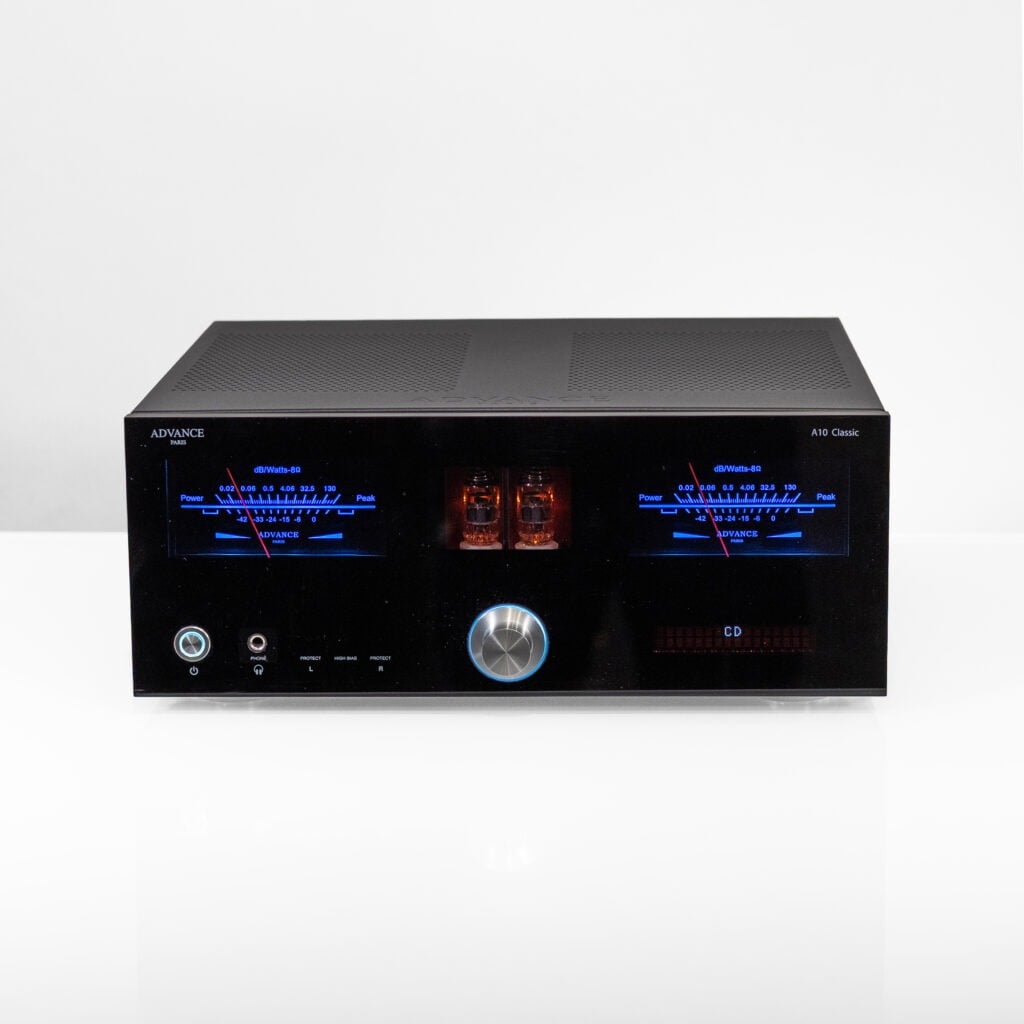
On the amplification front, the nominal impedance of 4 Ω with a minimum at 3,2 Ω and a sensitivity of 88 dB require a stable power amplifier at low loads: KEF's recommended power range is 15 to 250 W per channel. What amplifier do you need to drive the KEF R7 Meta? A solid integrated amplifier with at least 80–100 W into 8 Ω, capable of doubling or nearly doubling the current into 4 Ω, is a sensible starting point. The speaker accepts both high-current solid-state amplification as well as chains with hi-res DACs and high-resolution audio streaming sources , honestly conveying the differences between the upstream components.
It has a dual purpose. In hi-fi stereo, the R7 Meta offers a deep and stable soundstage, with a well-defined central image. In home theater, it integrates with the R6 Meta and R2 Meta center channels and the R8 Meta Dolby Atmos modules, maintaining the same tonal signature across all channels. The package includes a plinth with spikes, port caps, and magnetic grilles.