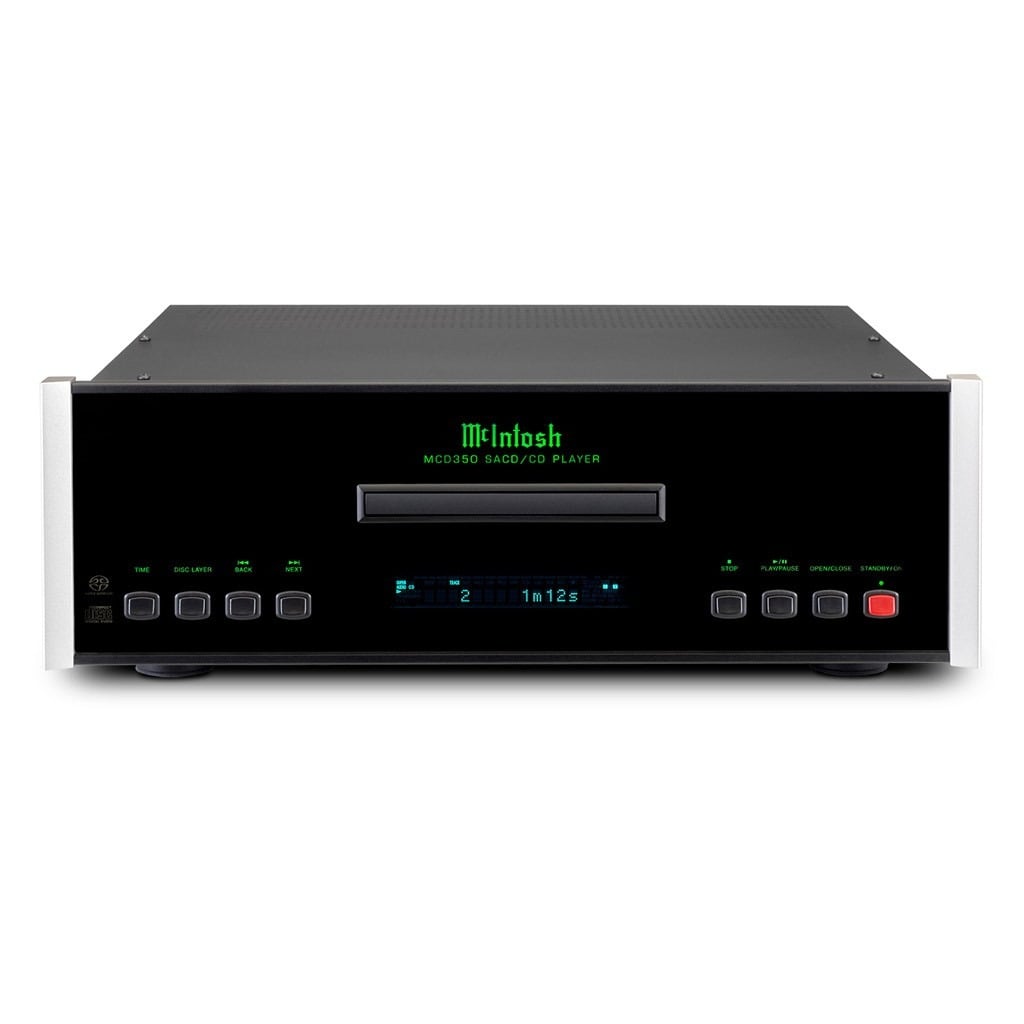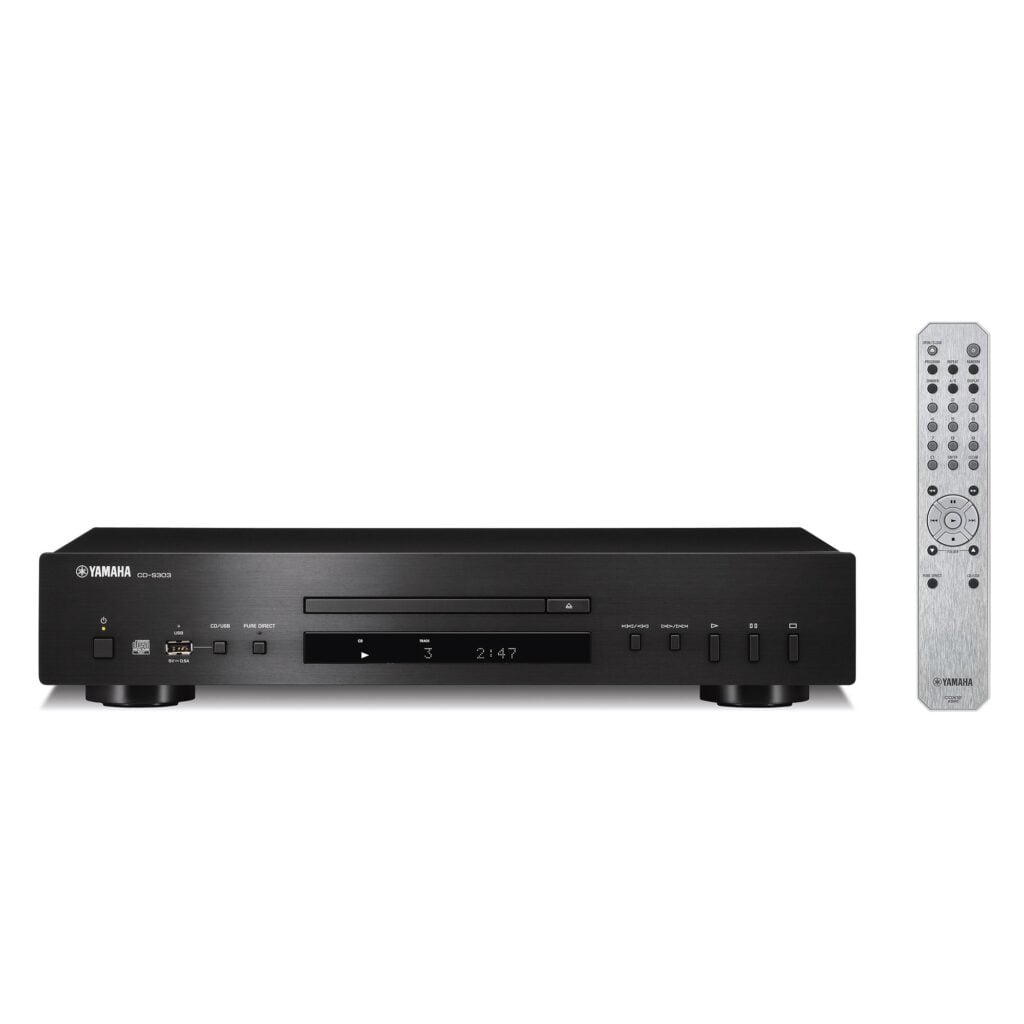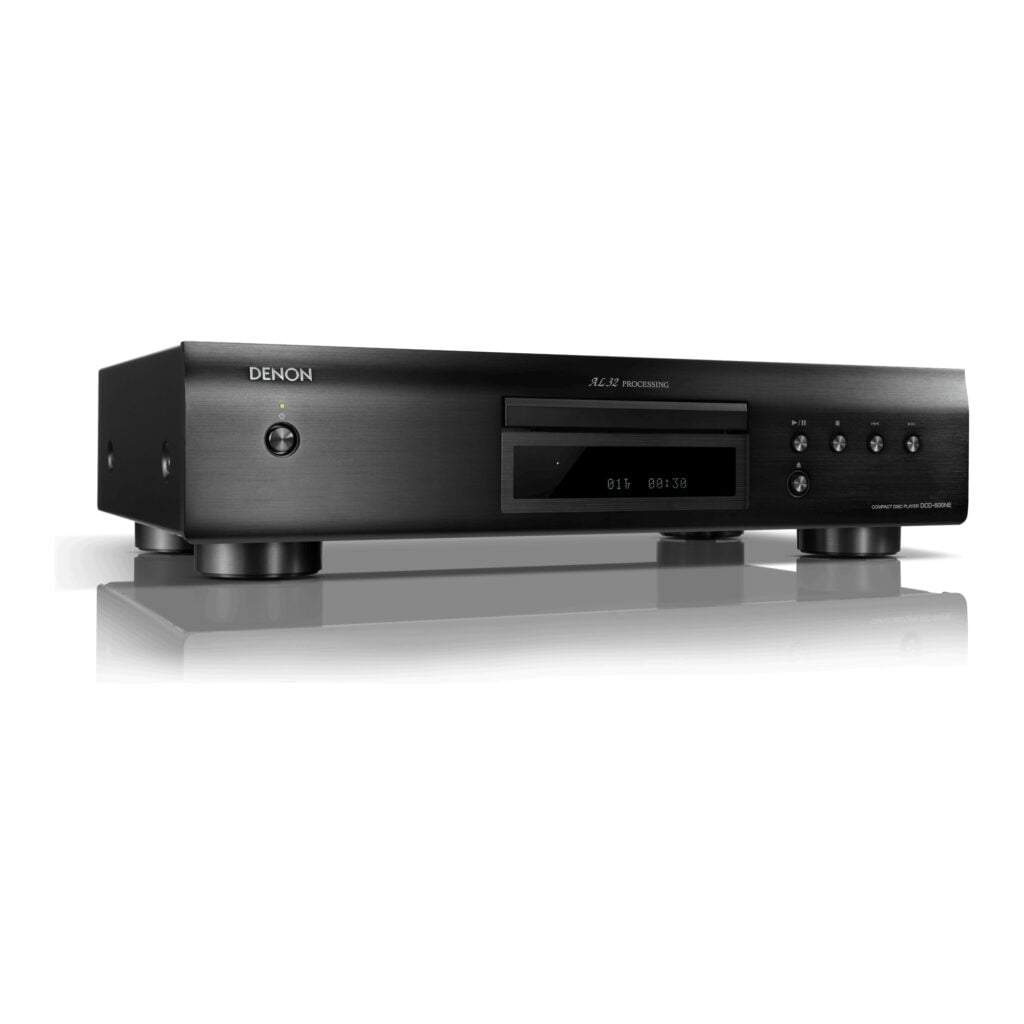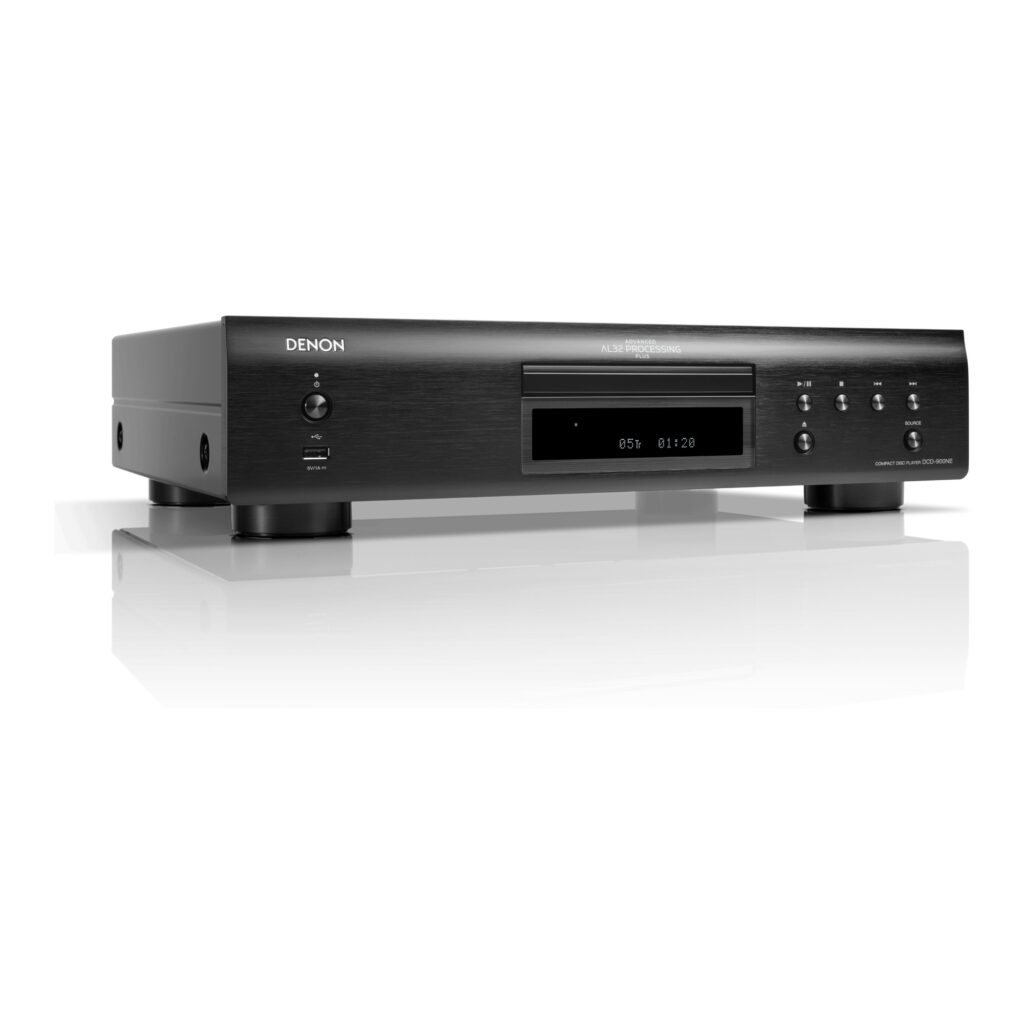







Description
-
CD Player Section
-
AUX Section
-
AUX H 1V (at 3V input)
-
AUX L 2V (at 3V input)
-
- AM Tuner Section
-
FM Tuner Section
-
Audio
-
Bass Boost/Cut (50Hz) +/-12 dB
-
Treble Boost/Cut (10Hz) +/-12 dB
-
Line Output 3V
-
Line Output (Non Clipping) 8V
-
Digital Input
-
Sampling Frequency: 44.1kHz
-
Format: Digital Audio Interface (EIAJ CP-1201)
-
-
General
One look at the unit and you know it's a McIntosh…looks just like every other product McIntosh makes. The laid back, chrome trimmed appearance makes it somewhat hard to integrate with most of today's monotoned dash schemes which, on the other hand makes it stand out (invest in a very good alarm system in other words). It does integrate well with some of the rather expensive European imports such as the SLK with its retro interior, the Jaguar XK8s and XKRs as well as some of the new Porsche 911s with the aluminum interior trim. Some may like it, some may not, but that really doesn't matter—it has nothing to do with the sound anyway. The upside to all this though is that one listen to the unit and you know it's a McIntosh. One of the quietest units I've come across (although our boy Peter Lufrano says the new Nakamichis will give it a run for its money). The unit was designed to reproduce music…and accurate reproduction is what it does best…it doesn't add anything to the music, nor does it take anything away.
The MX406 seems to reveal in simplicity. (So much so that I have one BIG complaint…but let's reserve that for later). From the analog controls (yes, analog) which also happen to be knobs, to the simple symmetrical (almost) layout of controls and of the display, to the (overly) limited functions available, the unit doesn't do much, but the little that it does, it does very, very well. The face of the unit is made of the same material as its home audio counterparts: black backed glass. The only thing missing is the green glow of the McIntosh logo on power up (in this case, it's just gold whether on or off). The layout is pretty simple: two concentric knobs on either side (the left knobs control power, volume, balance and fader while the right ones allow you to select the station as well as to select the source), two smaller round buttons, each inward of either knob (autostore and repeat, band selection) and a row of six buttons (station selection) each with an indicator light on top. On top of that is the fluorescent display (which matches the dash lights of my Expedition, thank you very much!) Another two buttons can be found each on top of either knob (the bass and treble knob on the left and the eject button on the right). A slot for the CD on top of the display completes the clutter free face of this head unit.
The display works well both in the daytime as well as at nighttime. As mentioned earlier, McIntosh opted to put very few buttons and knobs on the face panel. Some companies that do this compromise by requiring you to commit to memory pages upon pages of button combinations in order to access the tons of functions made available by the unit. McIntosh on the other hand chose the opposite route…few buttons mean fewer things to control. That's not really a bad thing. You can control all (well almost..again, more on that later) of the basic functions like volume, fader, bass, treble, track skip, station select (even autostore!) and all that…it just doesn't have functions like digital time alignment, jazz club, concert hall, stadium and disco simulation, garage door opening nor an eject button for rear seat passengers who complain that there isn't enough treble in the rear (although that IS a good idea, the passenger eject button).
The unit's built in D/A converter (a nice 20 bit job) accepts external signals from an outboard transport. This allows you to use an MCD4000's (or any of McIntosh's other changers equipped with digital outputs) digital output to take advantage of the better D/A converter of the MX406.
The line outs come in wired gold plated RCA jacks. Rubber grommets protect the wires that run out of the chassis. I guess they used this instead of the regular mounted RCA terminals as the unit is rather deep and by doing this, the need for more space to the rear of the unit is mitigated.
The MX406 comes with a 40+ page manual in A4 size pages. Lots of useful information and has the answers to most of the questions you may have. An added bonus is the tasteful cover…thick stock, dark blue with gold embossed lettering.
Radio performances:
I hardly listen to the radio while on the road but in my limited experience with its FM functions, it ain't too shabby. I did notice though that it seemed to pull in more stations clearly than the stock head unit or my previous head units (a lower model McIntosh and several Alpines).
CD Performances:
In one word…EXCELLENT! Although part of the credit must go to the amps, speakers and EQs, the unit delivers impeccable detail and clarity. The chassis is adequately shielded to reject noise. With the proper installation, it's just about impervious to skipping unless you are into the habit of trying to wreck your vehicle's suspension. The only time I notice skipping is when I hit a pothole large enough and hard enough to make me wince at the thought of what it did to my car. The ability to allow a changer to use the unit's internal D/A is great, although you can also go for an external D/A for the MX406 as well. No complaints in this department.
Pros:
-
-
Excellent the CD section.
-
Crystal clear sound.
-
Turn it on…no hiss. Play digital black (zero sound recording)...again, no hiss, even at full volume...Amazing!
-
Doesn't normally skip.
-
20 bit DAC. (Acts as an external DAC for the changer)
-
4-Volt 4-channel Line Level Output
-
Knobs!!!
-
Unique styling.
-
Cons:
-
-
Here's my biggest complaint by far: YOU CANNOT NAVIGATE * WITHIN* TRACKS!!! No forward, no rewind. Nothing. What if I wanted to skip the intro, huh??? What if I wanted to go back 2 seconds and I'm nearing the end of a 10 minute track, HUH??? Now, how hard was that to design in??? What the hell is wrong with you people??? OF ALL THE STUPID THINGS TO LEAVE OUT!!! (there, there now…)
-
No remote
-
Cannot remove faceplate
-
Permanent installation requires expensive alarm system (otherwise, it won't be there too permanently)
-
-
-
The clock only works when the unit is on.
-
What it is: Audio control for cars
Manufacturer: McIntosh USA
Price new: €2340, year 2006
Specifications
| PCM max | 20 |
|---|---|
| Digital outputs | Digital Audio Interface (EIAJ CP-1201) |
| CD mechanics | Compact Disc Audio System, Non-contacting laser reading |
| Weight | 4,5 kg |
| Dimensioni | W 18,8 × H 5,8 × D 16,8 cm |
| Frequency response | 5-20000 |
| Rapporto S/N | 112 dB |
| Harmonic Distortion (THD) | 0.004% |
| Wow & flutter | 0.001% |
| DAC chip | 20 bit |
| Alimentazione | 14.4V DC |
| Electricity consumption | 14.4 W |
| Speed (RPM) | 500-200 |
About the brand
McIntosh Laboratory was founded in 1949 by Frank H. McIntosh and Gordon Gow in Silver Spring, Maryland, and moved to Binghamton, New York, in 1951, where it remains headquartered today. Since November 2024, the McIntosh Group, which also includes Sonus faber, has been owned by the American company Bose, which has stated its intention to keep the two brands focused on amplifiers, speakers, and turntables.
McIntosh's history begins with the Unity Coupled circuit, patented at the company's inception and the basis of its first amplifier, the 50W-1: a unique output transformer configuration that reduced distortion compared to amplifiers of the time and is still used today in tube power amplifiers like the MC275. The design is unmistakable: black glass fronts, adopted in the 1960s, and the distinctive blue-illuminated VU meters, present since the mid-1970s. The transformers are still hand-wound in-house.
Distinctive technical solutions include Autoformers, the output autotransformers used in many solid-state amplifiers and integrated circuits, which allow full nominal power to be delivered into 2, 4, and 8-ohm loads; Power Guard, a patented circuit that compares the input signal with the output signal and limits clipping; and Sentry Monitor, a fuseless protection that disconnects the power amplifier when the current exceeds safety limits and automatically restores operation.
The range covers the entire chain. Integrated amplifiers include the MA252, the brand's first hybrid integrated amplifier, with a 12AX7 and 12AT7 tube preamplifier, a 100-watt solid-state power amplifier into 8 ohms, and a headphone output, and the MA12000, a 350-watt-per-channel hybrid, as well as the MA5300, MA7200, MA8950, and MA9500 solid-state integrated amplifiers and the MA2375 tube amplifier. The MC275 VI tube power amplifier delivers 75 watts per channel with KT88 tubes, or 150 watts in mono configuration; solid-state power amplifiers range from the MC152 to the 2.000-watt MC2.1KW monoblock. The range is completed by the C22 MKV, C49, C55, C2800 and C12000 preamplifiers, the MCD85, MCD350, MCD600 and MCD12000 players, the DS200 streamer, the MHA200 headphone amplifier, the MT2, MT5 and MT10 turntables and the XR100, XRT1.1K, XRT2.1K and ML1 MK II speakers.
The ML1 MK II is based on the ML1 designed around 1970 by Roger Russell: same closed cabinet and same dimensions, but with five speakers instead of four, including a 12-inch woofer. The MT5 turntable uses a magnetic suspension bearing, with minimal contact between the parts.
Those looking for a single unit with a tube preamp and simple operation will find the MA252 the most natural entry point. With demanding speakers or large rooms, autoformer-equipped integrated amplifiers like the 200-watt MA8950 or 300-watt MA9500 deliver full power into 2, 4, and 8 ohms. Those who prefer separate components can pair a C Series preamplifier with an MC275 VI, ideal for high-sensitivity speakers, or with a solid-state power amplifier when more power is needed.
In our Carpi showroom, you can listen to McIntosh equipment in the listening room, compare it with your speakers, and get advice on matching it. The same models can be ordered online at audiocostruzioni.com with shipping, asking us for advice first by email if necessary.
FAQ
This product is in the Archive section and is no longer available for sale. Visit our catalog to discover current models or contact us for personalized advice on a similar product.
When a model goes out of production, is sold permanently, or is no longer available from our suppliers, we move it to the Archive section. We maintain the page online for informational purposes: users and collectors can continue to consult specifications, descriptions, and reference images.
Probably. Visit our product catalog to discover equivalent models currently on sale: you can filter by category, brand, and price range to find the best alternative for your system.
We do not carry used or vintage products. To discover currently available alternatives, click the "Go to catalog" button at the top right of the page, or go directly to our product catalog to browse the models for sale.
We do not directly handle technical assistance or spare parts. On our support page , you'll find tables with direct contact information for service centers and specialized repairers: you can contact them directly to discuss repairs or spare parts availability.