












How much do you really need to get started with Hi-Fi? This is the question every enthusiast asks before investing in their first listening system. The figures circulating online range from €500 to €5000, creating more confusion than clarity. The truth is, there's no magic number that works for everyone: the right budget depends on your expectations, the space available, and the sources you'll use. What matters is understanding how to split the cost among components, where it's best to invest more right from the start and where you can grow slowly. This guide helps you build a realistic purchasing plan, avoiding waste but laying the foundation for truly satisfying listening experiences.
The 40-30-30 Rule (and When to Break It)
In the Hi-Fi world, a budget ratio has been around for decades: 40% on speakers, 30% on amplification, and 30% on the source. It's a sensible starting point for those unsure where to begin, but it should be taken as a flexible guideline, not a dogma.
Speakers have the greatest impact on the final result because they convert the electrical signal into sound pressure—this is the most critical step and the one where differences are immediately audible. A good pair of well-positioned speakers can make even modest electronics sound decent. The reverse rarely works.
Amplification deserves the remaining 30% because it must drive the speakers with control, dynamics , and low noise. A solid integrated amplifier will last you for years, growing with you as you replace your speakers. The source takes the last 30% because today even an entry-level CD player or a mid-range streamer offers more than decent technical performance.
When to change the aspect ratio
If you're starting with bookshelf speakers in a small room, you can shift your budget toward amplification—perhaps a higher-end integrated amplifier that you'll also use when you upgrade to floorstanders . If you listen mostly to vinyl, however, your turntable and phono preamp deserve a more generous share, sacrificing something on the digital source. The important thing is to think about the growth path , not just the starting point.
Realistic budget ranges to get you started
Let's talk about concrete figures. A first quality Hi-Fi system — which helps you understand what high-fidelity listening means — can start at approximately 1500-2000 euros, although the figures vary depending on personal choices and priorities. Below this threshold, you enter the territory of entry-level systems, which may sound pleasant but struggle to deliver dynamics, soundstage, and detail in a consistent way.vincente.
In the €1500-€2500 range , you can build a balanced system with reputable bookshelf speakers, a 50-80 watt-per-channel integrated amplifier, and a decent digital source. This is the budget we recommend for those who want to start with a clear idea, without having to regret it six months later.
Between €2500 and €4000, you can access mid- to high-end components: compact floorstanding speakers, amplifiers with more generous power supplies, dedicated DACs , or turntables with high-quality cartridges. Here, the qualitative leap is clearly noticeable, especially in dynamics and bass control.
Above €4000, you're entering the realm of the advanced enthusiast, with room for growth that lasts for years. But be careful: spending more only makes sense if your listening environment is suitable and you already have a clear understanding of your audio taste. Otherwise, you risk investing in features you won't be able to fully exploit.
Where it's best to invest more right away
If you're on a tight budget and have to make choices, speakers are the first place to invest in quality. A well-designed pair of speakers—even bookshelf speakers—will last you for years and sound great even with entry-level electronics. Once you have more resources, you can upgrade your amplifier and hear your speakers perform even better.
The second priority investment is the integrated amplifier . A good integrated amplifier with a stable power supply, low noise, and adequate power for your speakers is the backbone of the system. A solid €1000 integrated amplifier is better than a €400 one paired with €1200 speakers: the result will be more balanced and will grow better over time.
What you can put off without regrets
The digital source is where you can save the most at the start. A quality CD player or an entry-level streamer offer high technical performance—the difference with expensive models lies in refinements you'll only appreciate once the rest of the system is fully developed. Cables can also start with honest solutions: it's better to invest 50 euros in decent cables and 500 more on the amplifier, than the other way around.
If you listen to vinyl, the situation is different: the turntable deserves attention right from the start, but here too you can start with smart solutions like the mid-range Pro-Ject or Thorens models , upgrading the cartridge and phono preamp later.
Concrete examples of distribution for three budgets
Let's see how to distribute spending across three realistic bands, with proportions adapted to the context.
Budget 1800 euros (serious starter)
- Bookshelf speakers: 700 euros — models like Indiana Line Thesis or Utah or Triangle Borea (prices may vary depending on the period and offers), which offer natural timbre and good dynamics in rooms up to 20-25 m2
- Integrated amplifier: 600 euros — one integrated transistor 50-60 watts, maybe label o Yamaha , with sufficient inputs and stable power supply
- Digital source: 400 euros — entry-level CD player or streamer with integrated DAC, more than adequate for this price range
- Cables and accessories: 100 euros — honest, no-frills power and signal cables
This setup sounds balanced and immediately gives you a sense of what Hi-Fi is all about. When you want to grow, you'll first upgrade your amplifier (bringing it to €1000-1200) and then your speakers, perhaps switching to compact floorstanding speakers.
Budget 3000 euros (conscious enthusiast)
- Diffusers: 1300 euros — compact floorstanding or high-end bookshelf speakers, with at least 16 cm woofers and quality dome tweeters
- Amplifier: 1000 euros — integrated with 80-100 watts per channel (specs vary depending on model and brand), generous power supply section, low noise floor
- Source: 500 euros — high-end CD player or streamer with dedicated DAC, or a giradischi mid-range if you listen to vinyl
- Cables: 150 euros — balanced cables where needed
Here you enter a territory where dynamics, soundstage, and detail begin to shine. It's a system that sounds truly great in a well-treated room and you can easily upgrade it by adding an external DAC or subwoofer if you need bass extension.
Budget 5000 euros (mature system)
- Diffusers: 2200 euros — three-way floorstanding speakers or high-end monitors, with the ability to go below 40 Hz and generous dynamics
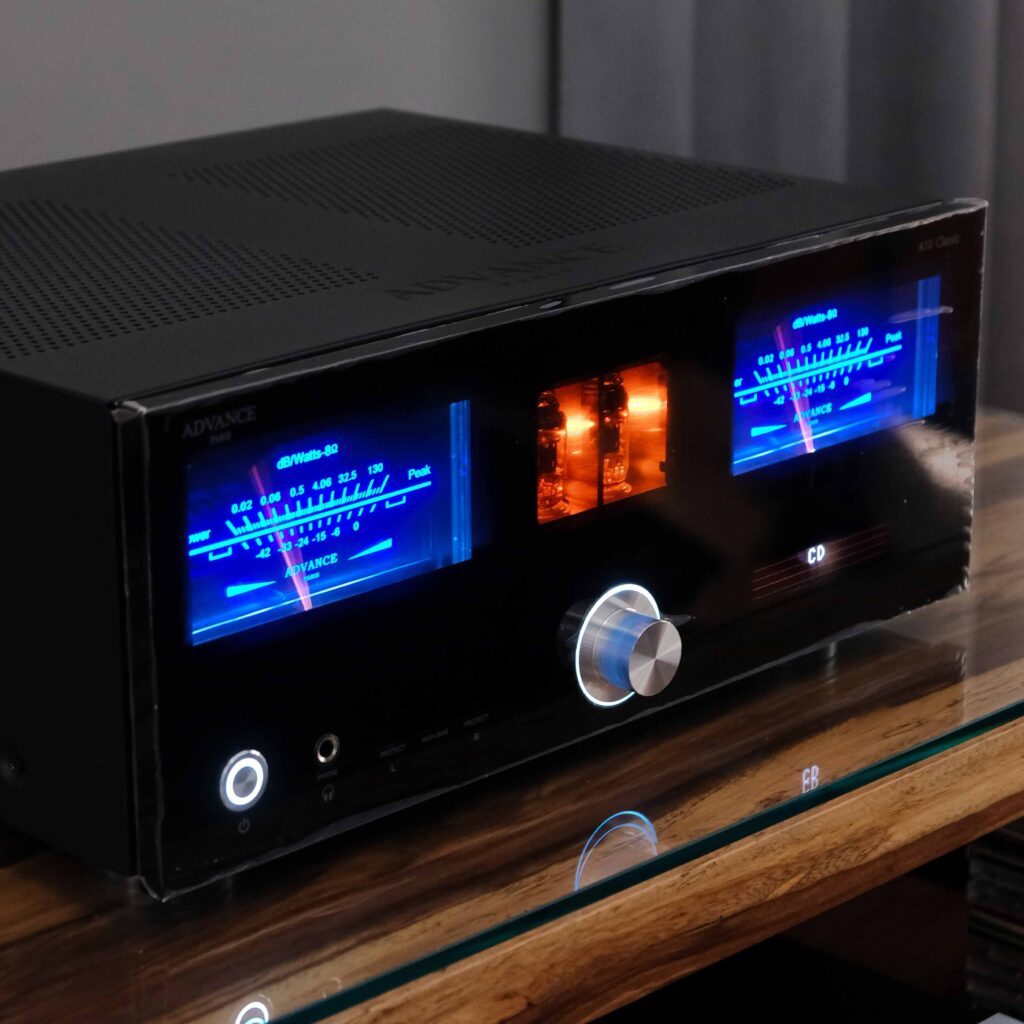
- Amplifier: 1800 euros — top-class integrated, maybe Musical Fidelity o Advance Paris, with refined electronics and excellent control
- Source: 800 euros — reference CD player or streamer + separate DAC, or turntable with level cartridge and phono preamp dedicated
- Cables: 200 euros — balanced, good-quality cables
It's a system that, in a well-maintained environment, sounds truly high-quality, with room for improvement that lasts for years. Each subsequent upgrade—a separate power amp, a high-quality preamp—brings perceptible but not revolutionary refinements.
Mistakes to avoid when allocating your budget
The first classic mistake is to unbalance troppo towards the speakersBuying €2000 towers and pairing them with a €300 mini-amp. The speakers will sound compressed, with no bass control, and you'll wonder where the money went. A €800+€800 system (speakers+amp) is better than €1400+€200.
The second mistake is underestimating the space . If the room is small, reflective, and sparsely furnished, even a €5000 system will sound muddy and tiring. Before investing a significant sum, consider sound-absorbing panels, heavy curtains, or full bookcases—they cost little and make a difference.
Third mistake: buying everything at once without listening to anything. Hi-Fi is a matter of personal taste—some people love analytical precision, some prefer the warmth of tubes, some seek physical impact. It's better to start with an entry-level system, figure out what you like, and then invest wisely. Otherwise, you risk spending €3000 on a sound that isn't yours.
Fourth mistake: ignoring future growth . If you buy a 40-watt amplifier with only two inputs, you'll be stuck in six months. It's better to spend an extra €200 for an integrated amplifier with more inputs, pre-outs for a future power amplifier, and adequate power even for more demanding speakers.
When it makes sense to spend more (and when it doesn't)
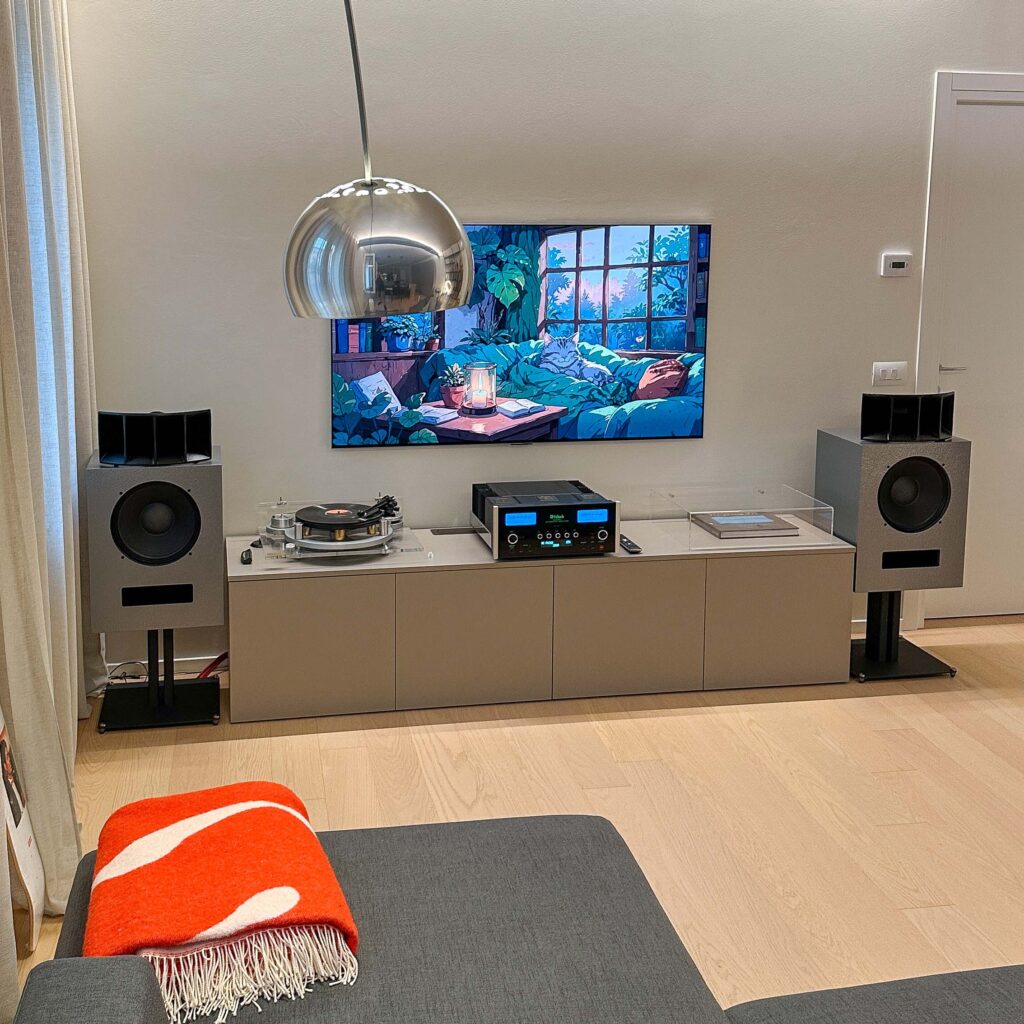
Spending more makes sense if the environment is suitable : a room of at least 18-20 square meters, with basic acoustic treatment and thoughtful placement. In a 12 square meter living room with stoneware flooring and bare walls, even an €8000 system will sound worse than a €2000 system in a well-maintained room.
It makes sense if you listen attentively , dedicating time to the music without doing anything else. If the system is just background music while you work or cook, a well-chosen €1500 system will satisfy you as much as a €5000 one. Hi-Fi rewards the listener, not the one who has the music on.
It makes sense if you already have an idea of your taste . After listening to different systems in the store or at friends', you'll understand whether you like warm and enveloping sound, precise and analytical sound, or dynamic and impactful sound. At that point, investing more means buying exactly what you're looking for, not hoping that the high price will solve everything.
There's no point in spending more if you've never listened to Hi-Fi . It's better to start with €1800-€2000, figure out what you're missing, and grow with awareness. It's pointless if the environment is inadequate and you can't improve it. It's pointless if you only listen to compressed streaming from your smartphone: first invest in quality sources (CDs, vinyl, lossless streaming), then in the system that enhances them.
Conclusion
The right budget for a quality first Hi-Fi system isn't a fixed number, but rather the result of a balance between expectations, space, sources, and personal taste. The €1500-€2500 range is the one we recommend for those who want to get started seriously, with clear room for growth and no short-term regrets. The 40-30-30 rule is a good starting point, but it should be adapted to your situation: if you listen to vinyl, the turntable deserves more attention; if you have a small room, it's better to invest in quality bookshelf speakers and a solid amplifier. The important thing is to avoid imbalances—a component thatoppo A weak system drags down the entire system—and think about the growth path, not just the destination. Hi-Fi is a journey built with patience, listening, and comparisons. Starting well means starting with clear ideas, not an empty wallet.