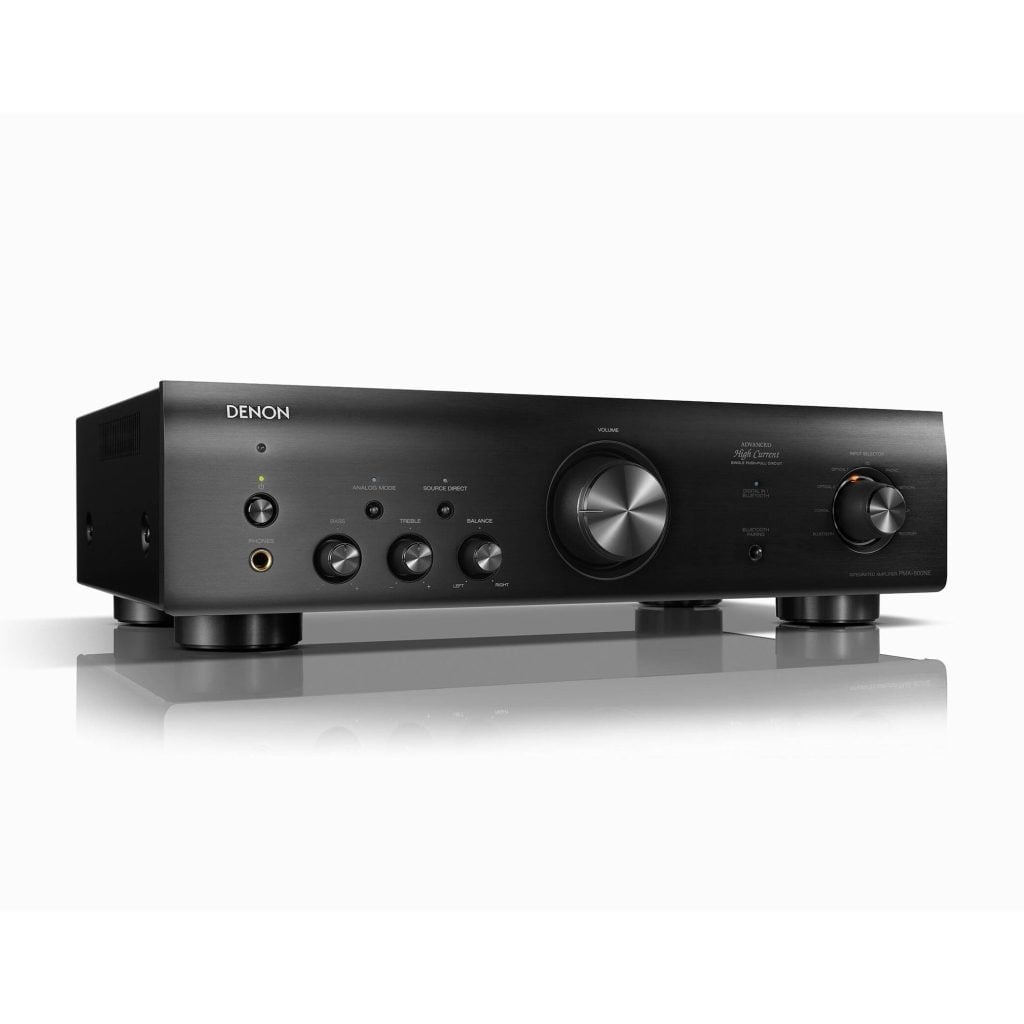







Description
From the site:
http://www.vintageaudio.com.au/Amps/Sansui/Sansui%20AU-555%20Integrated%20Amp.htm
Vintage Sansui AU-555 Integrated Amp 1972. The most beautiful amplifier and the AU series that started it all.
Please notice!
For convenience, I turned my own 555. The selling point has some corrosion on the top of the case, but is otherwise in similarly good condition.
Description
Vintage Sansui AU-555 Black face Integrated Amp circa 1972. The AU series first set the standards for Hi Fidelity integrated amplifiers and are still shining today. Very good working order. Including electric light. Made in Japan 240v.
Knobs
Speakers A, B, A + B, treble and bass for the left and right channels, Volume, Balance and input selection.
Switches
High & Low filter (Dolby start), Audio muting (effectively doubles the volume sensitivity), Loudness, Stereo/Mono, Tape source (input) and speaker load, High bass (on the back).
Size
Height 120mm Width 380mm Depth 295mm. TBA weight, not light.
Inputs
Tape Head (obsolete), Phono 1 & 2, Aux 1 (MIC) and 2. Tape (optional). Aux 1 and 2 can be used for CD, DVD, tuner, VCR, etc. The Tape Head is almost unnecessary as there are no resistors between the input and the preamp stage. This can easily be remedied by fitting a suitable resistor by your local hi-fi technician if you need an extra input!
Pre-Amp, inputs and power supply are all shielded.
Performance
This is the amp that made me notice the difference in quality between amplifiers and this exceptional quality amp. The AU series amplifiers, the 222, 555, 777, and 999, were designed to maintain the sound quality of the successful Sansui valve amplifiers. The 555 is very powerful, with an incredible final instrument clarity and depth. The instruments sound real. The bass is rich and full, the highs soar. I'm testing it today to decide if an amp plays all the music. I put on a live album of Astor Piazzolla live at RomaIf I don't get the feel of the place and the music right here, I know I'll soon be completely changed. With this amp, everything is there, not just the notes.
Taken from the forum:
http://audiokarma.org/forums/archive/index.php/t-3275.html
The Sansui AU-555 integrated amplifier is the heart and soul of my system. This amplifier was made between 1970 and 1973. I've owned this amp since the mid-90s, and my father purchased it new in 1970, before he got married. It has a warm sound and is incredibly powerful for the 20W listed in the service manual. It has a warm, immersive sound—I like it better than my Marantz 2226, which I once owned.
It has an all black metal face, and the knobs are made from a single piece of metal, unlike some later made components - I owned a Marantz 2226, and the knobs were platic and metal.
This little integrated amplifier allows the connection of two line inputs, two turntables, and has a tape monitor, as well as a tape head (not amplified reel to reel if I remember correctly). It also has pre/main connectors that allow it to serve as a preamp or power amplifier.
A neat feature the UA-555 has is a muting switch – you can lower the music by 20dB by flipping the switch.
As for build quality, I know the full history of this amplifier, as it's been in my family for 32 years (longer than I have). It's been in the Technician's office twice in its life (in 2000 and 2001). In 2000, the preamp blew a couple of plugs and needed some major repairs. It took a long time to find a competent technician, but I got it back, and it works great. In 2001, it went to Technician's office due to condensation issues in the output transistors; they fixed it quickly and cheaply. My conclusion is pretty simple: if no repairs have been needed in 30 years, it's a damn good quality amp.
One thing I don't really like about my amplifier is the speaker connectors, they are the typical connectors that don't allow for thick speaker wire - This problem was solved by using gold plated pins.
One more note - this amp has multi voltage - a big plus, we have traveled all over the world and this amp has worked everywhere, all you had to do was set the voltage.
I like the sound, look, and build quality of it, and will probably keep it forever.
Specifications
From the site:
http://www.vintageaudio.com.au/Amps/Sansui/Sansui%20AU-555%20Integrated%20Amp.htm
Vintage Sansui AU-555 Integrated Amp 1972. The most beautiful amplifier and the AU series that started it all.
Please notice!
For convenience, I turned my own 555. The selling point has some corrosion on the top of the case, but is otherwise in similarly good condition.
Description
Vintage Sansui AU-555 Black face Integrated Amp circa 1972. The AU series first set the standards for Hi Fidelity integrated amplifiers and are still shining today. Very good working order. Including electric light. Made in Japan 240v.
Knobs
Speakers A, B, A + B, treble and bass for the left and right channels, Volume, Balance and input selection.
Switches
High & Low filter (Dolby start), Audio muting (effectively doubles the volume sensitivity), Loudness, Stereo/Mono, Tape source (input) and speaker load, High bass (on the back).
Size
Height 120mm Width 380mm Depth 295mm. TBA weight, not light.
Inputs
Tape Head (obsolete), Phono 1 & 2, Aux 1 (MIC) and 2. Tape (optional). Aux 1 and 2 can be used for CD, DVD, tuner, VCR, etc. The Tape Head is almost unnecessary as there are no resistors between the input and the preamp stage. This can easily be remedied by fitting a suitable resistor by your local hi-fi technician if you need an extra input!
Pre-Amp, inputs and power supply are all shielded.
Performance
This is the amp that made me notice the difference in quality between amplifiers and this exceptional quality amp. The AU series amplifiers, the 222, 555, 777, and 999, were designed to maintain the sound quality of the successful Sansui valve amplifiers. The 555 is very powerful, with an incredible final instrument clarity and depth. The instruments sound real. The bass is rich and full, the highs soar. I'm testing it today to decide if an amp plays all the music. I put on a live album of Astor Piazzolla live at RomaIf I don't get the feel of the place and the music right here, I know I'll soon be completely changed. With this amp, everything is there, not just the notes.
Taken from the forum:
http://audiokarma.org/forums/archive/index.php/t-3275.html
The Sansui AU-555 integrated amplifier is the heart and soul of my system. This amplifier was made between 1970 and 1973. I've owned this amp since the mid-90s, and my father purchased it new in 1970, before he got married. It has a warm sound and is incredibly powerful for the 20W listed in the service manual. It has a warm, immersive sound—I like it better than my Marantz 2226, which I once owned.
It has an all black metal face, and the knobs are made from a single piece of metal, unlike some later made components - I owned a Marantz 2226, and the knobs were platic and metal.
This little integrated amplifier allows the connection of two line inputs, two turntables, and has a tape monitor, as well as a tape head (not amplified reel to reel if I remember correctly). It also has pre/main connectors that allow it to serve as a preamp or power amplifier.
A neat feature the UA-555 has is a muting switch – you can lower the music by 20dB by flipping the switch.
As for build quality, I know the full history of this amplifier, as it's been in my family for 32 years (longer than I have). It's been in the Technician's office twice in its life (in 2000 and 2001). In 2000, the preamp blew a couple of plugs and needed some major repairs. It took a long time to find a competent technician, but I got it back, and it works great. In 2001, it went to Technician's office due to condensation issues in the output transistors; they fixed it quickly and cheaply. My conclusion is pretty simple: if no repairs have been needed in 30 years, it's a damn good quality amp.
One thing I don't really like about my amplifier is the speaker connectors, they are the typical connectors that don't allow for thick speaker wire - This problem was solved by using gold plated pins.
One more note - this amp has multi voltage - a big plus, we have traveled all over the world and this amp has worked everywhere, all you had to do was set the voltage.
I like the sound, look, and build quality of it, and will probably keep it forever.
About the brand
Sansui is one of the most beloved names in Japanese hi-fi. The era that enthusiasts remember spans the 1960s to the 1990s, when the company designed and built amplifiers, tuners, and turntables in Japan that influenced generations of listeners.
Sansui Electric was founded in Tokyo on June 3, 1947, by Kosaku Kikuchi. Initially, it produced transformers. From 1954, it switched to tube amplifiers and preamplifiers, and in 1958, it introduced its first tube stereo preamplifiers and power amplifiers. In the 1970s, it also made a name for itself with quadraphonic audio, with the QS-1 synthesizer in 1971 and the QS Vario Matrix decoder in 1973. During that period, its product line included amplifiers, tuners, receivers, turntables, cassette decks, and reel-to-reel tape recorders.
Then the market changed. The Shin-Yokohama plant closed in 2001, and in the early 2000s, high-end amplifier production in Japan ended. The Japanese company then ceased production in 2014. Since then, the Sansui name has also appeared on products made under license by other companies, which share only the brand name with the historic models.
The AU series is at the heart of Sansui's history. The matte black front panel, typical of these integrated amplifiers, dates back to the mid-1960s. Among the models that many remember is the AU-999 from 1970, a solid-state integrated amplifier without output capacitors. The most famous is perhaps the AU-9500, introduced in October 1972 as the flagship: approximately 75-80 watts per channel and weighing over 20 kg.
In the late 1970s, Sansui introduced the "Diamond Differential" circuit in the power stage, for example in the AU-D607. In 1984, the AU-D907X introduced "X-Balanced" technology, which uses a balanced drive to reduce the effects of mass on the sound. The evolution of these circuits continued in the following years up to the Alpha series models, which remained in the catalog until 2000.
At the end of the 1980s came the AU-X911DG, with a built-in D/A converter for directly connecting a CD player: a sign of how the brand was trying to accompany traditional integrated amplifiers towards new digital sources.
The first thing that makes a Sansui recognizable is its aesthetics. The matte black front of the AU integrated amplifiers has distinguished Sansui from the often silver-colored units of other Japanese manufacturers for decades, and even today, a glance is enough to recognize them.
The second is technical. Throughout its history, Sansui has worked primarily on the power stage: from the capacitor-free output of the AU-999 to the Diamond Differential and X-Balanced circuits, the goal has always been to reduce what comes between the signal and the speakers.
The third is the completeness of the offering. In the golden years, it was possible to build an entire Sansui system, from turntable to tuner to amplification, with a coordinated aesthetic. For those new to the brand today, it's useful to distinguish between the historic models, designed by Sansui Electric, and the more recent products that bear the same name under license.
Audiocostruzioni It is a shop with showroom and listening room in Carpi and an online store on audiocostruzioni.com. For information on Sansui models or for a system consultation, you can email us or stop by the store: in our listening room, we'll help you choose speakers and sources that match your electronics.
FAQ
This product is in the Archive section and is no longer available for sale. Visit our catalog to discover current models or contact us for personalized advice on a similar product.
When a model goes out of production, is sold permanently, or is no longer available from our suppliers, we move it to the Archive section. We maintain the page online for informational purposes: users and collectors can continue to consult specifications, descriptions, and reference images.
Probably. Visit our product catalog to discover equivalent models currently on sale: you can filter by category, brand, and price range to find the best alternative for your system.
We do not carry used or vintage products. To discover currently available alternatives, click the "Go to catalog" button at the top right of the page, or go directly to our product catalog to browse the models for sale.
We do not directly handle technical assistance or spare parts. On our support page , you'll find tables with direct contact information for service centers and specialized repairers: you can contact them directly to discuss repairs or spare parts availability.