













Visiting McIntosh means entering one of the most important places in the history of high fidelity.
During our trip to the United States, we had the opportunity to visit the McIntosh factory in Binghamton, New York. A rare experience, because it allows us to see firsthand how some of the world's most recognizable amplifiers, preamplifiers, and hi-fi components are created.
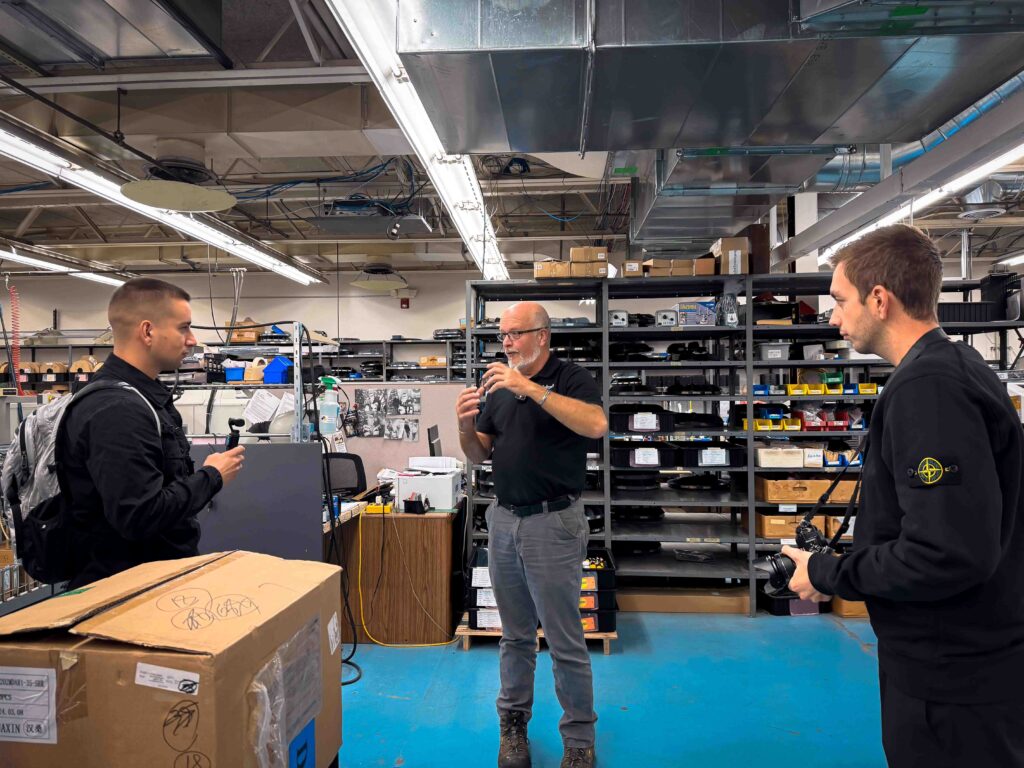
The McIntosh visit was even more special because we were accompanied by Charlie Randall, former president of McIntosh. Not just any guide, but someone with an in-depth knowledge of the company, its history, its philosophy, and how its products are designed and built.
During the tour, we saw the production departments, the R&D studio, the anechoic chamber, the in-house glass cutting facility, and the various assembly and quality control stages. Everything that, from the outside, is often only visible through the finished product becomes much more tangible there.
We also shared this experience in a comprehensive YouTube video, which allows you to see the rooms, departments, and some of the most interesting moments of the visit firsthand.
McIntosh: a real factory, not just a historic brand
The first thing that strikes you when entering the McIntosh headquarters is that it is not simply a famous brand.
McIntosh is a real factory.
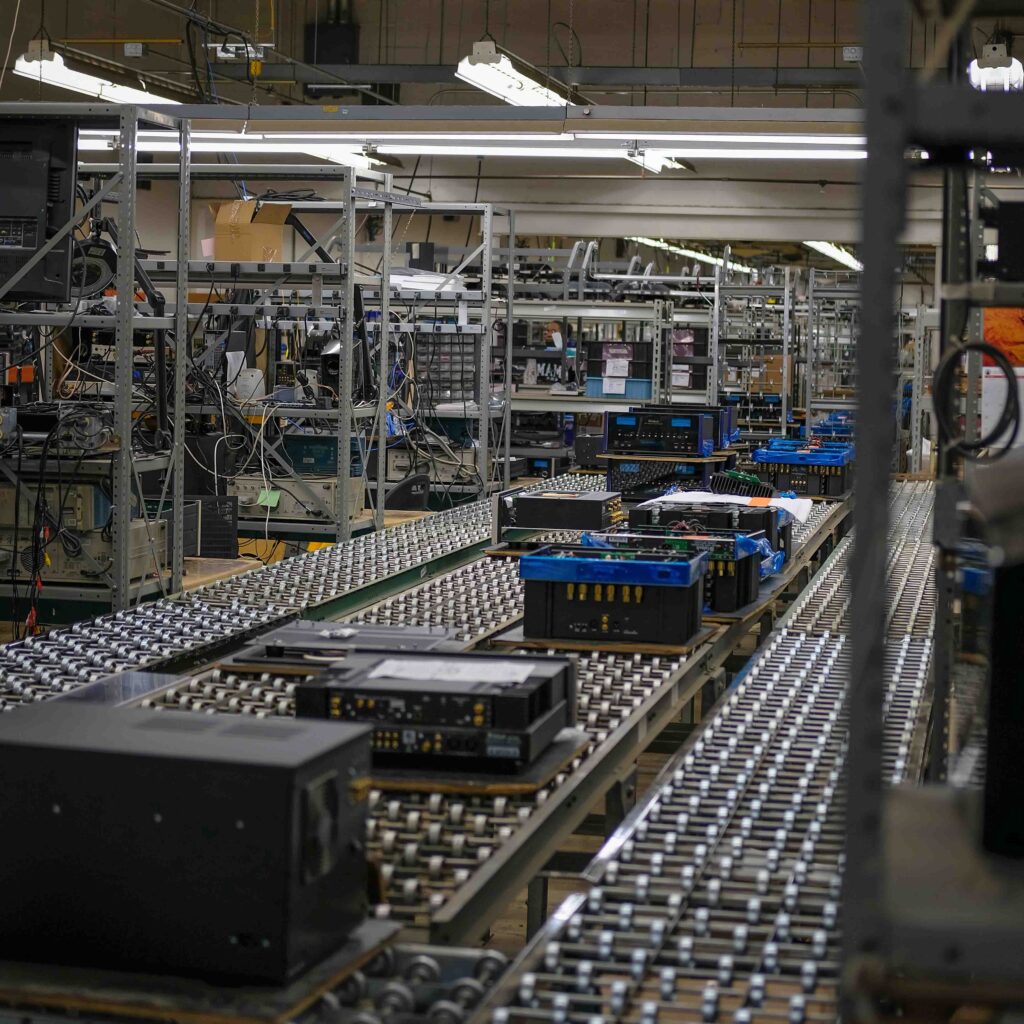
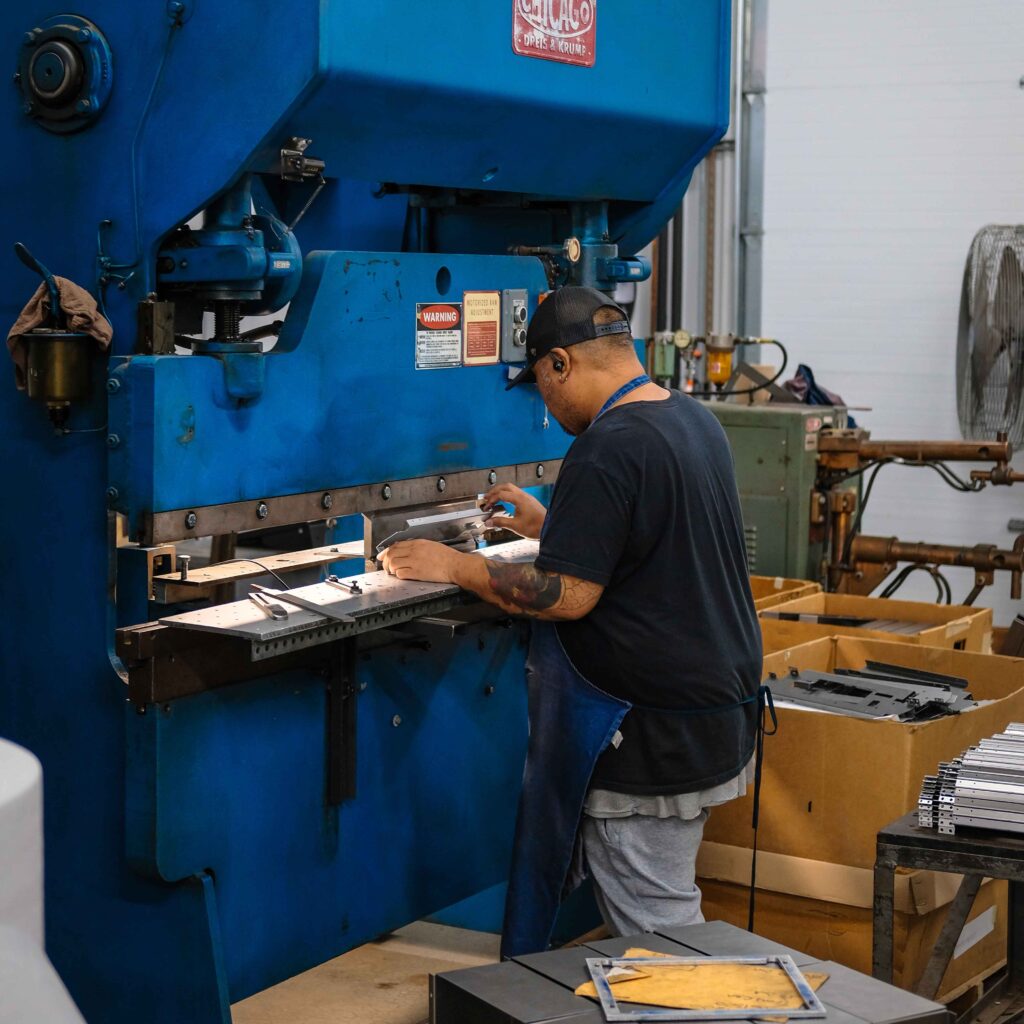
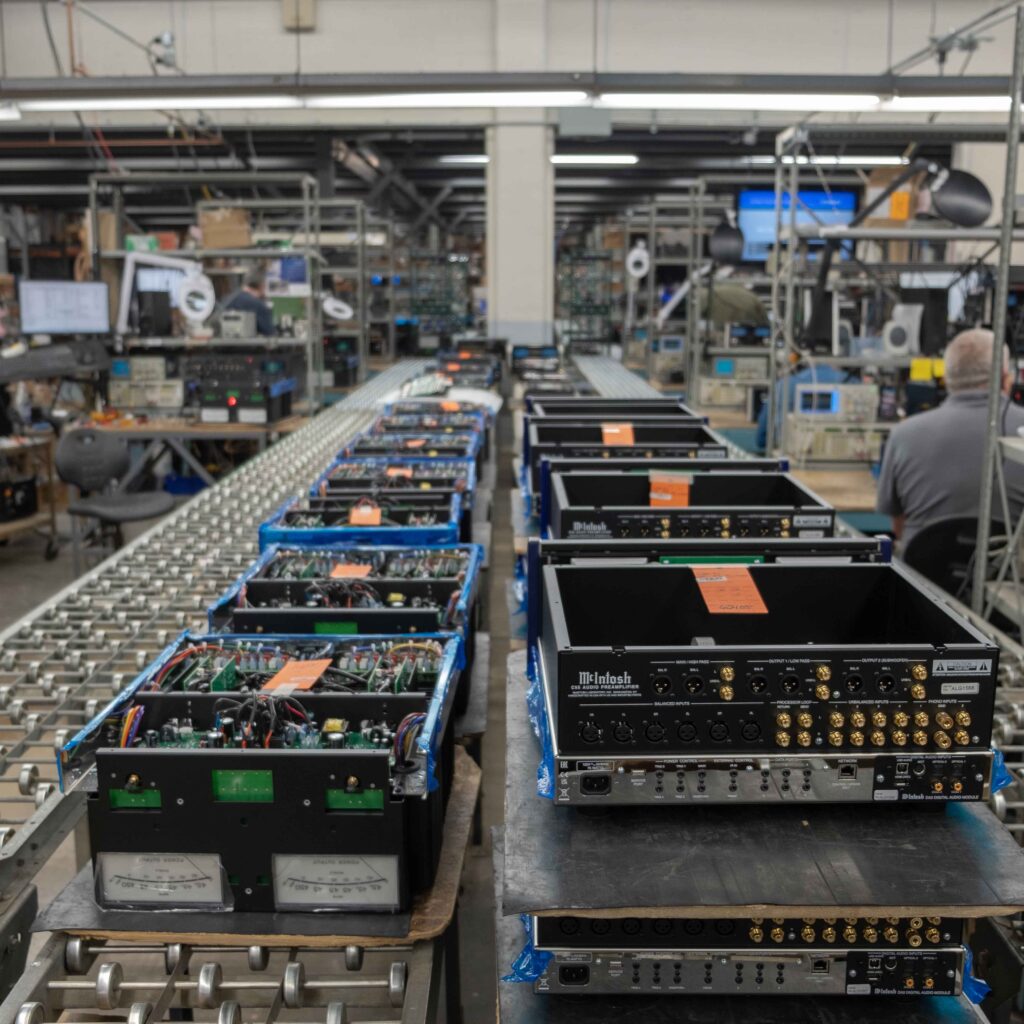
Inside the Binghamton plant, you can see technicians at work, assembly benches, measuring instruments, quality control checks, and products in various stages of production. It's an orderly, concrete environment, where manual labor still plays a vital role.
This aspect is crucial to understanding the brand's value. McIntosh doesn't thrive solely on its image, its blue VU-meters, or the allure of American design. Behind every piece of electronics lies a meticulous production process, involving assembly, testing, inspection, and continuous quality control.
During the McIntosh visit, it's clear how each product is built with durability in mind. These aren't devices designed to be replaced quickly, but rather Hi-Fi components designed to last in a system for many years.
The visit with Charlie Randall, former McIntosh president
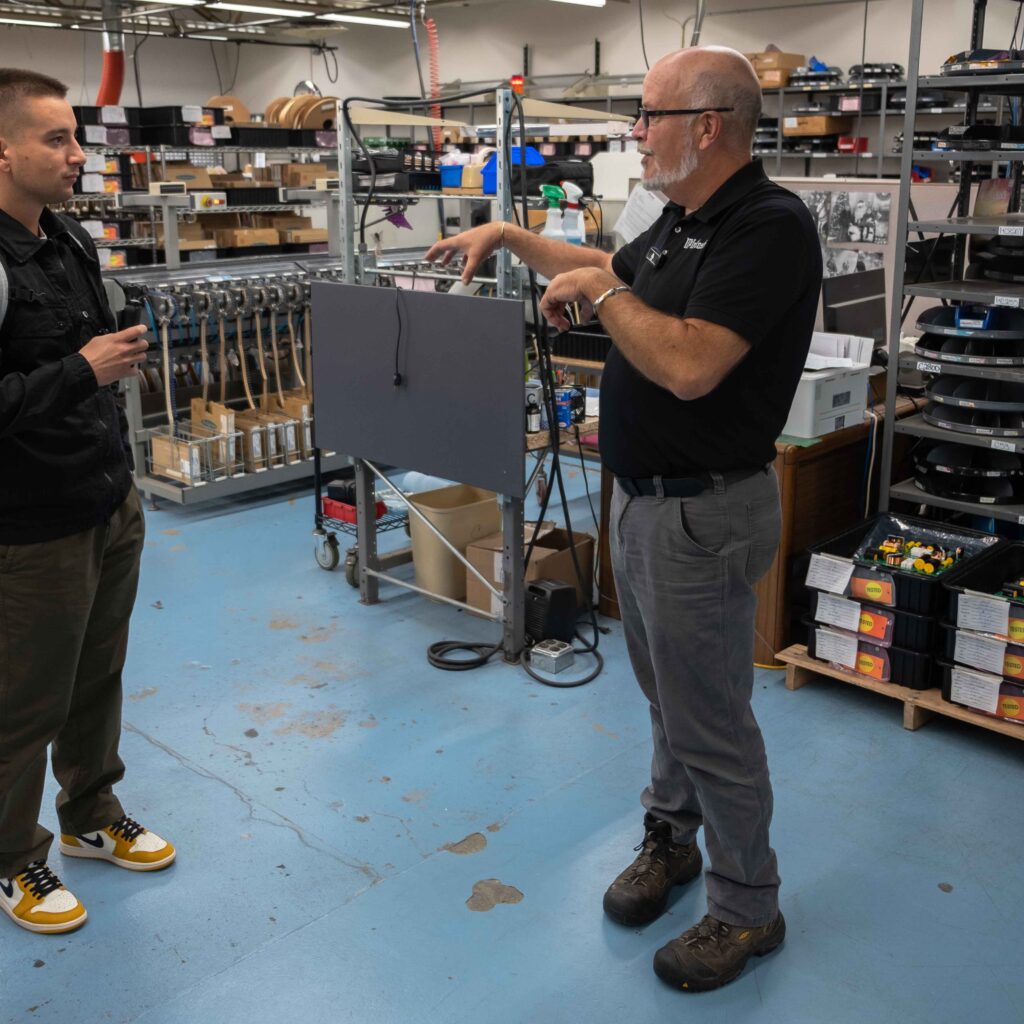
One of the highlights of our visit was being accompanied directly by Charlie Randall, former president of McIntosh.
This completely changed the type of experience.
We didn't just visit the production facilities. We were able to understand the rationale behind many of the construction, technical, and aesthetic choices. Charlie Randall gave us an inside look at McIntosh, explaining how the company has managed to maintain a strong identity while continuing to evolve over time.
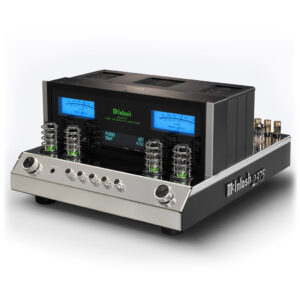
McIntosh is a brand with a very clear personality. The black glass fronts, blue VU-meters, knobs, bold chassis, and sturdy construction are part of a language recognizable everywhere.
But during the visit, you understand that this aesthetic is more than just image. It's part of a broader philosophy: building solid, recognizable, reliable products that are consistent with the brand's history.
The R&D studio: where McIntosh products are born
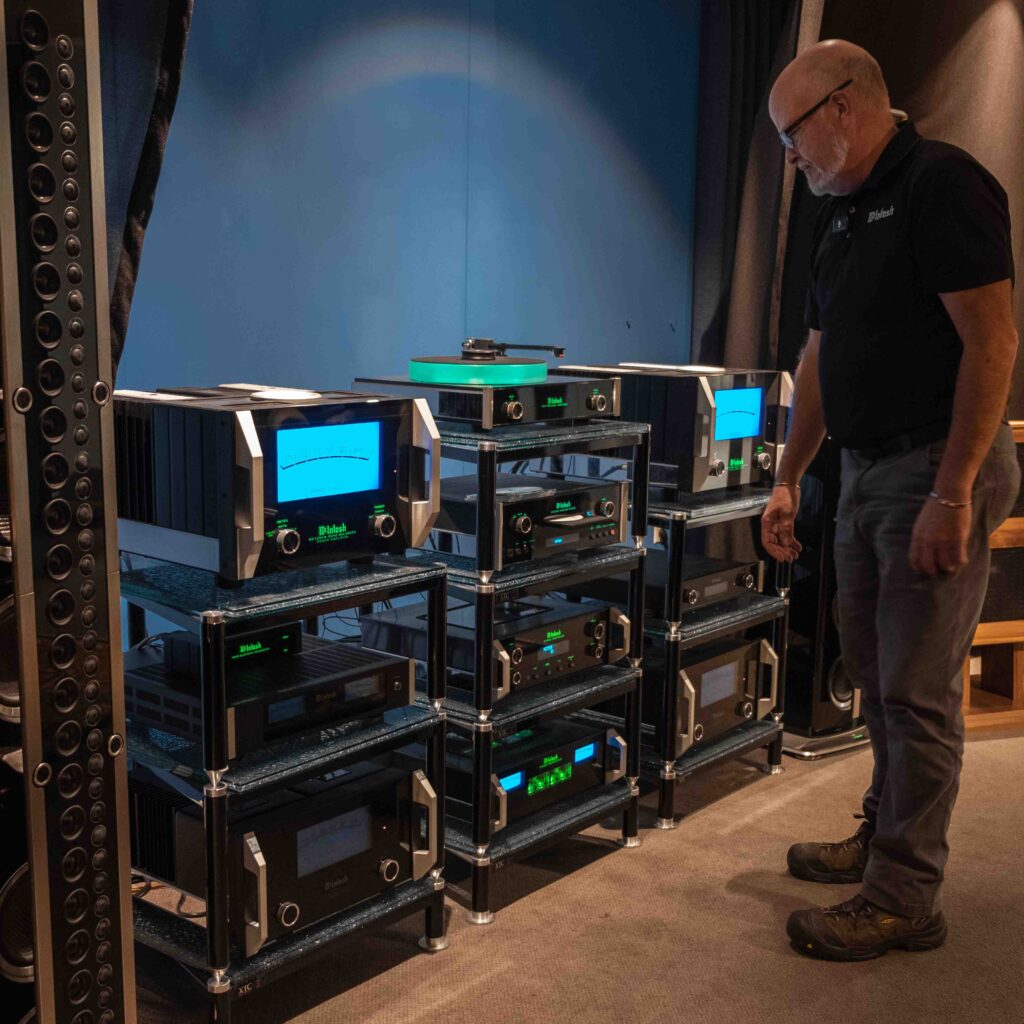
A very interesting part of the McIntosh visit was the R&D studio, that is, the area dedicated to research and development.
This is where new technical solutions are researched, tested, and refined. In the world of Hi-Fi, this department is crucial, because a product must not only be beautiful or powerful: it must sound good, be reliable, work well with different speakers, and maintain consistent performance over time.
The R&D studio allows us to understand how much work goes into developing a product before it reaches the market. Every amplifier, preamplifier, player, streamer, or digital component is born from a series of tests, measurements, listening sessions, and checks.
This is a part that is often invisible to the end enthusiast, but it is precisely here that an important part of a brand's technical identity is built.
Visiting the McIntosh R&D studio means seeing the less dramatic, but perhaps more important, side of the company: the one where ideas are transformed into real products.
Glass cutting done in the company
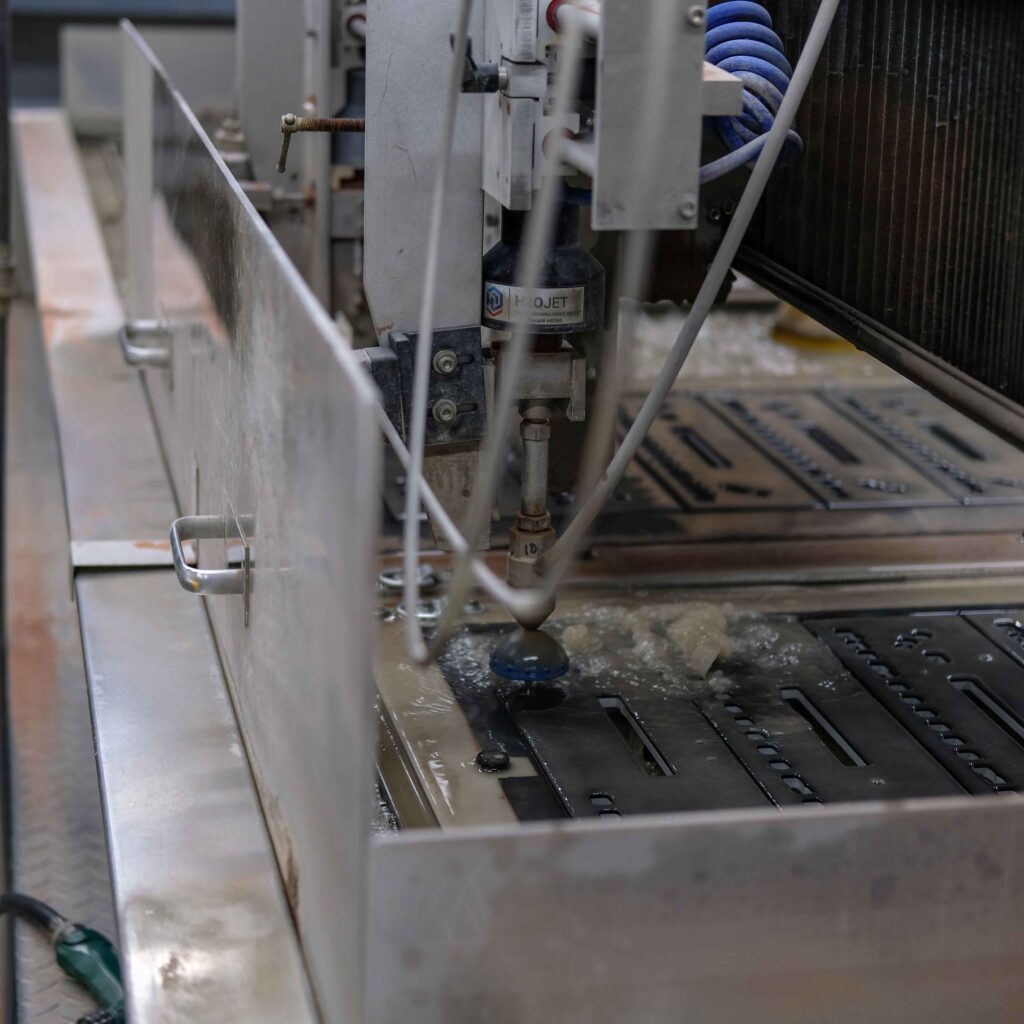
One of the most recognizable elements of McIntosh is the black glass front.
It's a key part of the brand's identity. When you look at a McIntosh amplifier, the glass front, the lettering, the blue VU meters, and the layout of the controls are immediately recognizable.
During the tour, we also saw the glass cutting and processing department. This is a very interesting aspect, as it demonstrates how McIntosh monitors components that, for many other manufacturers, might simply be outsourced.
The glass front isn't just an aesthetic detail. It's an integral part of the product, its feel, and its longevity. It must be precise, durable, clean, and perfectly consistent with the appliance's design.
The fact that this process is handled in-house demonstrates the company's meticulous attention to quality control. McIntosh doesn't just build the electronics: it also creates the physical image of the product, the one the enthusiast sees and touches every day.
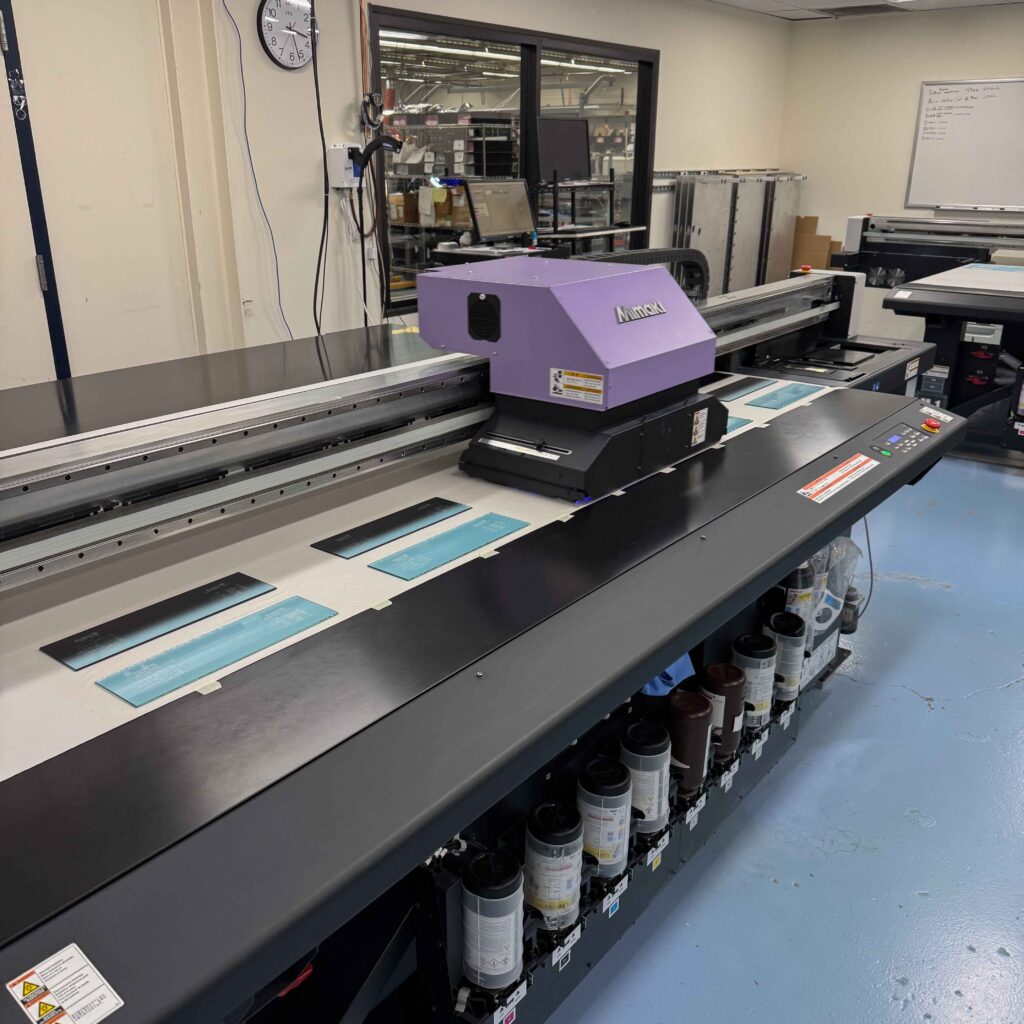
Assembly, checks and attention to detail
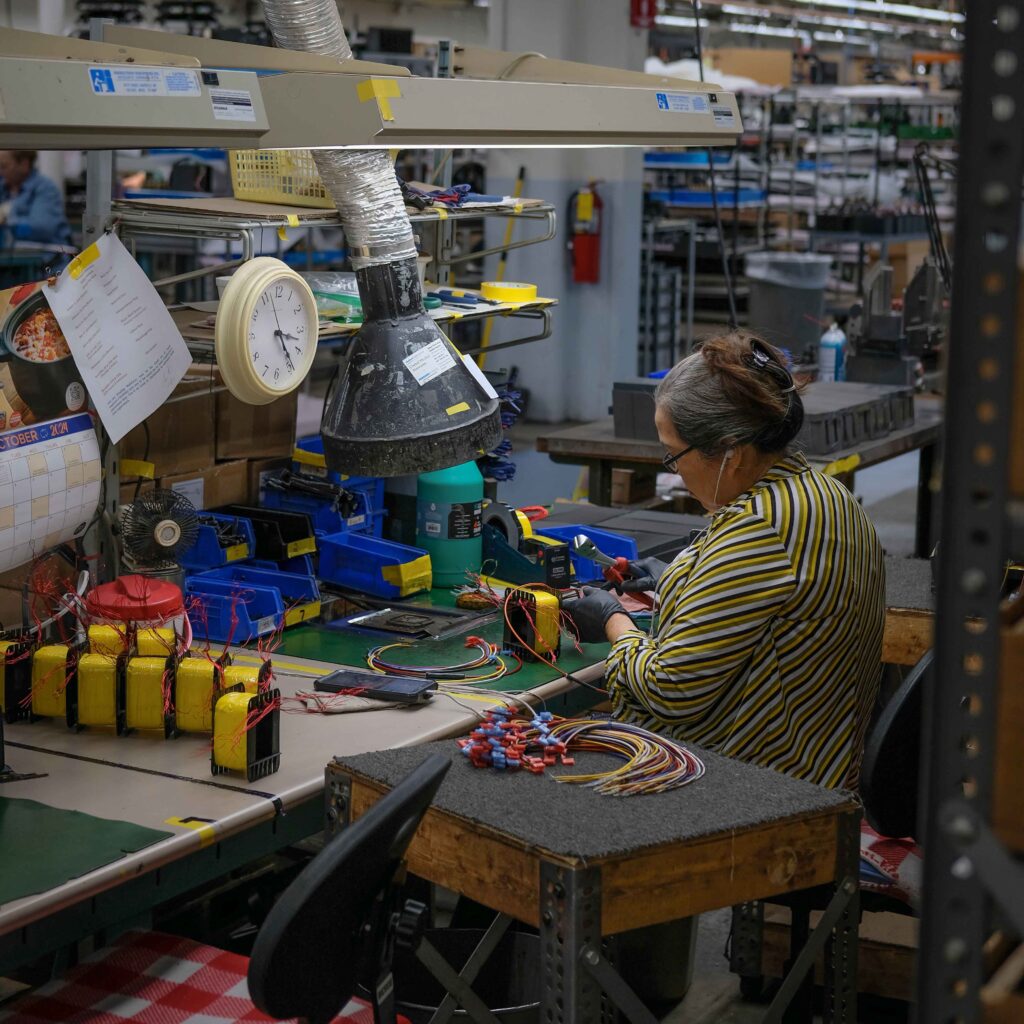
The production process shows how much work goes into every McIntosh electronic product.
Amplifiers are also physically important objects. They weigh, take up space, have massive transformers, sturdy chassis, and precision-crafted front panels. But what really matters is how everything is managed internally.
Components aren't simply assembled and enclosed in a frame. Every step is checked. Each device must meet precise parameters. Each fase it makes sense.
This is crucial, especially for products in this price range, where long-term reliability is an integral part of their value. A McIntosh amplifier isn't just purchased for the moment, but also for its ability to remain a central component of a system for many years.
This is precisely what emerges during the visit: the construction is designed to provide continuity, not to chase a passing fad.
The allure of McIntosh blue VU-meters
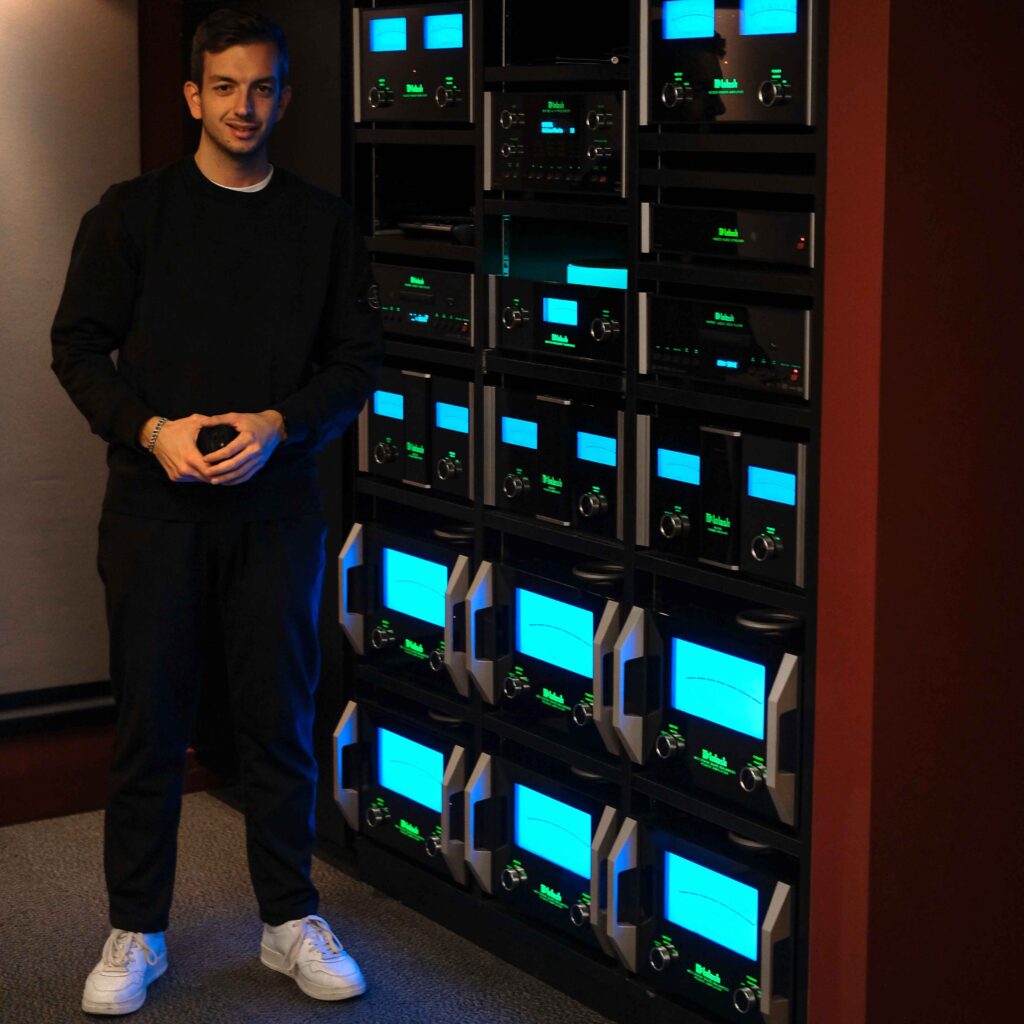
It's impossible to talk about McIntosh without talking about the blue VU meters.
They're probably one of the most recognizable aesthetic elements in all of Hi-Fi. But seeing them in the factory setting, before the product arrives in a store or at an enthusiast's home, has a different effect.
They're not just a scenic detail. They're part of the McIntosh language.
The black glass front, the blue light, the hands, the symmetry of the panel: everything contributes to creating a precise identity. It's an aesthetic that you may or may not like, but it has a rare strength. You see a McIntosh even from afar and you immediately know it's a McIntosh.
In a market where many products end up looking the same, this recognisability is a huge asset.
Tradition and contemporary products
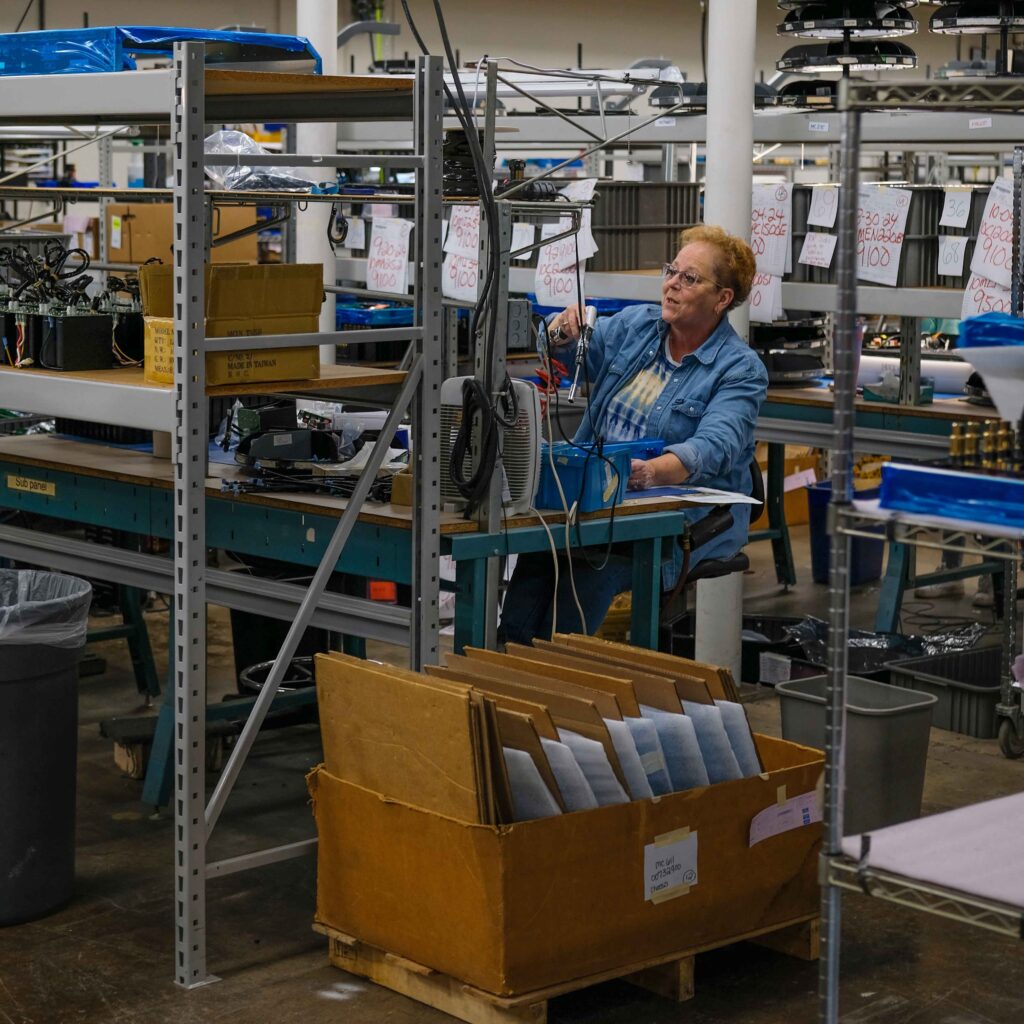
Another interesting point of the McIntosh visit is seeing how the brand manages to combine tradition and modernity.
On one side, there are amplifiers, preamplifiers, power amplifiers, and products that directly recall the brand's history. On the other, there are electronics designed for contemporary listening, with digital inputs, streaming, integrated DACs, and features more in line with current usage.
This is a major challenge for any historic brand: remaining true to itself without becoming stagnant.
From this perspective, McIntosh has chosen a clear path. It doesn't abandon its identity, but continues to update its range to respond to a way of listening that has changed profoundly over the years.
Today, a Hi-Fi system can start with a turntable, a CD player, a streamer, a television, or a digital library. McIntosh tries to accommodate all these scenarios, while maintaining the same basic footprint.
Watch the full YouTube video of our McIntosh visit
The video provides a firsthand look at the factory, some of its production departments, moments from the visit with Charlie Randall, and several details that are difficult to fully convey in words.
Watching the full video is the best way to truly immerse yourself in the atmosphere of the McIntosh Binghamton factory. You get a better sense of the scale of the factory, the people's work, the attention to detail, and the way these products are built.
For those who love the world of Hi-Fi, video is a very interesting piece of content because it allows you to go beyond the finished product. You don't just see the amplifier turned on in a system, but the process that leads to its creation.
If you'd like to learn more about our visit to McIntosh, we recommend reading the article and watching the full video on our YouTube channel.
Why visiting the McIntosh factory changes your perception of the product
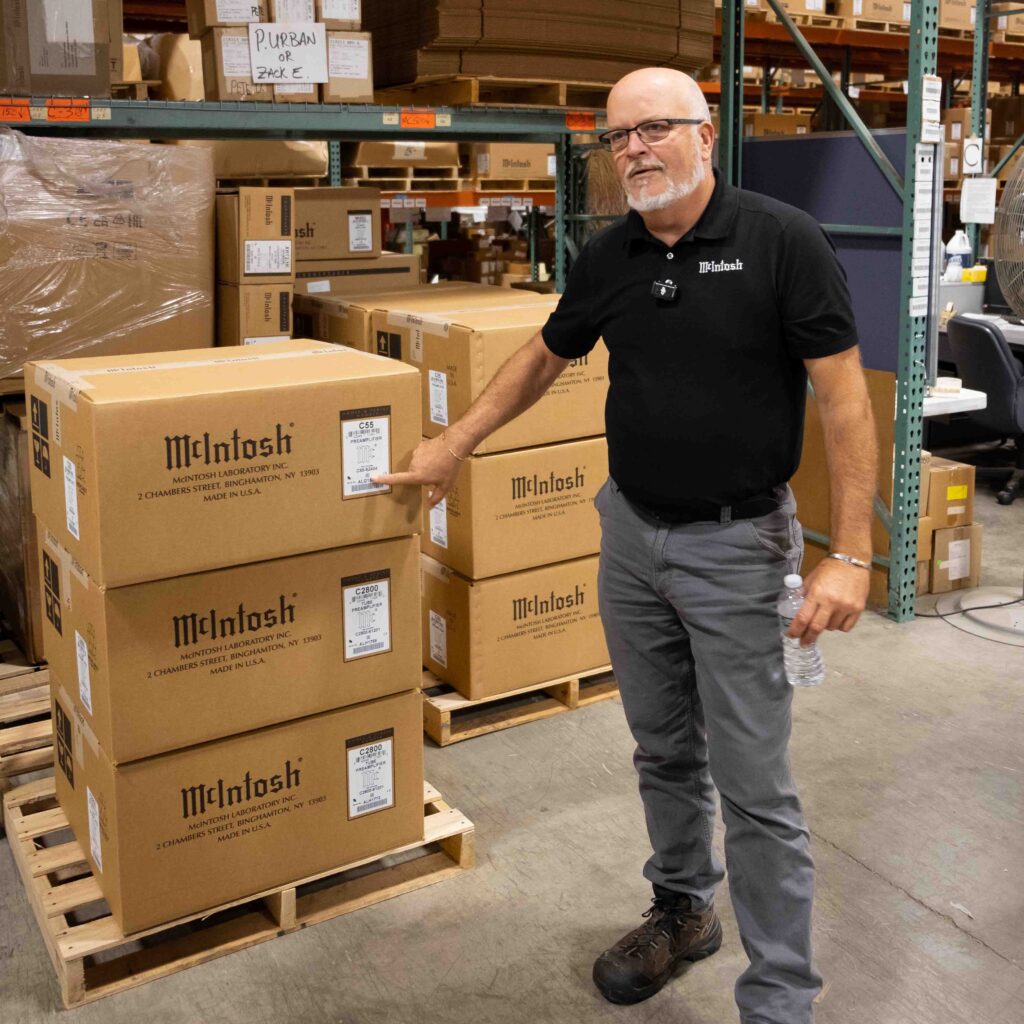
For those who sell and talk about Hi-Fi every day, visiting a factory is always important.
We constantly see products in the store, install them, listen to them, compare them, and explain them to customers. But going to the place where they're made adds a whole new level of understanding.
You better understand what's behind the price. You better understand why certain devices are built a certain way. You also understand how important people are: technicians, assemblers, designers, production managers, and those rarely seen, but who determine the final quality of the product.
In the case of McIntosh, this is even more evident, because the brand has a very strong iconic component. The risk, from the outside, is to stop at the image: the blue VU meters, the black glass, the American charm.
The factory, on the other hand, brings everything back to earth.
Show the work.
It shows the complexity.
It shows why these objects continue to have such an important weight in the Hi-Fi world.
A visit that helps to better tell McIntosh
For us, this visit to McIntosh was above all a tool for better understanding.
Better understand the brand, its products, its manufacturing philosophy, and how McIntosh interprets high fidelity. Not as a purely technical exercise, but as a combination of sound, reliability, aesthetics, history, and presence.
Having Charlie Randall as our guide made it all the more meaningful, because it allowed us to see McIntosh through the eyes of someone who lived it from the inside and contributed directly to its growth.
When a McIntosh product arrives in the store, you look at it differently. It's no longer just an amplifier in a box. It's the result of a supply chain, a corporate culture, and a specific manufacturing history.
And this, ultimately, is the greatest value of a visit like this: returning home with more tools to better describe what you hear.
DISCOVER MCINTOSH PRODUCTS