




"Best turntable" rankings last only as long as the model they recommend. The mistakes that lead to buying the wrong one, however, have been the same for twenty years—and they don't depend on which model comes out this year. We see them repeated in stores every week, often by people who have done a lot of research before coming in. If you avoid five of them, you'll find the right turntable on your own, in any price range.
Mistake 1: Comparing turntables by looking only at the price of the turntable
This is the most costly mistake, and almost no one notices it in time. A turntable alone doesn't make sound: you need a cartridge and a phono preamplifier . Two models that cost the same on display can have very different destinies, because one arrives fully assembled and the other not.
Before comparing two prices, always check three things:
- Is the head included and already mounted? A decent head that can be purchased separately starts at a few dozen euros and goes up quickly;
- Is the phono built in? Some models have it on board with a switch, some don't, and your amplifier may not have it;
- Does your amplifier have a PHONO input? An AUX input is no good: the signal from a cartridge is hundreds of times weaker and needs to be equalized.
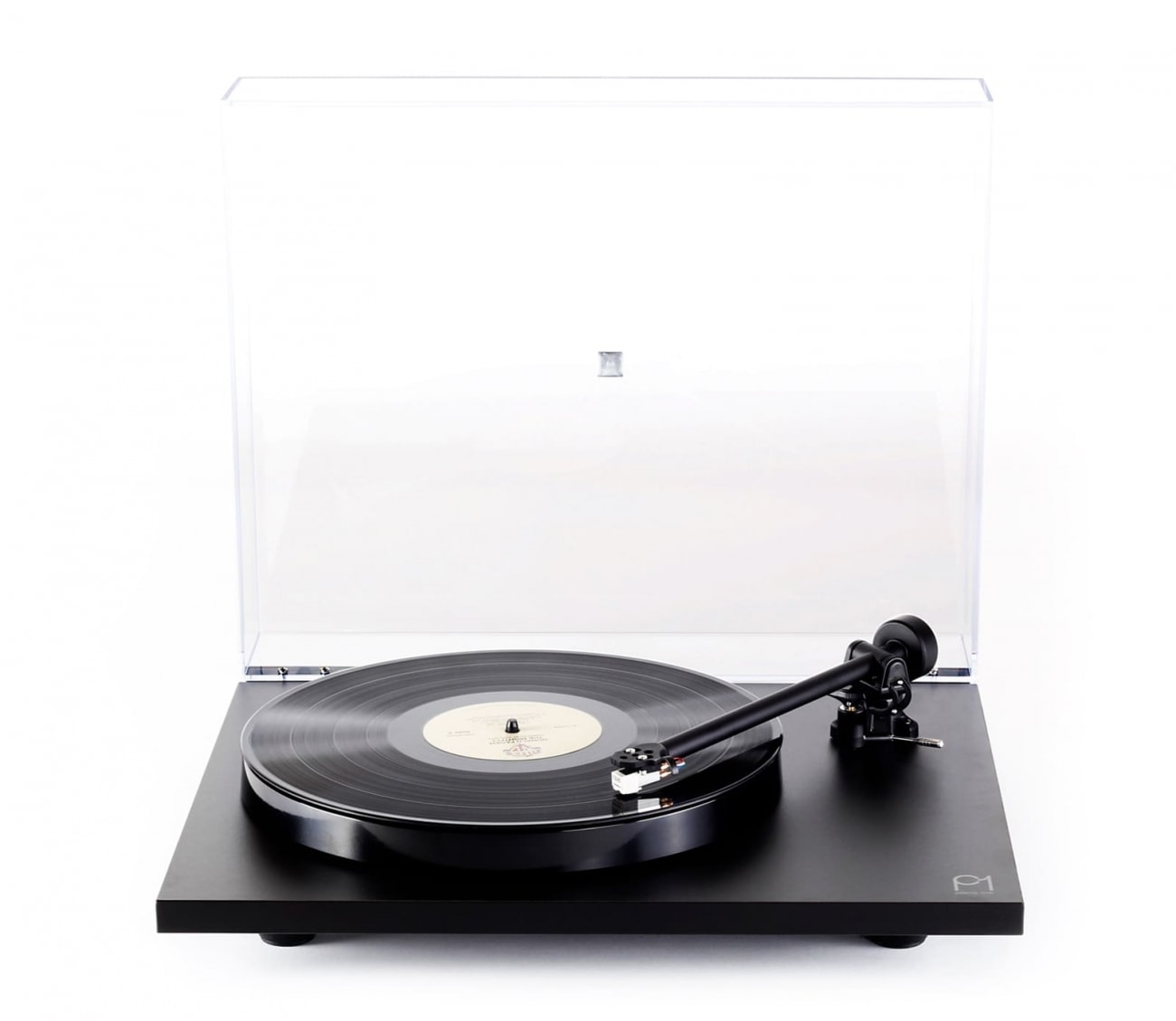
This is precisely why brands like Pro-Ject sell the same chassis in different versions: the T1 EVO and the T1 EVO Phono are the same turntable, with and without the phono stage. If your amplifier already has a phono input, that price difference is money you can put elsewhere.
Mistake 2: Buying the "all-inclusive" with speakers inside
Cases with built-in turntables and speakers are inexpensive and seem like the perfect gateway. The problem is mechanical, not tasteful: the speakers are housed in the same cabinet as the tonearm . Every vibration they produce is transmitted to the needle, which reads it as if it were music engraved in a groove.
There's a second, less obvious and more serious consequence: these devices almost always use ceramic cartridges with very high tracking force. It's not just a matter of sound— they wear out records . If you have a cherished collection, or if you inherit someone's vinyl, it's a risk that's not worth the money you'll save.
The threshold below which it's best to wait is lower than you might think. Even with entry-level models from serious brands—a Teac TN-180BT , an Audio-Technica AT-LP70X —you're in a different league: real tonearm, replaceable cartridge, and records that won't get damaged.
Mistake 3: Thinking about the turntable and not where to place it
A turntable is the only component in the system that plays a groove a few hundredths of a millimeter wide with a diamond tip. Everything that makes it vibrate ends up in the sound. And that's why the same turntable, moved two meters away, can seem like a completely different piece of equipment.
The rules are few and apply at any price:
- never above or next to the speakers, and never on the same piece of furniture if you can avoid it;
- a plan rigid and heavy beats an elegant yet flexible piece of furniture;
- If the floor is wooden and gives way when you walk, consider a wall shelf: it costs little and solves the problem at the root;
- put the bubble on the platter. An uneven turntable causes the tonearm to work poorly, and you can hear it.
If you're also choosing the position of your speakers, it's worth reading our guide on how to position your speakers : many of the vibrations that reach the stylus originate there.
Mistake 4: Assuming that vintage is a bargain
We say this from a shop that deals a lot in second-hand items, so believe us: a vintage turntable can be an excellent purchase or a bottomless pit , and the difference can't be seen in the photograph.
What to check before buying:
- la pinOn a forty-year-old device it almost always needs replacing, and on certain vintage heads the replacement no longer exists;
- la belt, if it is belt-driven: it dries out even when stationary, but it is usually found;
- i automatic commands: the automatic return mechanisms are the part that jams first and the most annoying to put back;
- il cover: it may seem like an aesthetic detail, but on many models it is impossible to find and weighs heavily on the value.
The right question isn't "how much does it cost," but " how much does this cost plus what it needs ?" A classic that costs little and then demands the same for a cartridge and service is a sensible purchase only if you're really interested in that model. Otherwise, once you add the two figures together, the comparison should be made with a Rega Planar 1 or a Pro-Ject T2 , new and under warranty.
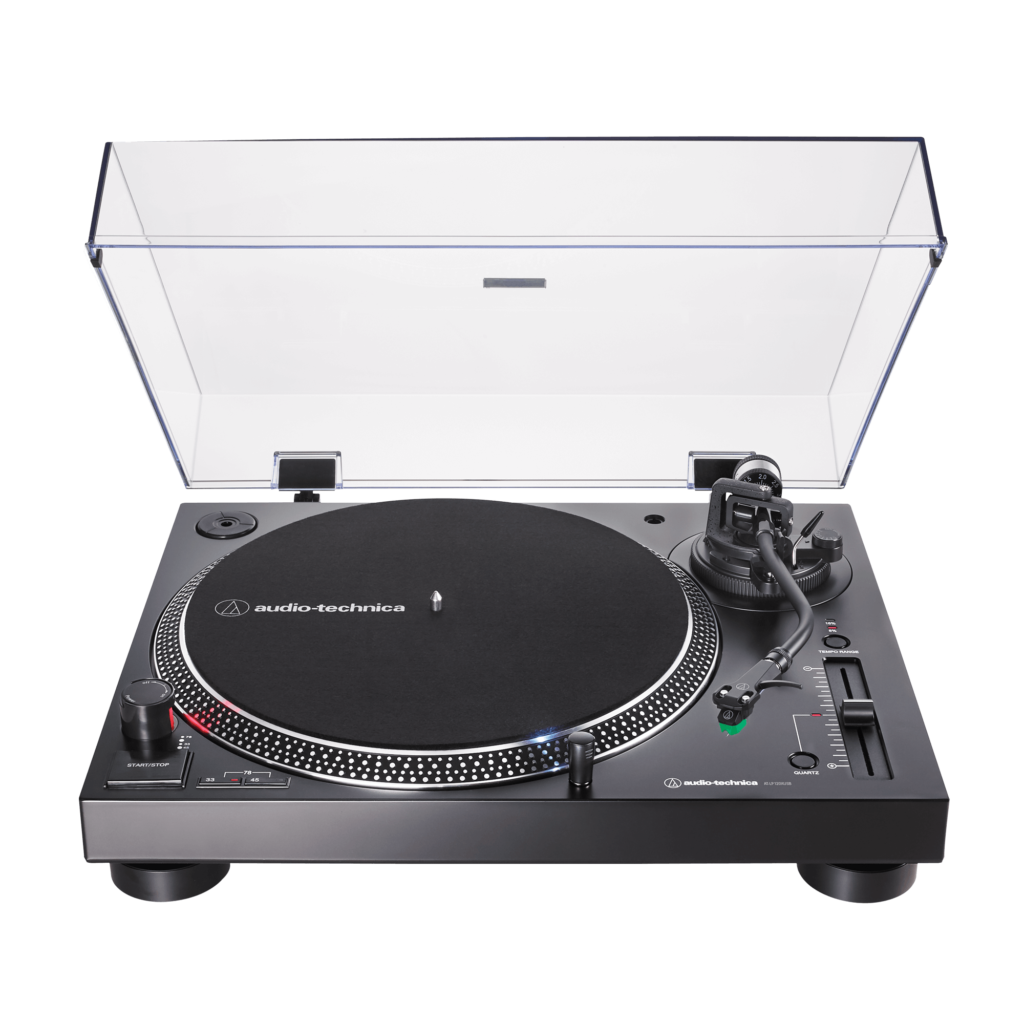
Mistake 5: Choosing direct drive "because that's what DJs do."
Belt-drive vs. direct-drive is the oldest debate in vinyl, and it's almost always misunderstood. Neither is superior in every way: they're two different ways of solving the same problem: isolating the platter from motor vibrations.
- la belt it acts as a mechanical filter between the motor and the platter, and is the path that most hi-fi manufacturers choose for home listening;
- la direct drive It gets up to speed quickly and holds it precisely, has no belts to replace, and allows for scratching — which is what it was born for in clubs.
If you need a turntable for listening while sitting on the couch, direct drive doesn't automatically give you an advantage. It makes sense if you like the device, want to mix, or want to avoid having to carry spare parts: in that case, the Audio-Technica AT-LP120X USB is a classic in this category. For pure listening, the choice is much wider in the same price range.
How to choose, in three steps
If we had to boil it all down to one method:
- Start from the amplifier, not from the turntable: check if it has a phono input, and from there you will know if you need a model with an integrated stage.
- Decide on the total budget, including cartridge and phono, and compare models on that figure — not on the list price of the chassis alone.
- Look where you're going to put it before ordering. If the only available space is the cabinet where the speakers are placed, solve that before spending.
The rest—which brand, which model—comes naturally once you've established these three points. If you want to delve deeper into choosing your first device, we have a dedicated guide on how to choose your first turntable.
In our catalog, you'll find turntables from entry-level models to absolute references, and a wide selection of cartridges and tonearms if you want to upgrade your existing one instead of replacing it. If you tell us the make and model of your amplifier, where you plan to place the turntable, and what records you listen to, we'll tell you what makes sense in your price range—and also when it's best to keep what you have and just replace the cartridge.