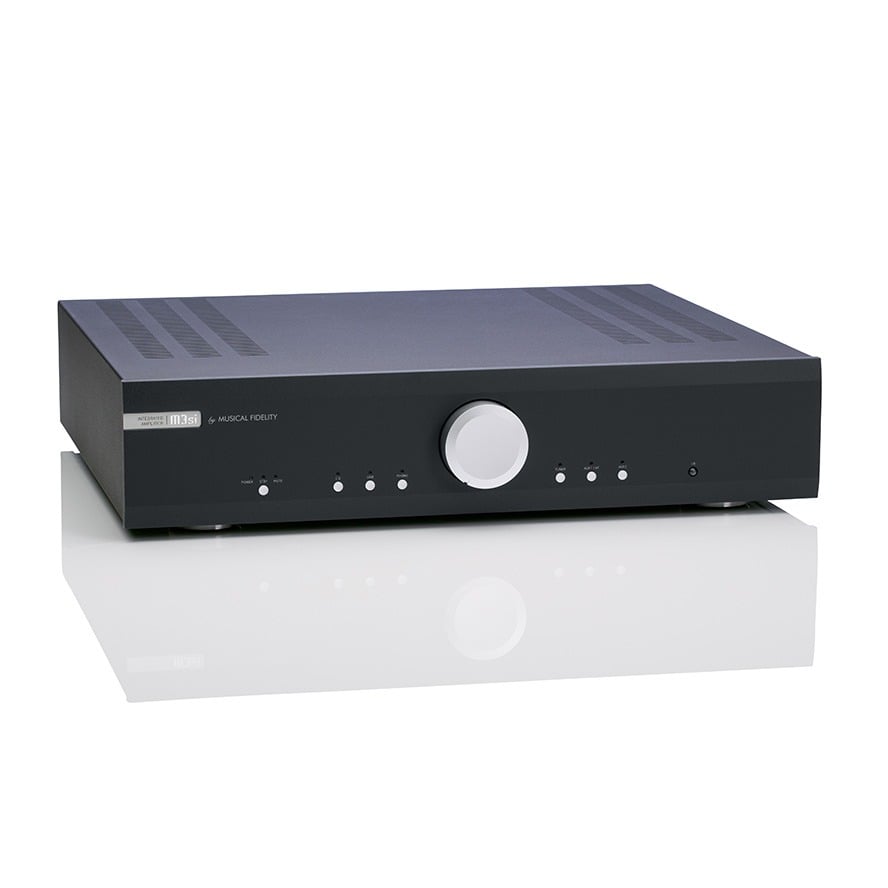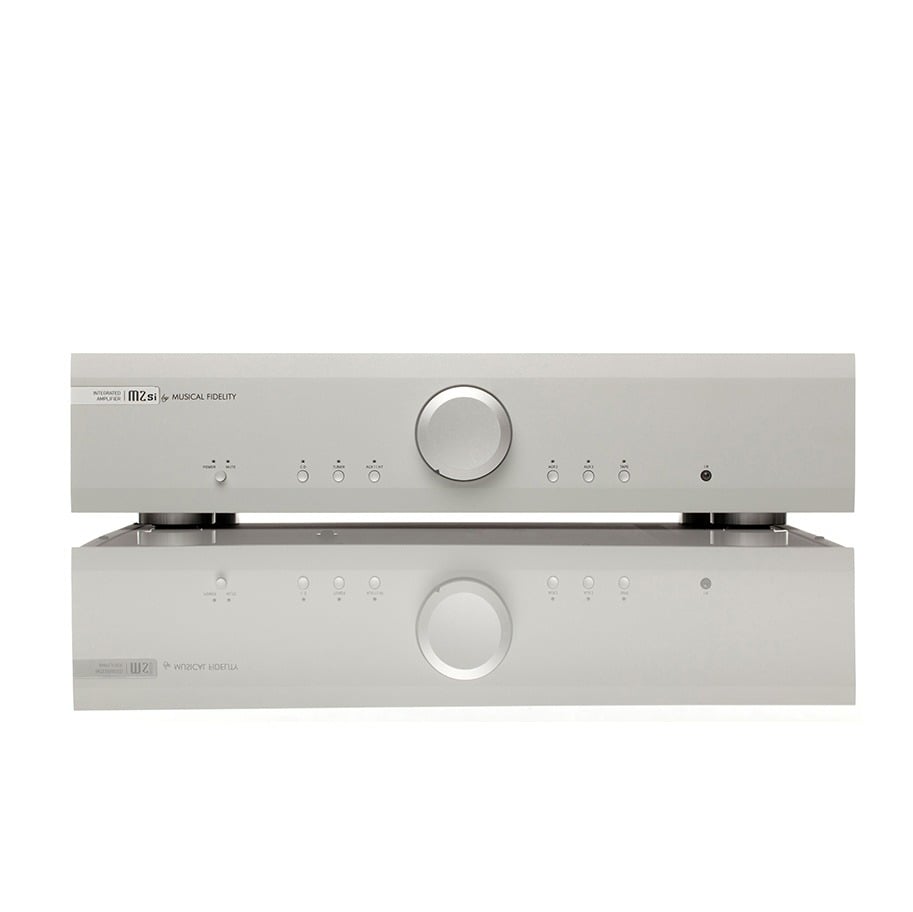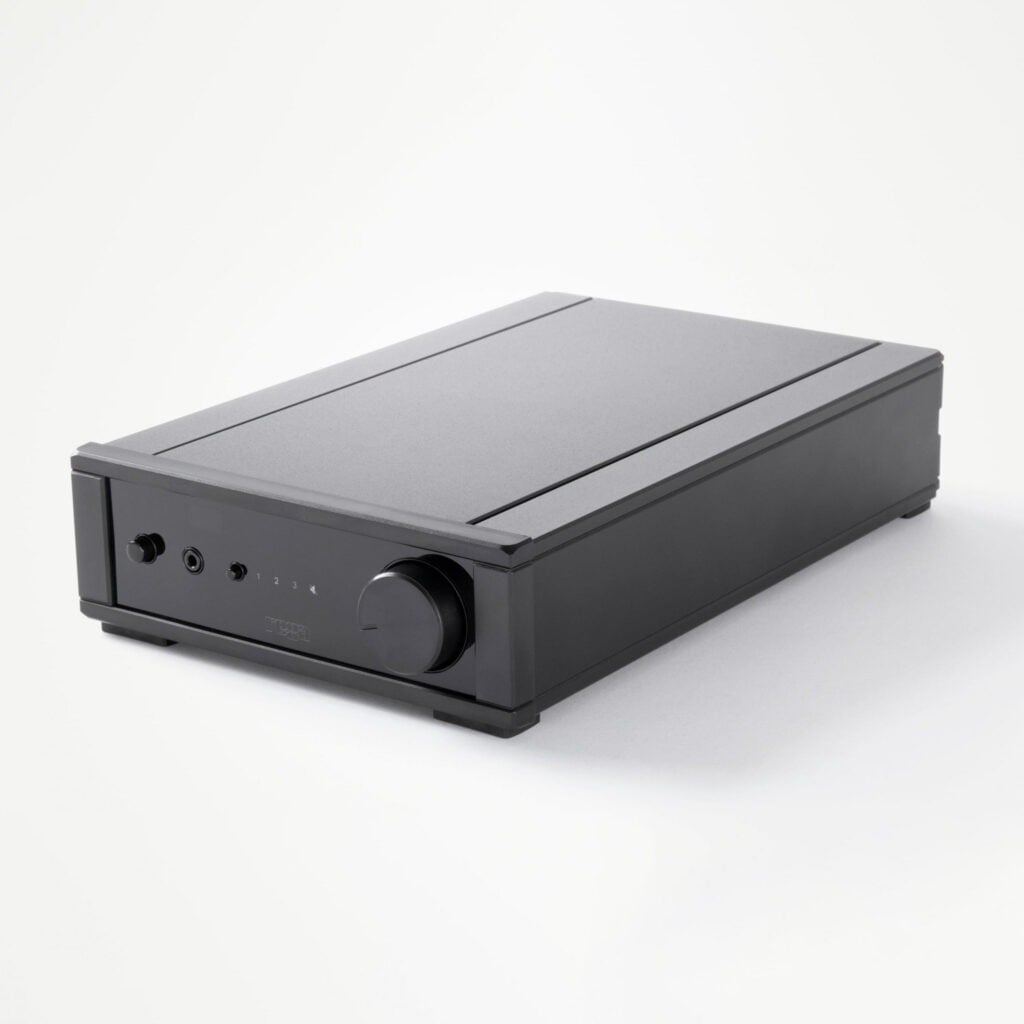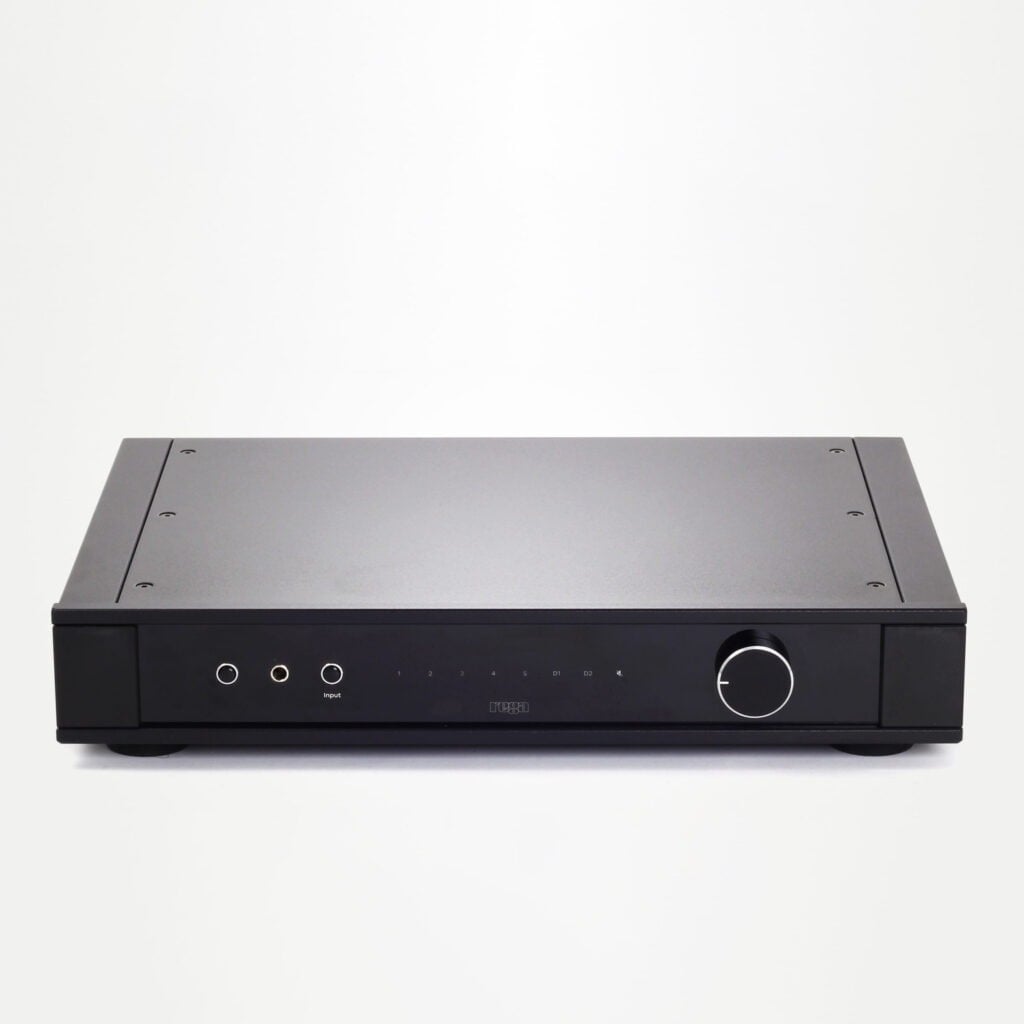





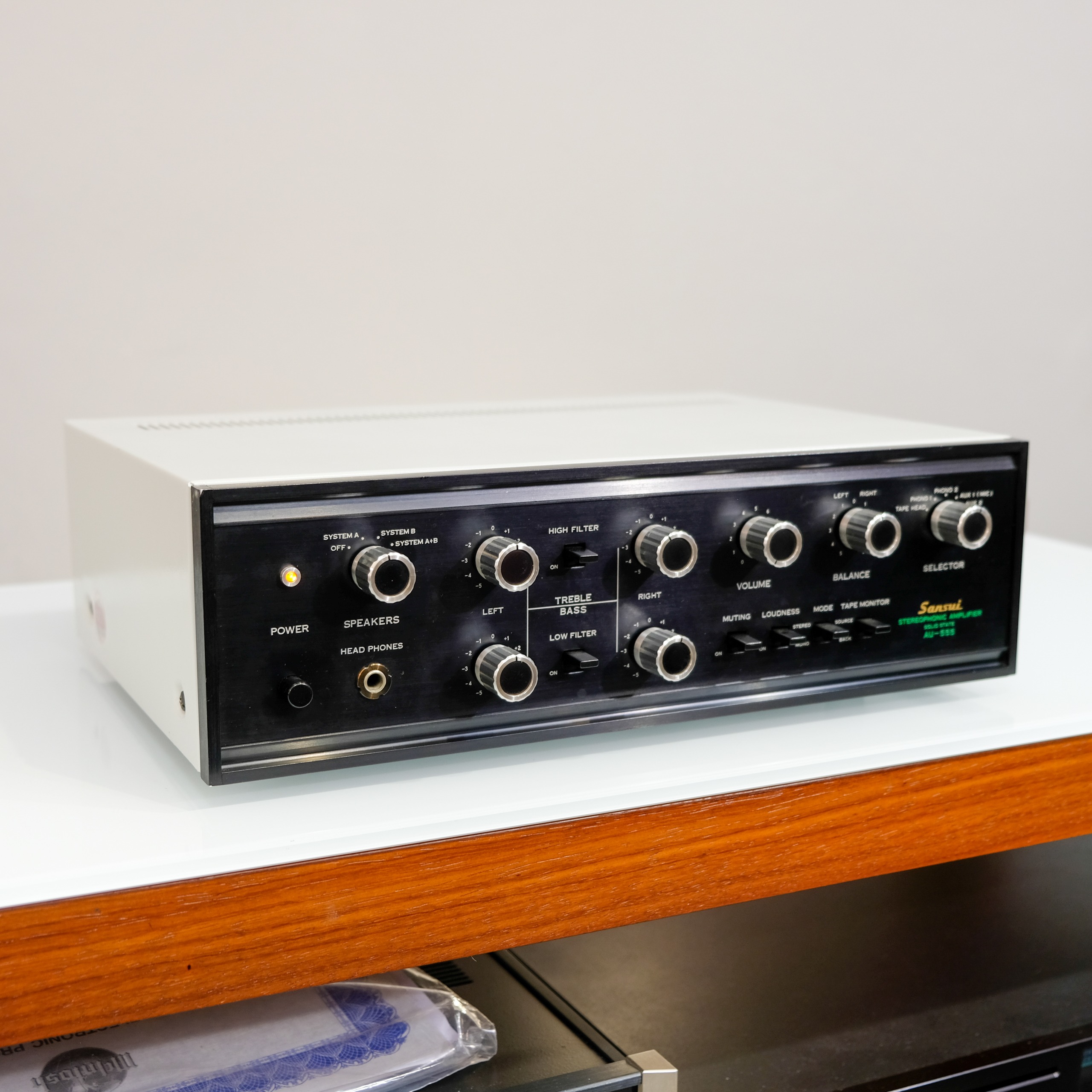
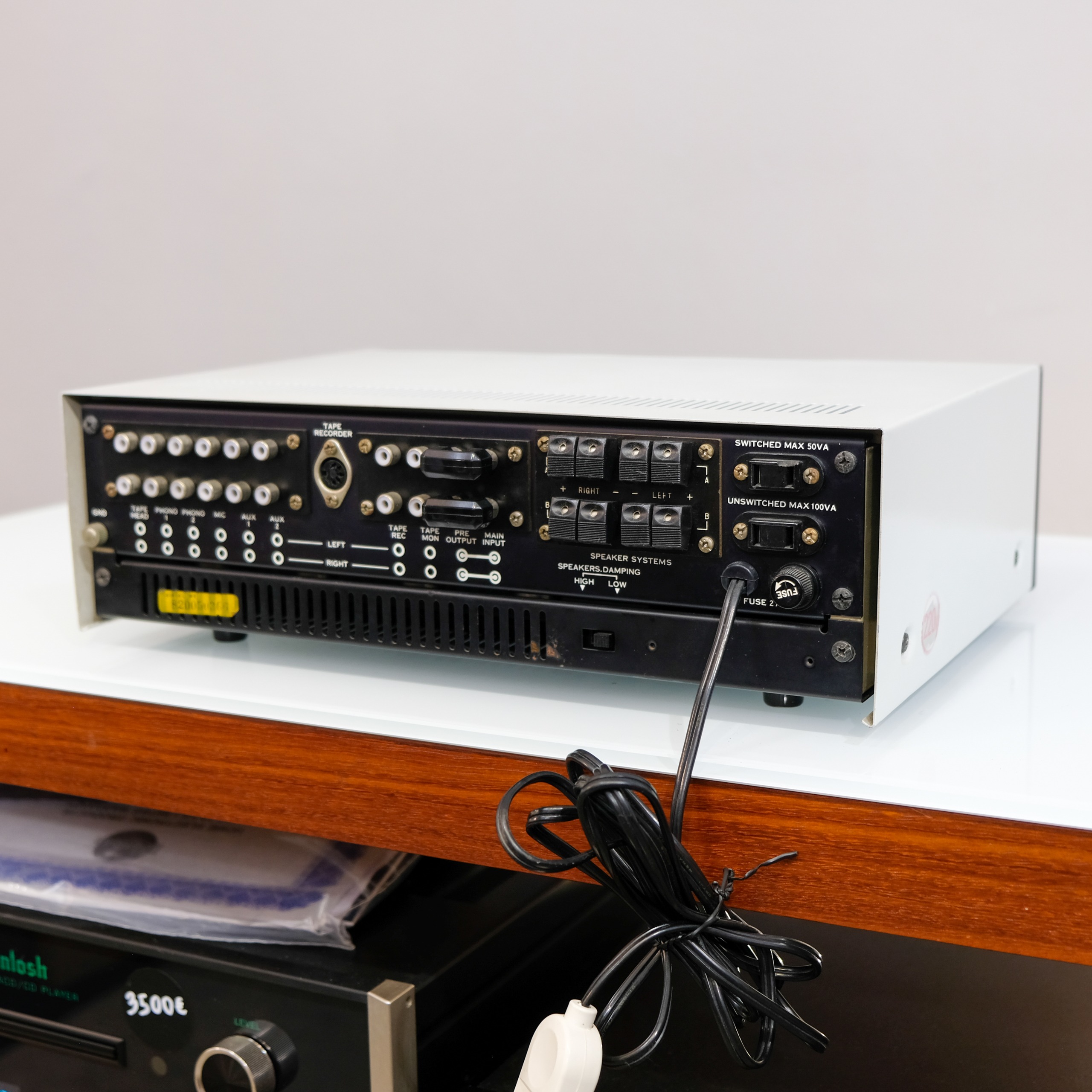
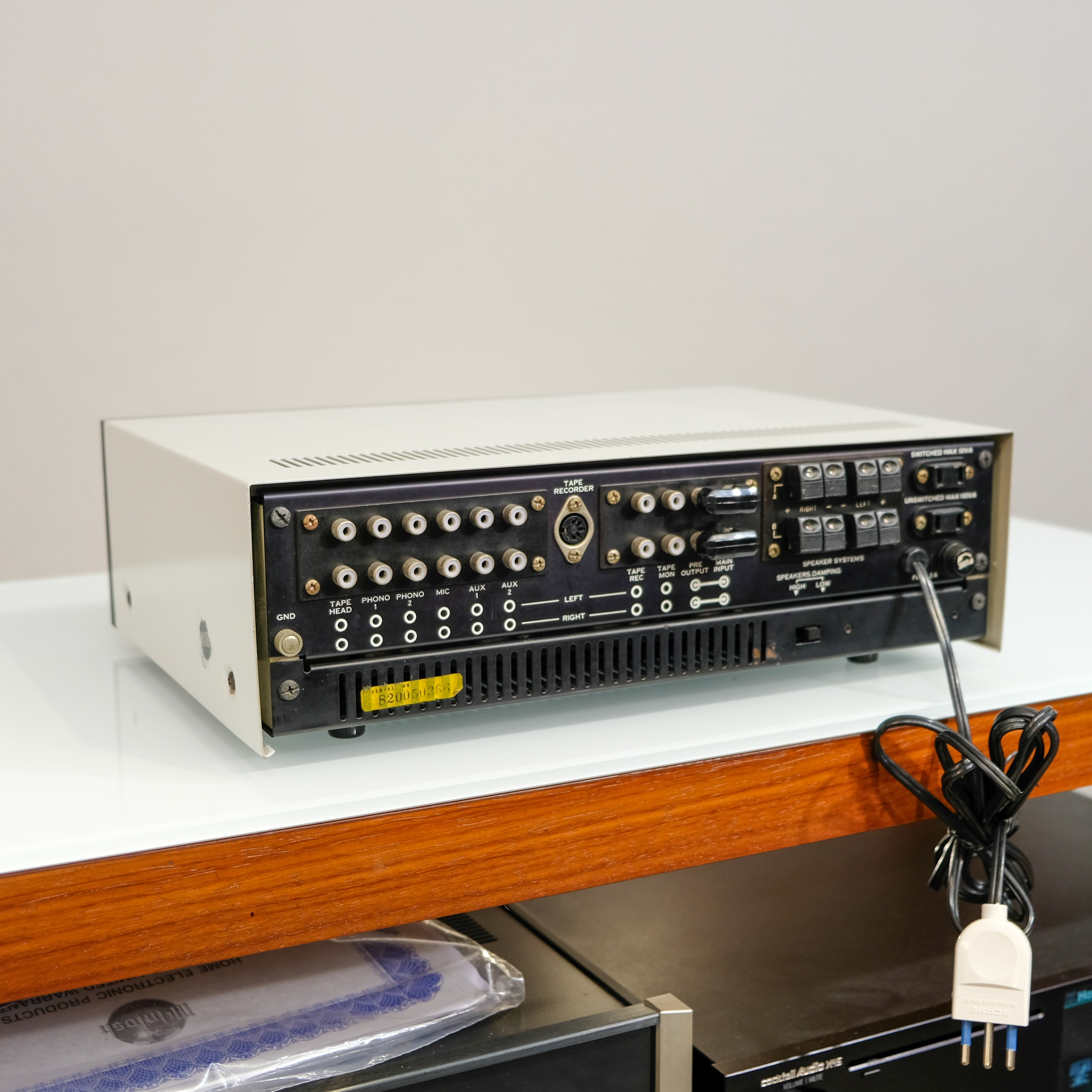
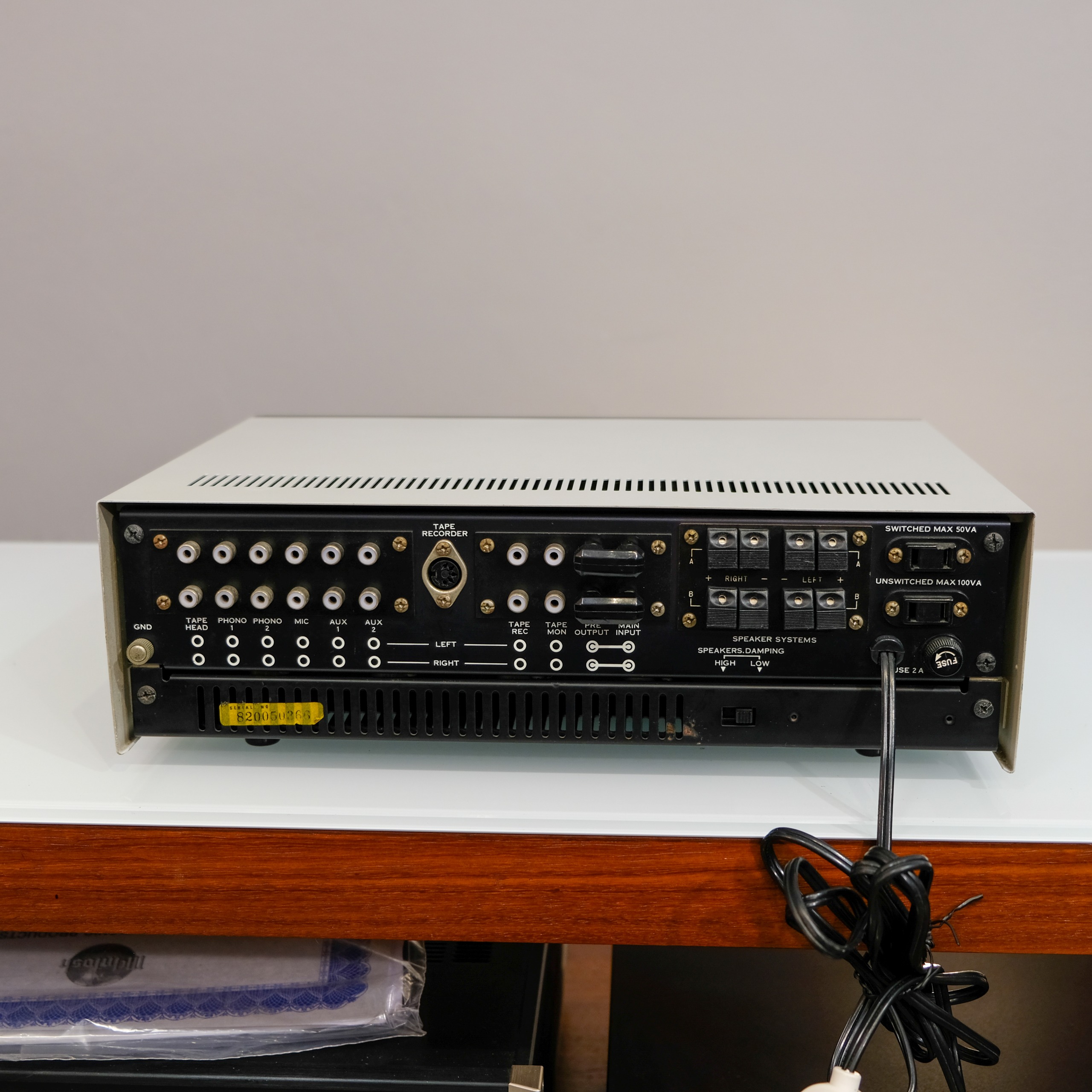
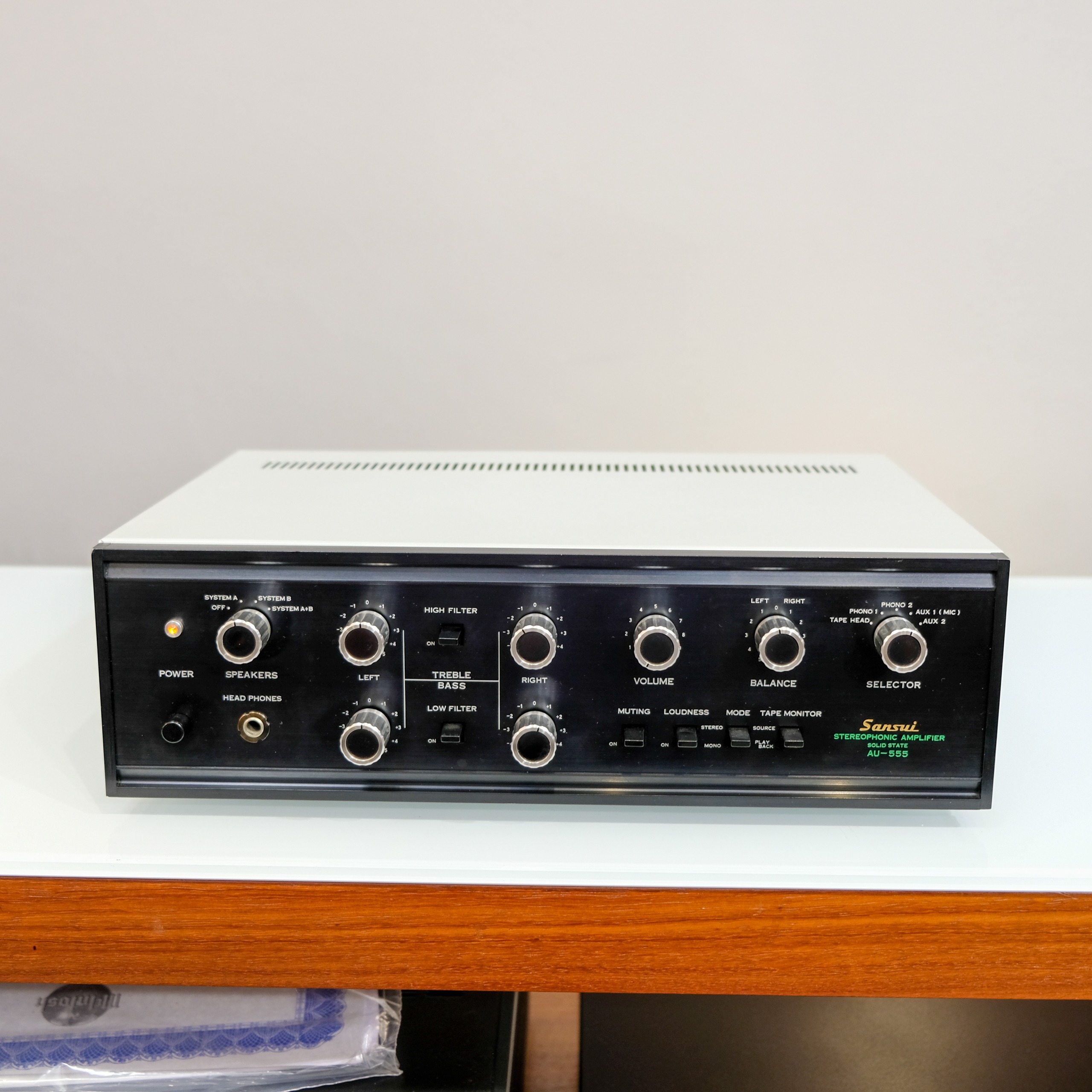
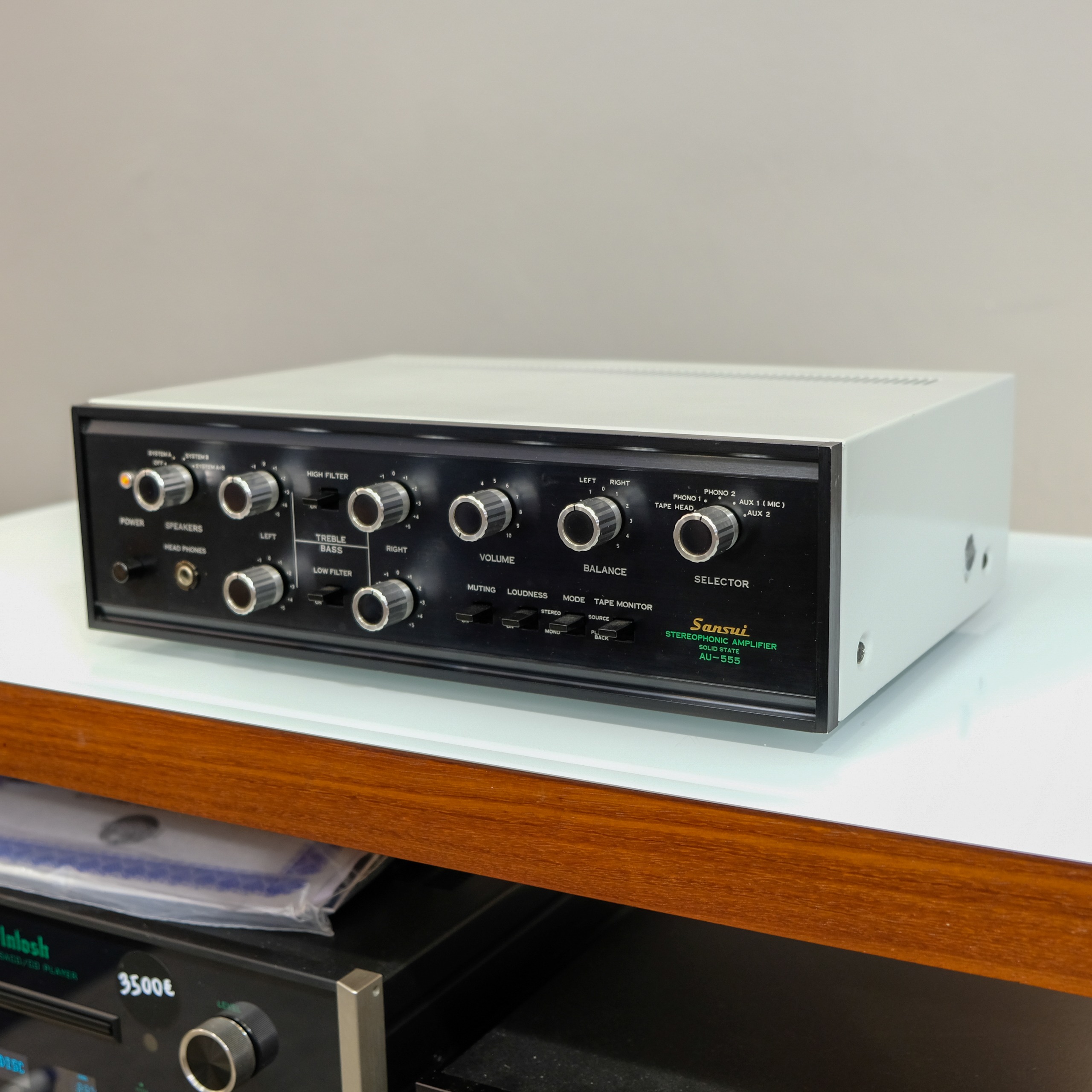
Description
Power-output: 25 watts per channel into 8Ω (stereo)
Frequency response: 20Hz to 30kHz
Total harmonic distortion: 0.5%
damping factor: 50
Input sensitivity: 2mV (MM), 180mV (DIN), 180mV (line)
Signal to noise ratio: 70dB (MM), 80dB (line)
Channel separation: 45dB (MM), 50dB (line)
output: 180mV (line), 30mV (DIN)
Speaker load impedance: 4Ω to 16Ω
Semiconductors: 23 x transistors, 2 x diodes
: 395 127 x x 278mm
Weight: 8kg
Specifications
| Amplification type | transistor |
|---|---|
| RMS power per channel | 25 W |
| Reference load | 8 ohm |
| Stadio phono | MM |
| Frequency response | 20Hz is 30kHz |
| Harmonic Distortion (THD) | 0.5% |
| Line input sensitivity | 180mV |
| Rapporto S/N | 80 dB |
| Input impedance | 2 kOhm |
| Dimensions (WxHxD) | 395 x 127 x 278 mm |
| Weight | 8 kg |
About the brand
Sansui is one of the most beloved names in Japanese hi-fi. The era that enthusiasts remember spans the 1960s to the 1990s, when the company designed and built amplifiers, tuners, and turntables in Japan that influenced generations of listeners.
Sansui: what brand is it?
Sansui Electric was founded in Tokyo on June 3, 1947, by Kosaku Kikuchi. Initially, it produced transformers. From 1954, it switched to tube amplifiers and preamplifiers, and in 1958, it introduced its first tube stereo preamplifiers and power amplifiers. In the 1970s, it also made a name for itself with quadraphonic audio, with the QS-1 synthesizer in 1971 and the QS Vario Matrix decoder in 1973. During that period, its product line included amplifiers, tuners, receivers, turntables, cassette decks, and reel-to-reel tape recorders.
Then the market changed. The Shin-Yokohama plant closed in 2001, and in the early 2000s, high-end amplifier production in Japan ended. The Japanese company then ceased production in 2014. Since then, the Sansui name has also appeared on products made under license by other companies, which share only the brand name with the historic models.
AU Series Integrated Amplifiers
The AU series is at the heart of Sansui's history. The matte black front panel, typical of these integrated amplifiers, dates back to the mid-1960s. Among the models that many remember is the AU-999 from 1970, a solid-state integrated amplifier without output capacitors. The most famous is perhaps the AU-9500, introduced in October 1972 as the flagship: approximately 75-80 watts per channel and weighing over 20 kg.
Diamond Differential, X-Balanced, and the arrival of digital
In the late 1970s, Sansui introduced the "Diamond Differential" circuit in the power stage, for example in the AU-D607. In 1984, the AU-D907X introduced "X-Balanced" technology, which uses a balanced drive to reduce the effects of mass on the sound. The evolution of these circuits continued in the following years up to the Alpha series models, which remained in the catalog until 2000.
At the end of the 1980s came the AU-X911DG, with a built-in D/A converter for directly connecting a CD player: a sign of how the brand was trying to accompany traditional integrated amplifiers towards new digital sources.
What makes a Sansui recognizable?
The first feature is aesthetic. The matte black front of the AU integrateds has distinguished Sansui from the often silver-plated units of other Japanese manufacturers for decades, and even today, a glance is enough to recognize them.
The second is technical. Throughout its history, Sansui has worked primarily on the power stage: from the capacitor-free output of the AU-999 to the Diamond Differential and X-Balanced circuits, the goal has always been to reduce what comes between the signal and the speakers.
The third is the completeness of the offering. In the golden years, it was possible to build an entire Sansui system, from turntable to tuner to amplification, with a coordinated aesthetic. For those new to the brand today, it's useful to distinguish between the historic models, designed by Sansui Electric, and the more recent products that bear the same name under license.
Information and advice
Audiocostruzioni It is a shop with showroom and listening room in Carpi and an online store on audiocostruzioni.com. For information on Sansui models or for a system consultation, you can email us or stop by the store: in our listening room, we'll help you choose speakers and sources that match your electronics.
FAQ
This product is in the Archive section and is no longer available for sale. Visit our catalog to discover current models or contact us for personalized advice on a similar product.
When a model goes out of production, is sold permanently, or is no longer available from our suppliers, we move it to the Archive section. We maintain the page online for informational purposes: users and collectors can continue to consult specifications, descriptions, and reference images.
Probably. Visit our product catalog to discover equivalent models currently on sale: you can filter by category, brand, and price range to find the best alternative for your system.
We do not carry used or vintage products. To discover currently available alternatives, click the "Go to catalog" button at the top right of the page, or go directly to our product catalog to browse the models for sale.
We do not directly handle technical assistance or spare parts. On our support page , you'll find tables with direct contact information for service centers and specialized repairers: you can contact them directly to discuss repairs or spare parts availability.