





There are events where music isn't simply listened to. It's narrated, experienced, shared. It becomes personal memory, popular culture, collective history, and, for a few hours, an experience capable of uniting an entire room around a single gesture: truly listening.
The Riff Listening Theatre at the VYNI Festival 2026 was exactly that. A special event, built around vinyl, storytelling, and listening quality, in the extraordinary setting of the Teatro Cavallerizza in Reggio Emilia.
For the occasion, we brought a top-of-the-line Hi-Fi system, designed not just to boost volume, but to restore the music's full potential: body, dynamics, depth, presence, and immersion.
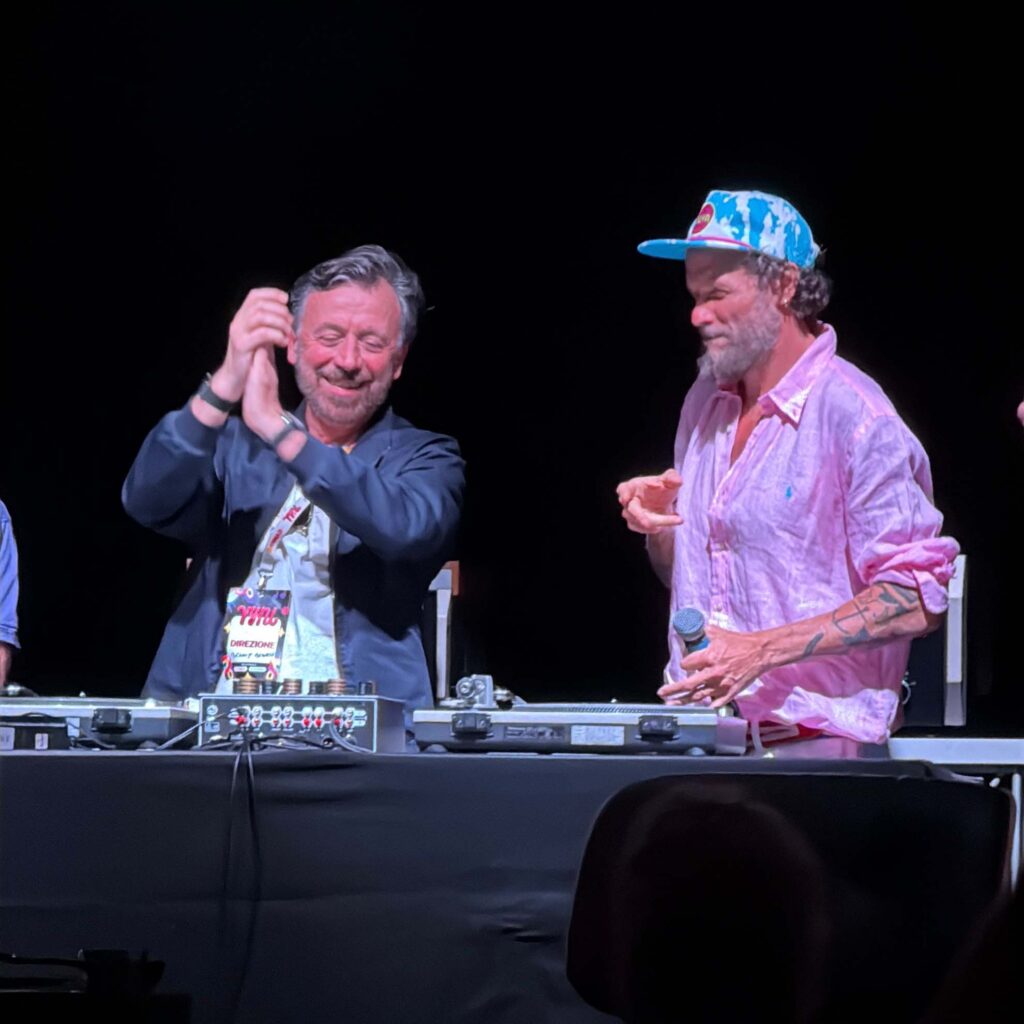
On stage, a special surprise guest: Jovanotti. Through a selection of vinyl records, he retraced his musical history, recounting his listening habits, influences, memories, and key moments in his artistic journey.
Moderating the meeting was Luca Sofri, who guided the narrative with ease, striking the right balance between conversation, memory, and listening. Finally, Benny Benassi, the creator of the format, closed the event by playing some records on the console, bringing everything back to the most immediate and powerful gesture: playing music and sharing it with a full room.
The result was an incredibly successful event.
A theater transformed into a listening room
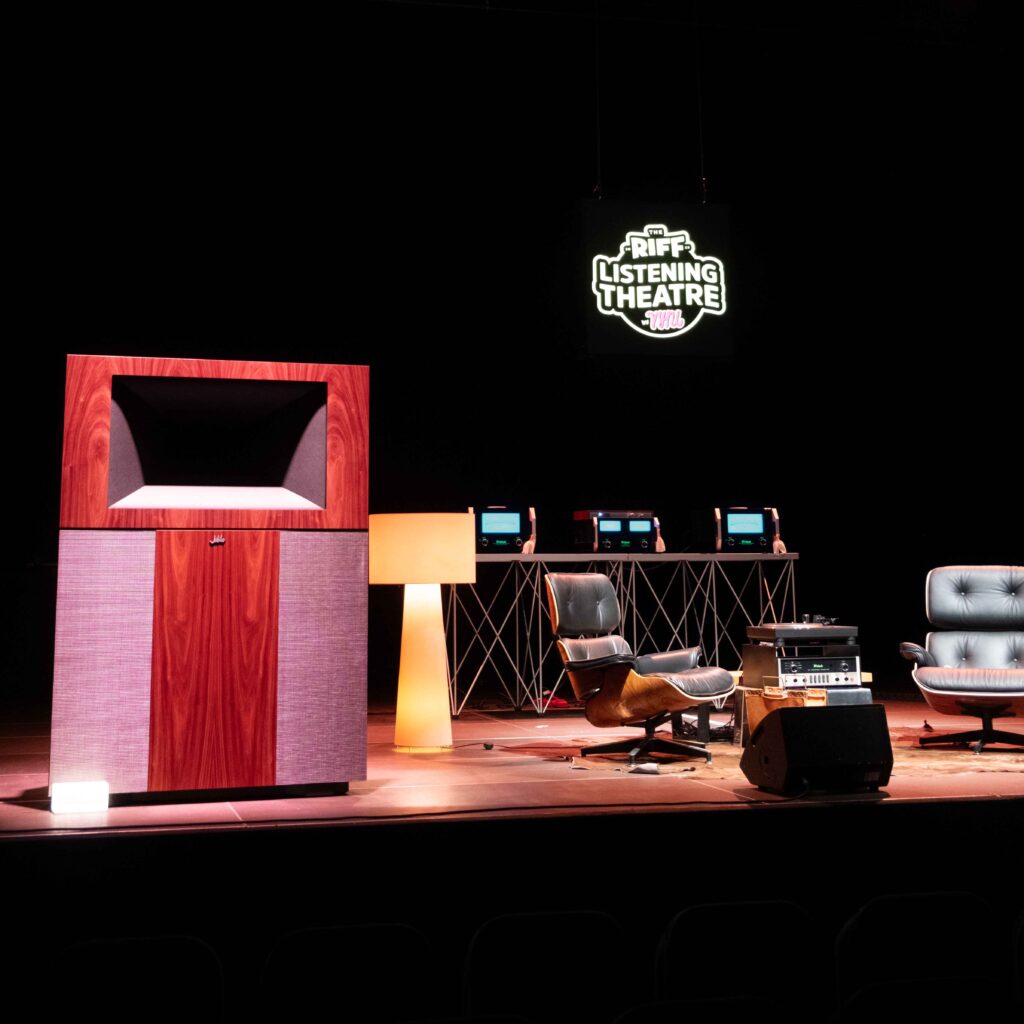
The Teatro Cavallerizza in Reggio Emilia is a space with a powerful identity. It has a powerful stage presence, a distinctive atmosphere, and that suspended dimension that only certain theaters can achieve.
Bringing a Hi-Fi system of this level into a place like this, however, means facing a very different challenge compared to a normal home installation. It is not enough to simplyempire the environment. It's not enough to turn up the volume. It's not enough to impress.
The music must be delivered in a natural, understandable, and engaging way. Detail and dynamics must be preserved, vocals must be given body, recordings must be given depth, instruments must be given presence, without turning listening into a technical demonstration.
The goal was clear: to create the conditions for every vinyl record chosen by Jovanotti to become part of the story. Each record had to have the right weight, the right size, the right emotional presence.
In such a context, the sound system must perform a complex task. It must be powerful, because the space demands it. It must be refined, because vinyl highlights every nuance. It must be dynamic, because music thrives on contrasts. But above all, it must be natural, because the audience shouldn't be thinking about the sound system: they must be immersed in the story.
When everything works, technology disappears.
What remains is the voice, the record, the needle touching the vinyl, and the thrill of listening together.
The Riff Listening Theatre: Listening to Music Through Stories
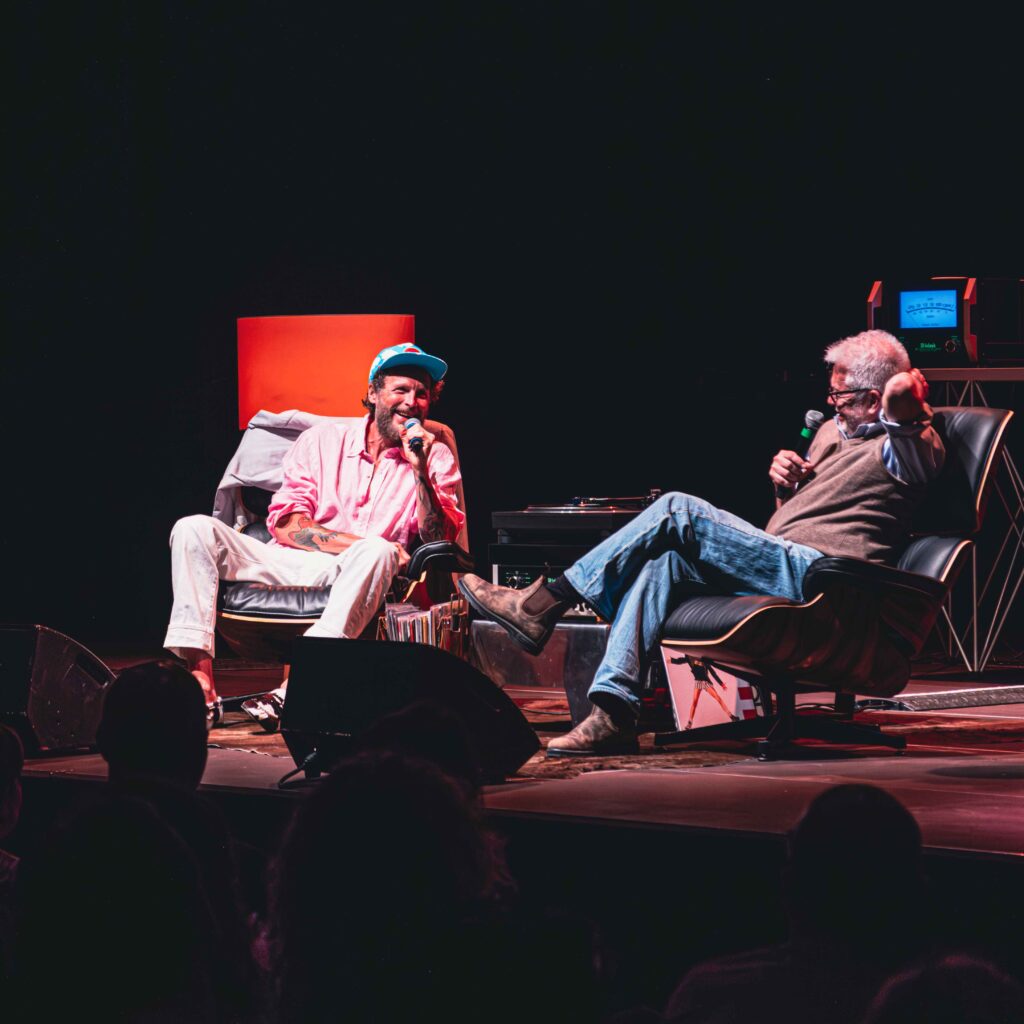
The Riff Listening Theatre is a valuable format because it puts listening back at the center.
In an age where music is often consumed in a hurry, skipping from one track to another, listening distractedly from small speakers or headphones, this type of experience chooses the direction oppofrom.
It stops.
It takes time.
Invite a guest to tell their story through the records that have shaped their life, their education, and their imagination.
This is not just an interview.
This is not a commented playlist.
It's not even just a musical event.
It's a different way of entering an artist's history: not starting from the dates, the awards or the successes, but from the records.
From the listenings that left a mark.
From the songs that paved the way.
From the sounds that have built a sensitivity.
With Jovanotti this mechanism worked particularly well.
His musical history is made up of encounters, influences, changes in direction, and constant curiosity. Telling it through vinyl means giving concrete form to all of this.
Each album becomes a stage.
Each song opens a memory.
Each listen adds a piece to the journey.
The audience didn't just witness a conversation.
He went on a musical journey.
Jovanotti and vinyl: music as a living memory
Jovanotti's presence gave the event a special dimension. Not just because of his name, of course, but because of the way his artistic story lends itself to being told through his records.
Jovanotti is an artist who has always explored diverse genres, languages, and musical cultures. From rap to funk, from world music to pop, from electronic music to singer-songwriter music, his career has always been marked by a profound openness to sound and cross-fertilization.
Listening to the records that helped pave this path means entering an artist's emotional and cultural laboratory. It means understanding where certain intuitions, energies, rhythms, and choices come from.
Vinyl, in this sense, wasn't just a nostalgic medium. It was a narrative tool.
A physical record has a different time. It needs to be chosen, picked up, positioned, and listened to. It's not as immediate as streaming, but precisely for this reason it requires a deeper form of attention. At an event like The Riff Listening Theatre, this ritual becomes part of the experience.
The music doesn't come in as background.
It arrives as a presence.
Luca Sofri: The story told with the right balance
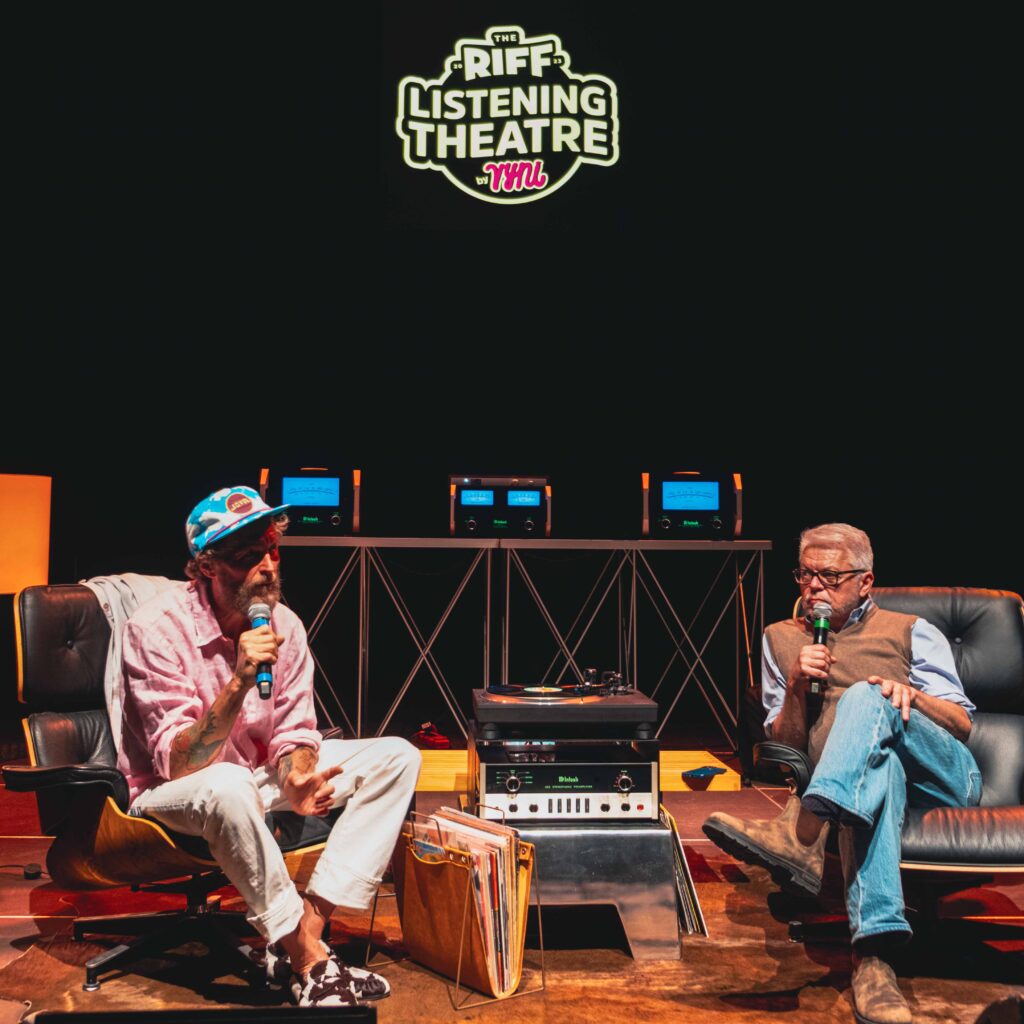
The meeting was moderated by Luca Sofri, who had the delicate task of balancing storytelling, listening, and the pace of the event.
When you talk about music in front of an audience, the risk is always that of explaining troppo or, on the contrary, to leave everything troppo Dispersive. In this case, balance was crucial. The words had to open the space for listening, not replace it. The questions had to accompany the process, not interrupt it.
The result was a fluid, natural narrative, capable of enhancing both the guest's personality and the strength of the chosen records.
Luca Sofri gave structure to the conversation, letting the music and memories guide the event's focus. This is precisely the value of a well-constructed format: when the moderation works, it doesn't feel like something external, but rather like an invisible trail that allows the story to unfold.
The audience remained immersed in the experience from beginning to end.
The heart of the system: Klipsch Jubilee
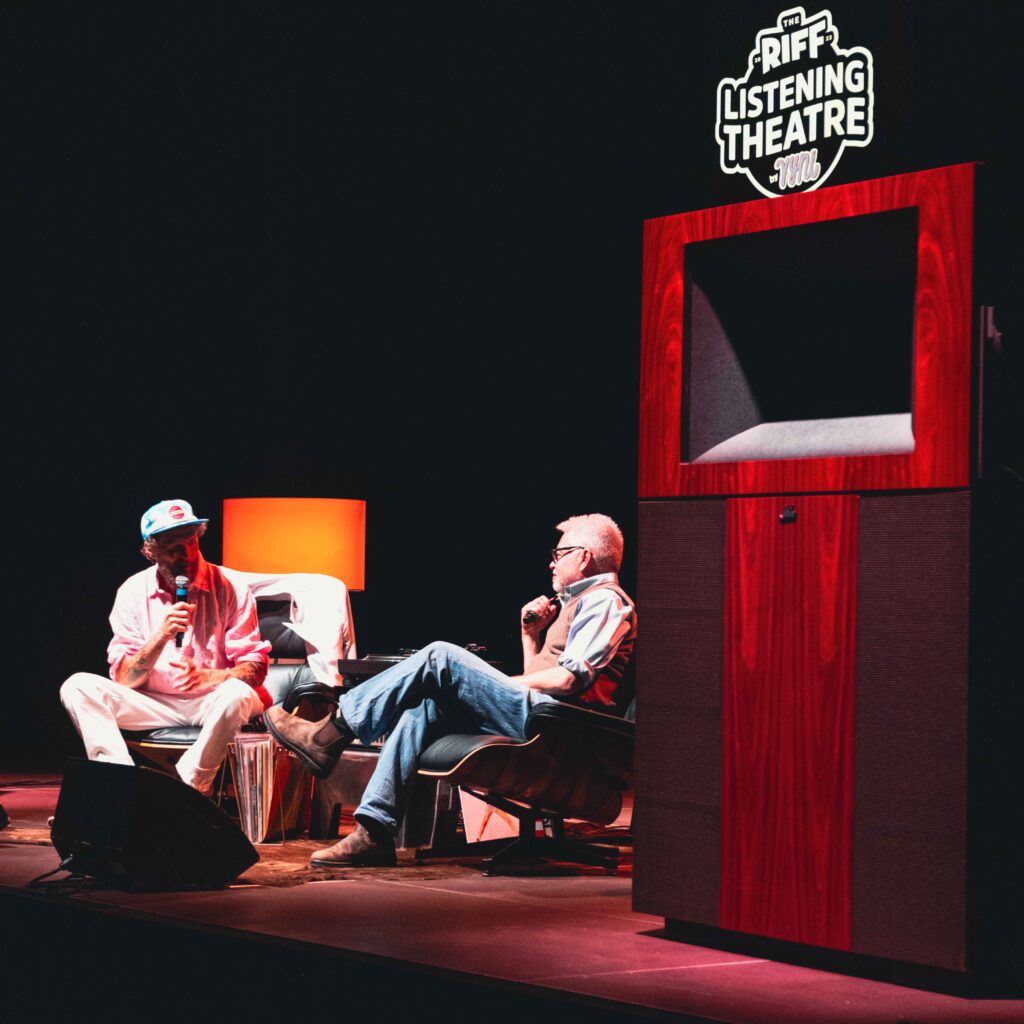
The absolute protagonists of the system were the Klipsch Jubilee, extraordinary speakers that represent one of the maximum expressions of the Klipsch philosophy.
The Jubilees are no ordinary speakers. They are significant, physical, and spectacular systems, designed to deliver music with an extraordinary sense of scale, dynamics, and realism. They are speakers capable of making sound feel not as something emanating from two speakers, but as an event that occupies space.
In a theatre, this feature becomes fundamental.
The Klipsch Jubilees have the ability to move air naturally, maintain presence even in large rooms, and deliver extremely lively dynamics. Voices gain body, bass gains weight and control, and instruments are positioned authoritatively in space.
But most importantly, despite their impact, the Jubilees don't turn music into something aggressive. When used in a coherent system, they manage to be powerful and refined at the same time.
In an event centered on storytelling and vinyl listening, this quality is essential. The system must excite, but not overwhelm. It must be large, but not intrusive. It must make the music feel alive, without losing the naturalness of the gesture.
The Klipsch Jubilee gave the event an almost physical dimension.
Why Jubilees work so well in a theatre
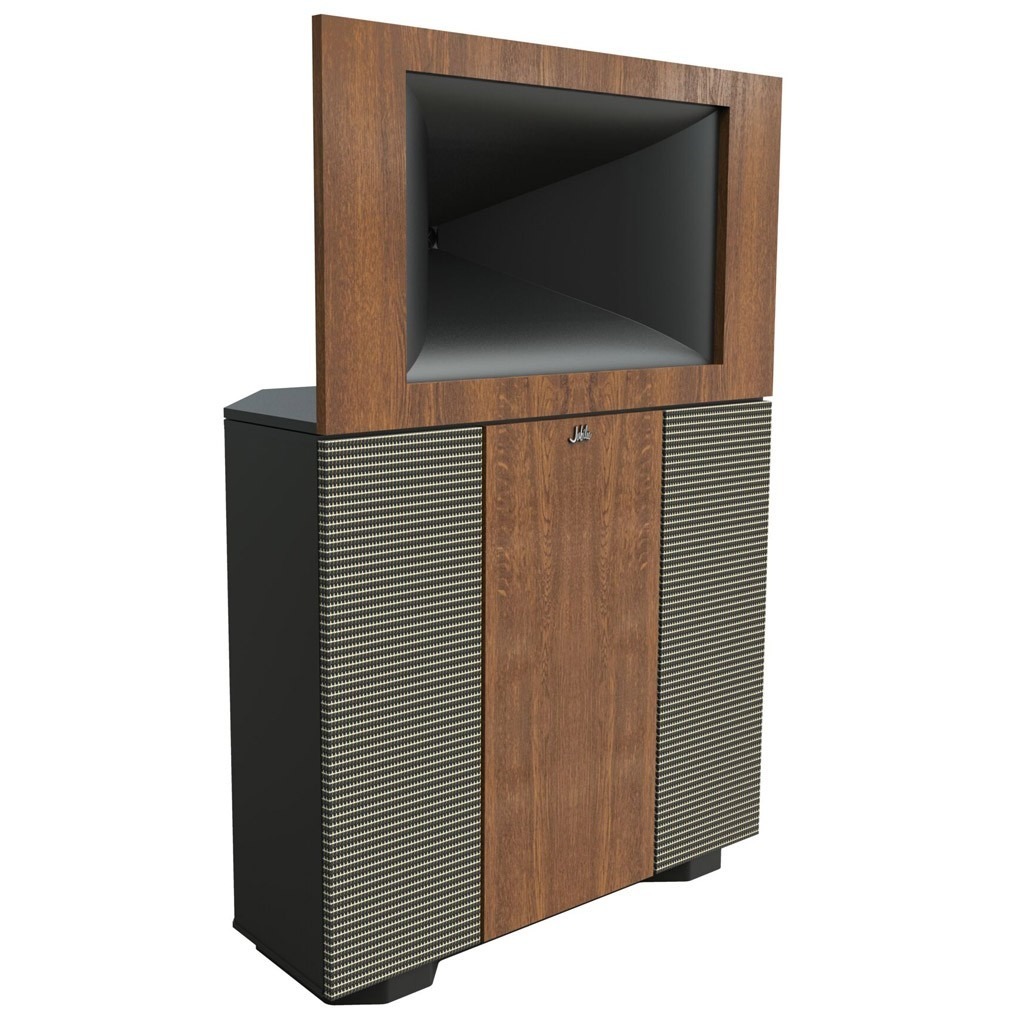
In a theater setting, speakers face very different demands than in a typical living room. They must cover a large space, maintain coherence, offer dynamics, and convey the musical message even to those who aren't sitting in the ideal position.
The Klipsch Jubilee are perfect for this type of situation because they were born with a precise philosophy: efficiency, control, large scale and immediacy.
High efficiency allows the music to breathe. Dynamics come through effortlessly, without that feeling of compression that often occurs when a system is pushed to its limits. The sound remains open, present, physical, but not forced.
This was crucial during The Riff Listening Theatre. Each record had to be able to change mood, energy, and color without the PA becoming an obstacle. We needed a system capable of following the music, not homogenizing it.
Jubilee allowed just this: to move from the intimate story to the impact of the song, from the detail of the voice to the size of the room, always maintaining a sense of naturalness.
McIntosh MC1.25KW: monumental power and absolute control
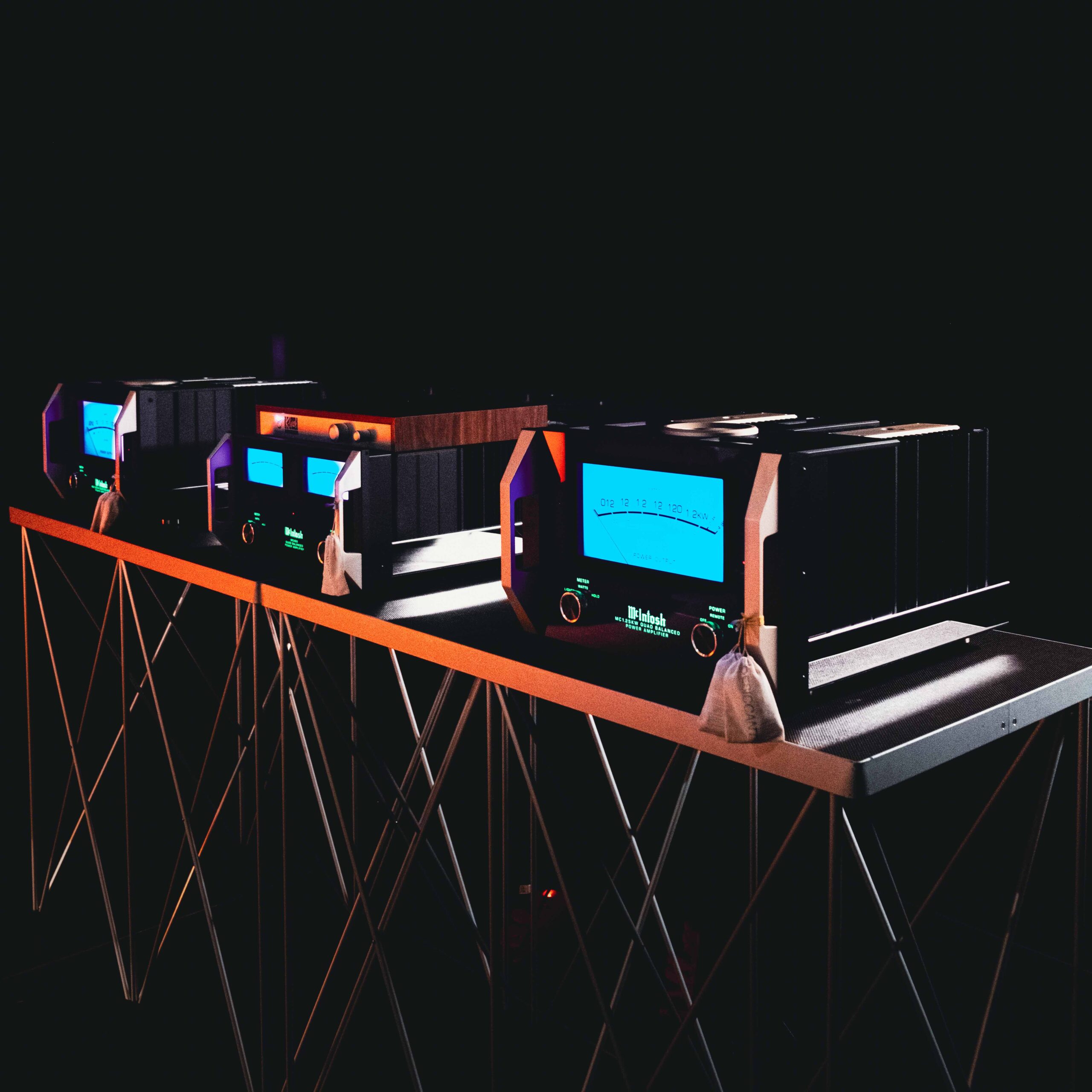
Driving the system are the McIntosh MC1.25KW, reference monoblock amplifiers designed to offer enormous power reserves while maintaining control, stability and musicality.
The McIntosh MC1.25KW is synonymous with authority. These amplifiers can handle large systems with impressive confidence, without ever giving the impression of being at the limit.
In a context like the Teatro Cavallerizza, this power reserve isn't just for "playing loud." It's especially important for sounding good without effort. It's the difference between a system that reaches the required volume and one that does so while maintaining control, dynamics, and naturalness.
The McIntosh MC1.25KWs provided the system with a rock-solid foundation. The music had weight, presence, and stability. The most energetic passages retained their composure, while the more delicate ones maintained body and breath.
This is precisely the strength of high-level amplification: it makes itself noticed not only in spectacular moments, but also when it needs to disappear and make room for the music.
McIntosh MC462: Muscle, refinement and great musicality
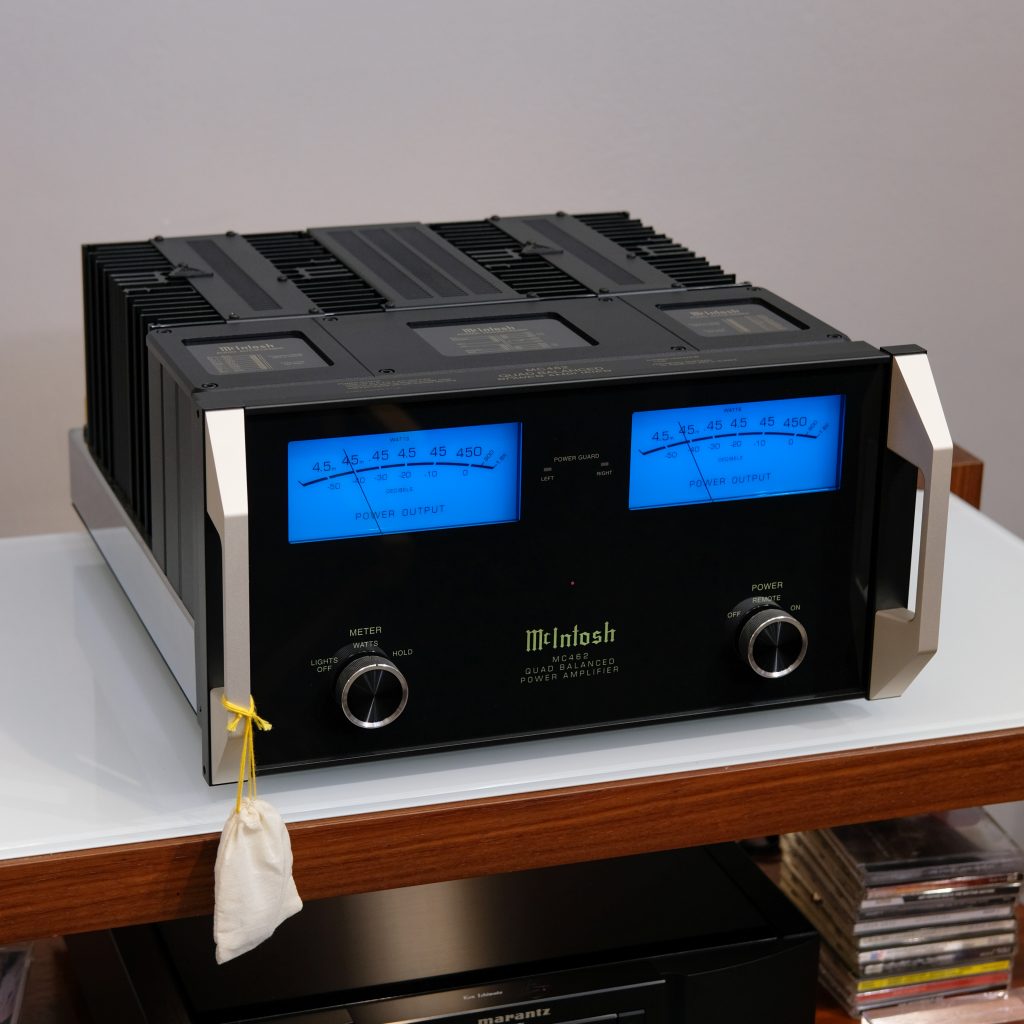
Alongside the MC1.25KW, the system also included the McIntosh MC462, an iconic stereo power amplifier for its power, control and driving capabilities.
The MC462 is one of those amplifiers that perfectly embodies the McIntosh character: solid, authoritative, refined, and always musical. It has the ability to structure the sound, while maintaining a rich and pleasant tone that is never cold or sterile.
In a system with speakers like the Klipsch Jubilees, the amplification must be up to par. Not because the Jubilees are difficult in the traditional sense, but because such a dynamic and revealing speaker immediately highlights the quality of whatever is connected to it.
The MC462 helped give the system a solid, controlled feel, and a great sense of security. The sound was never thin, never brittle, never nervous. Each track had a clear structure, with a strong bass, a present midrange, and a stable soundstage.
At a public event, this solidity is essential. The audience shouldn't sense instability or fatigue. They simply need to listen.
Technics SL-1300G, Sumiko Blue Point Low, and McIntosh C22 MKV: the analog heart of the system

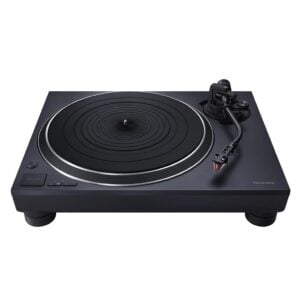
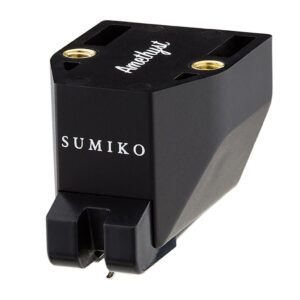
The analog heart of the system was built around three fundamental elements: the Technics SL-1300G turntable, the Sumiko Blue Point Low cartridge and the McIntosh C22 MKV tube preamplifier.
In a vinyl listening event, this part of the chain isn't a technical detail. It's the starting point of everything. It's where the record is read, interpreted, and transformed into music. It's where much of the character of the listening experience is decided.
The Technics SL-1300G guaranteed solidity, precision and reliability. In a public context like The Riff Listening Theatre, where every passage must function naturally and without hesitation, a turntable capable of combining Hi-Fi quality and great reliability was needed. operaTechnics direct drive delivers stable rotation, excellent control, and consistently accurate disc tracking.
Completing the source is the Sumiko Blue Point Low, a low-output cartridge capable of restoring detail, energy, and musicality to vinyl. The cartridge is the first real contact with the groove: it collects the information engraved on the record and transforms it into a signal. In this system, Sumiko has made it possible to maintain a lively, open, and engaging listening experience, without losing any naturalness.
The signal then went to the McIntosh C22 MKV, a tube preamplifier that played a decisive role in giving body, balance, and musical coherence to the entire chain. In a system of this level, the preamplifier is not a simple intermediate step: it is the point where the sound takes shape, where timbre, presence, fluidity, and depth are defined.
The presence of tubes in the C22 MKV added a naturalness particularly suited to vinyl. Voices were present, instruments were believable, the sound full but never fatiguing. It wasn't a matter of making the listening experience artificially warm or colored, but of giving the music a more human, more material dimension, closer to the story unfolding on stage.
Together, the Technics SL-1300G, Sumiko Blue Point Low, and McIntosh C22 MKV formed a solid, refined analog section perfectly in keeping with the spirit of the event. Vinyl wasn't just a nostalgic medium, but the true thread of the experience: each record had its own voice, its own energy, its own character.
And this is precisely the beauty of a well-built analog chain: it doesn't flatten the music, it doesn't make it all the same, but allows the sonic history of each recording to emerge.
Conclusion
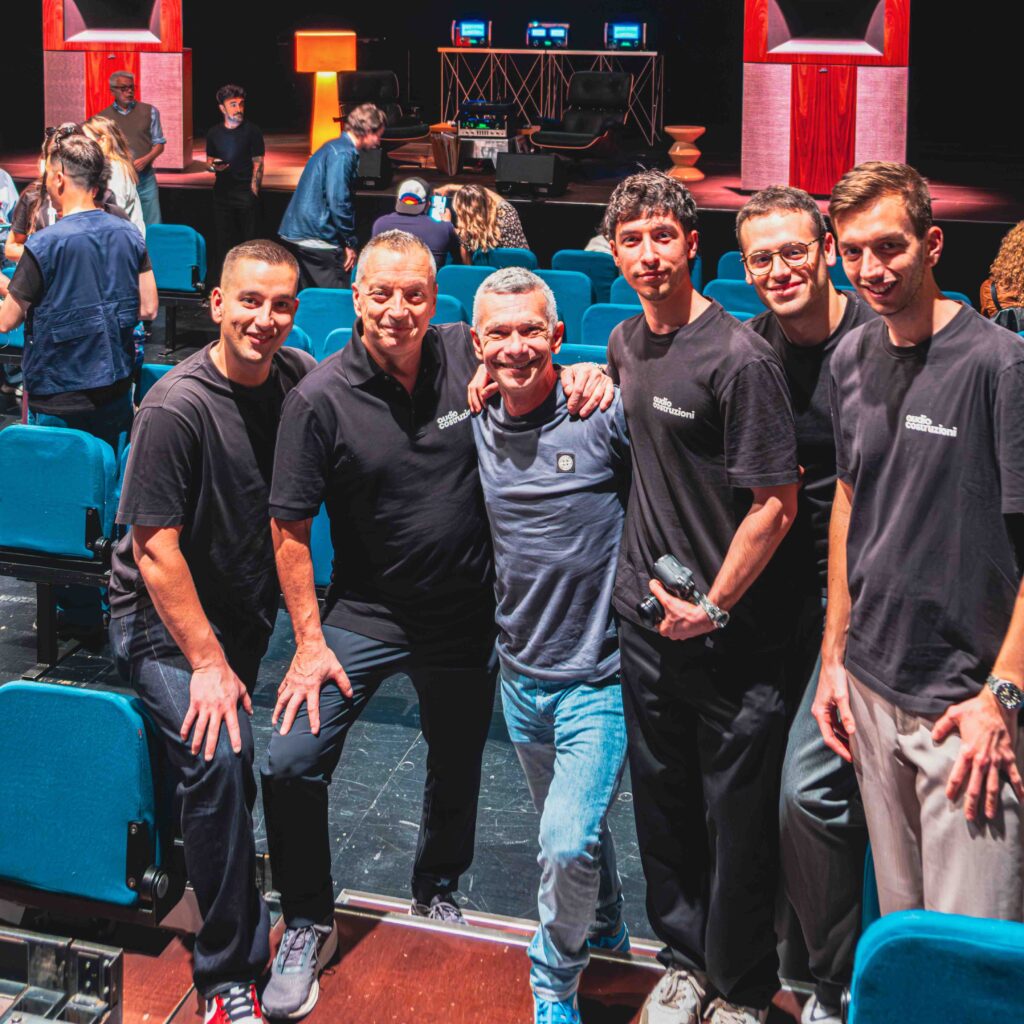
The Riff Listening Theatre at VYNI Festival 2026 was one of those events that leave a mark because it manages to bring different elements together in a natural way.
There was the allure of the theatre.
There was the power of vinyl.
There was Jovanotti's story.
Luca Sofri was the guide.
There was Benny Benassi's idea.
And there was a top-notch Hi-Fi system, capable of giving the music a real, physical, emotional dimension.
The event's success wasn't just down to the presence of big names, but the overall balance of the experience. Everything made sense. The venue, the format, the setup, the records, the storytelling, and the closing music all worked together.
The public perceived something rare: the possibility of listening to music not as quick content, but as a shared experience.
The Riff Listening Theatre at VYNI Festival 2026 was much more than a musical event. It was a meeting of storytelling, vinyl, listening culture, and high-end hi-fi.
At the Teatro Cavallerizza in Reggio Emilia, Jovanotti retraced his musical history through his records, accompanied by Luca Sofri as moderator and a sound system capable of conveying every listen with power, naturalness, and involvement.
The pairing of the Klipsch Jubilee, McIntosh MC1.25KW, McIntosh MC462, McIntosh C22 MKV, Technics SL-1300G, and Sumiko Blue Point Low resulted in a stunning system: commanding, refined, dynamic, and profoundly musical.
Benny Benassi's closing at the console completed the journey, transforming the story into a celebration, listening into sharing, musical memory into present energy.
In an age where music is often consumed quickly and distractedly, events like this remind us how powerful it can be to stop, choose a record, listen carefully, and let its story resonate with us.
Because in the end, the best Hi-Fi isn't the one that impresses only with its power, size, or the value of its components.
That's what allows the music to really come through.