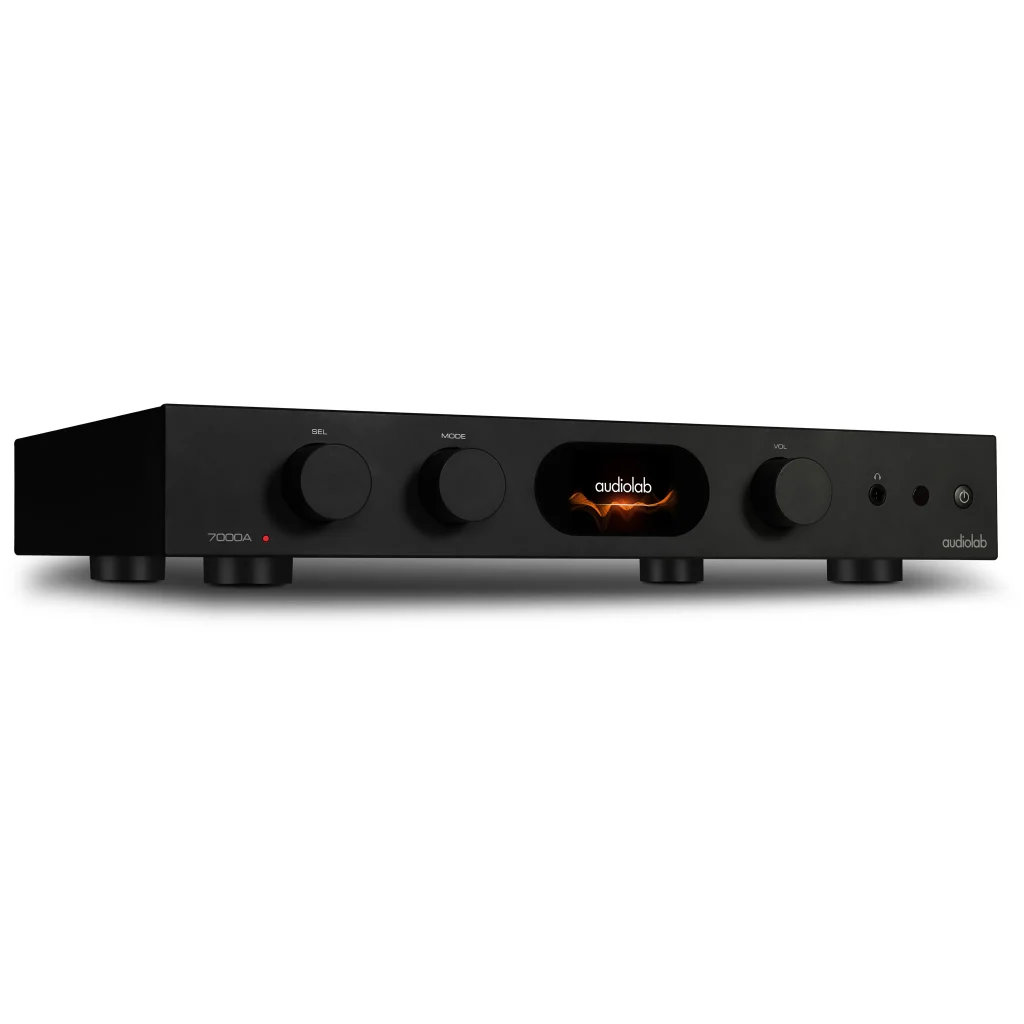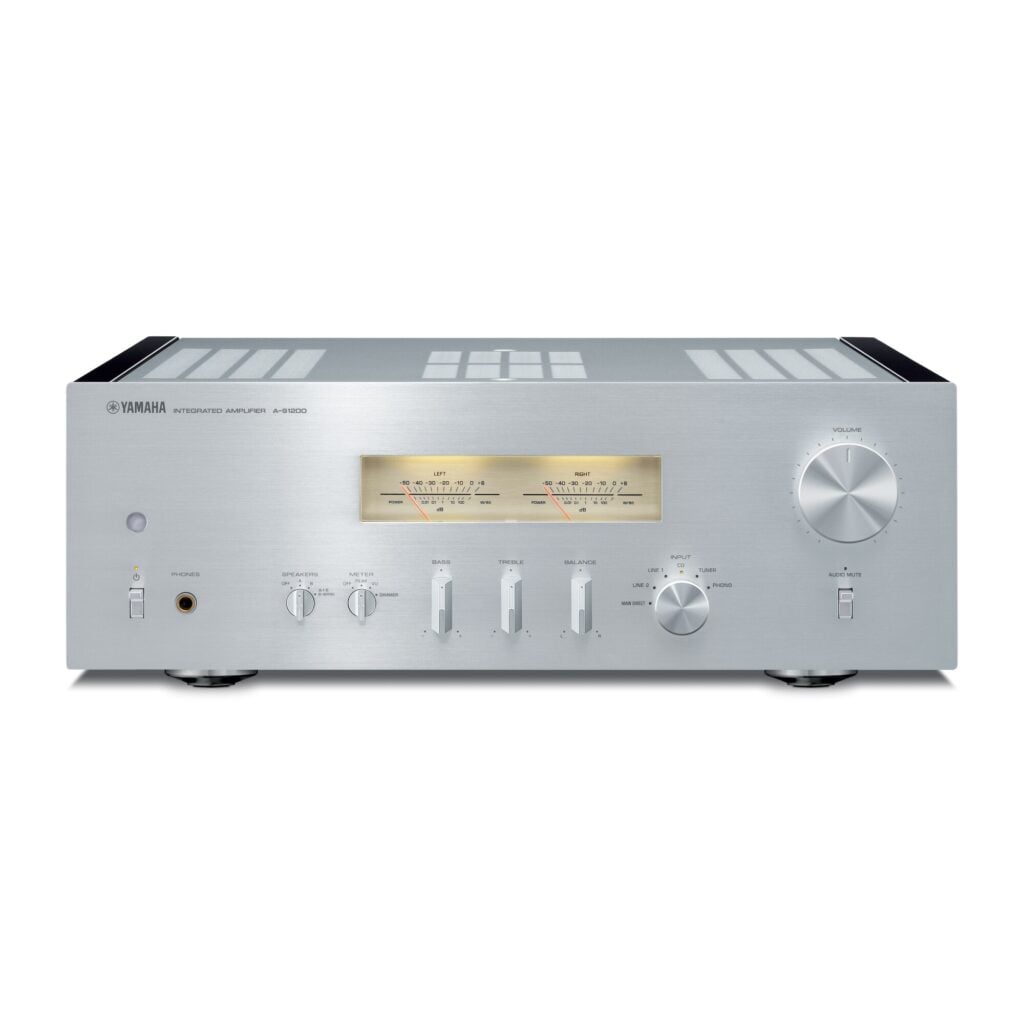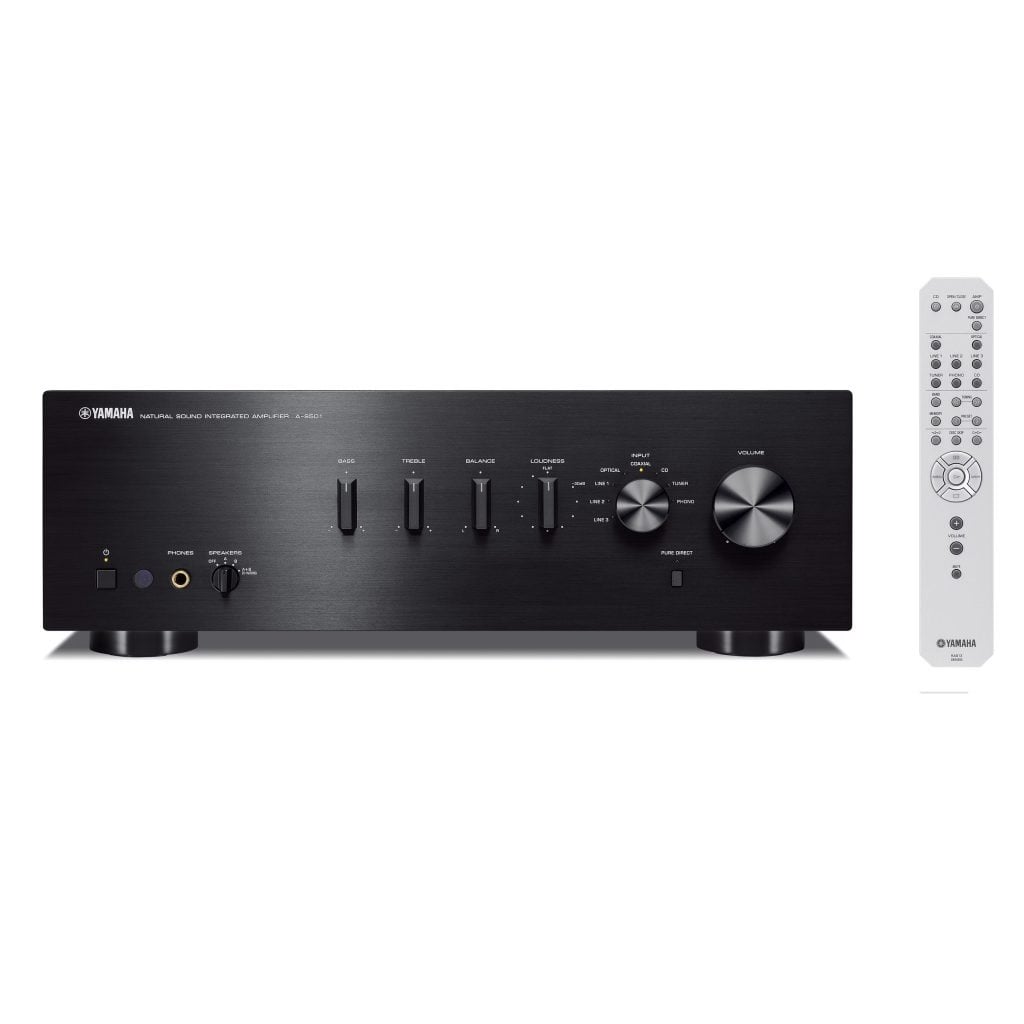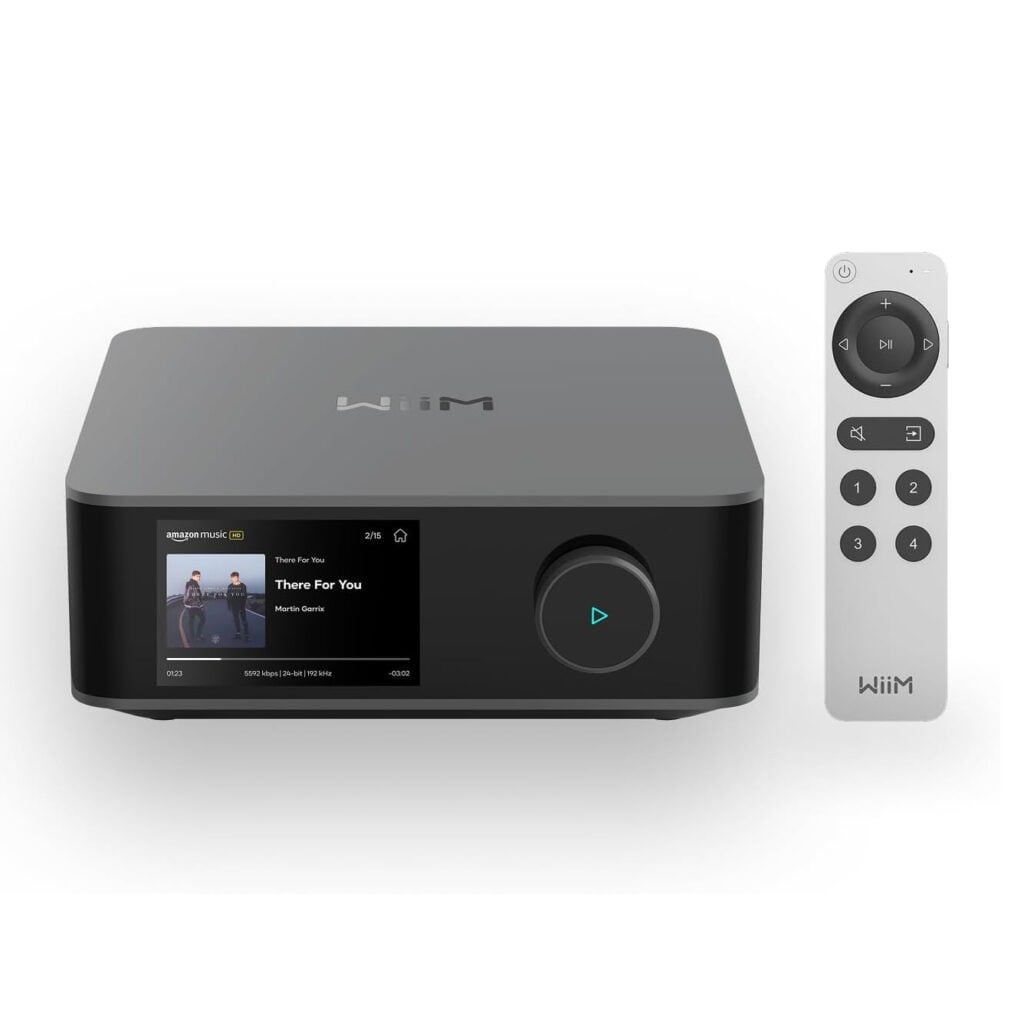






Descrizione
Dal sito:
http://www.audioenz.co.nz/2007/audiolab_q-p.shtml
Audiolab is one of those audio makers who have never been known to produce a dud. That isn’t to say they’re products suit everyone’s tastes however, for, as the name suggests, this manufacturer takes a decidedly scientific approach to high fidelity sound reproduction. The associated images of white coats and oscilloscopes in a distinctly sterile environment could be a serious turn-off to audiophiles who demand romanticism or ‘personality’ from their equipment. Not much of that on show here, for better or worse.
Under the microscope
In this edition we’re dissecting the pairing of Audiolab’s pre- and power amplifiers, the 8000Q and P. Most folk know amplifiers in their integrated form, where the bit that handles the incoming signal switching, and the other bit that plumps up that signal and makes the speakers vibrate, live together in the same box. Audiolab make one of those in the 8000 series, but in this instance the bits are given their own cases and power supplies.
The primary advantage in keeping these basic amplifier functions separate is that the all the big watts being chucked around in the power section don’t create electrical nasties that upset the delicate little waveforms dancing through the pre-amp. This configuration is all very well, but there is a downside, which I’ll come to in my own good time.
Scalpel please, nurse
Let’s first look at what’s built into these units. The 8000Q pre-amp is a long-time member of the Audiolab line-up, and an interesting affair. Naturally, it looks after the selection of line inputs, such as CD, tape, tuner and so on and so forth. It also manages signal output to recording devices, which these days will probably involve something with a hard disc. What sets the 8000Q apart is the ability to adjust gain on the signal prior to its passage to the power amp. It tickles up the incoming signal via a high quality class A amplification circuit, which might be very useful if you’re using long interconnects in a bi-amp setup where the power amps tend to sit very close to the speakers and relatively distant from source components.
Bi-amping wasn’t on the menu for this review, but one could certainly go that way by teaming up the 8000Q with a pair of Audiolab’s 8000M monoblocs. Instead, I had the stereo 8000P to contend with. This is a superficially featureless 100W/channel item that closely resembles the monoliths in 2001: A Space Odyssey. Blank it may be on the surface, but the 8000P is a world of busyness under the lid. Capable of swinging a 40 amp instantaneous current when under duress from head-bangers and fogeys who want maximum realism from the cannons in the 1812 overture, this is an amp capable of taming all but the most evil speaker loads.
Audiology clinic
Are they good? Absolutely, yes. There is power, delicacy, transparency, high resolution, and neutrality aplenty, just the attributes I want in my amplification. I have little sympathy for the warm and cuddly school of sound reproduction, and while tubes can exhibit a beguiling liquidity, the sonic trade-offs are usually too great for my liking. With the Audiolabs almost everything is where it should be, when it should be, and in the correct measure, whether the everything in question concerns Rachmaninov, the Klaxons, or Adrian Edmonson reading Dr Suess’s Cat in the Hat.
Wired for Sound
However, having extolled the virtues of a clinical approach to hi-fi, I should register a note of caution about the 8000Q/P pairing, as to some ears they could err on the side of cool. In an effort to correct a slight reticence in the lower midrange when connected via my regular Nordost cables, I tried a selection of different interconnects between the pre- and power amps. You’ll recall I referred to a downside to dis-integrating the main parts of an amplifier and here it is – you’re in charge of ensuring they’re connected sympathetically via your choice of cables. Wires from Monster Cable, van den Hul, and, finally, Audiolab served in turn as the bridge between the Q and P, each imparting a distinct change to the sound delivered by the speakers. I finally settled on a pair that I don’t normally favour, only because it added a touch of warmth without doing too much harm elsewhere. If I’d kept looking I’d have found the ideal cable, but time was against me.
My verdict then, is that these units would do wonders for a system with a dark, veiled, or slow character. If your source and speakers already strike with laser-like precision, perhaps the Q/P pairing would be a little too much of a good thing. Then again, you can “tune” them with your interconnect selection, so I would not rule them out from even the more incisive systems. Do consider, though, the prospects for system building via the addition or replacement of power amps, as this certainly counts in favour of a package of this kind.
Specifiche
| Tipologia amplificazione | transistor |
|---|---|
| Potenza RMS per canale | 100 W |
| Paese di origine | Regno Unito |
Sul marchio
Audiolab è un marchio britannico di elettroniche hi-fi fondato nel 1983 da Philip Swift e Derek Scotland, compagni di studi all'Imperial College di Londra. Progetta amplificatori integrati, preamplificatori e finali, convertitori DAC, lettori e meccaniche CD e streamer di rete.
Il primo prodotto fu l'integrato 8000A, nato per offrire vera alta fedeltà a un prezzo accessibile e con un uso semplice. Da lì nacque la famiglia 8000: i preamplificatori 8000C e 8000Q, il finale 8000P, i monofonici 8000M e il lettore 8000CD, rimasta in produzione per molti anni e ancora molto cercata sul mercato dell'usato. Alla fine degli anni '90 il marchio passò a TAG McLaren Audio; dai primi anni 2000 fa parte di International Audio Group, lo stesso gruppo di Quad e Wharfedale. Il rilancio è arrivato con la serie 8200 e con il convertitore M-DAC.
Gli amplificatori Audiolab usano stadi finali a transistor in classe AB, mentre le sezioni digitali sono costruite attorno ai convertitori ESS Sabre.
La gamma attuale è divisa in serie:
– 6000: integrato 6000A (50 W per canale su 8 ohm, con DAC e ingresso fono MM), meccanica CD 6000CDT e streamer 6000N Play;
– 7000: integrato 7000A (70 W per canale su 8 ohm), streamer 7000N Play e meccanica 7000CDT;
– 8300: integrato 8300A (75 W per canale su 8 ohm);
– 9000, la serie di riferimento: integrato 9000A, preamplificatore con DAC 9000Q, finale 9000P (100 W per canale su 8 ohm, utilizzabile a ponte come monofonico), streamer 9000N e meccanica 9000CDT.
Nel corso degli anni i prodotti Audiolab hanno ottenuto molti riconoscimenti dalla stampa specializzata britannica, a cominciare dai What Hi-Fi? Awards. Da Audiocostruzioni trovi la gamma Audiolab nuova e spesso anche esemplari usati delle serie storiche 8000 e 8200.
Domande Frequenti
Questo prodotto si trova nella sezione Archivio, quindi non è più disponibile alla vendita. Visita il nostro catalogo per scoprire i modelli attuali oppure scrivici per ricevere consigli personalizzati su un prodotto equivalente.
Quando un modello esce di produzione, viene venduto definitivamente o non è più reperibile dai nostri fornitori, lo spostiamo nella sezione Archivio. Manteniamo la pagina online a scopo informativo: utenti e collezionisti possono continuare a consultare specifiche, descrizioni e immagini di riferimento.
Probabilmente sì. Visita il nostro catalogo prodotti per scoprire i modelli equivalenti attualmente in vendita: potrai filtrare per categoria, marca e fascia di prezzo per trovare l'alternativa più adatta al tuo impianto.
Non gestiamo prodotti usati o vintage. Per scoprire le alternative attualmente disponibili clicca sul pulsante "Vai al catalogo" in alto a destra della pagina, oppure vai direttamente al nostro catalogo prodotti per sfogliare i modelli in vendita.
Non gestiamo direttamente assistenza tecnica né ricambi. Nella nostra pagina supporto trovi le tabelle con i contatti diretti dei centri di assistenza e dei riparatori specializzati: puoi contattarli senza intermediari per valutare riparazioni o disponibilità ricambi.