





Descrizione
The Accuphase DP-65V, although it could be considered an integrated CD player, is actually a CD transport and a separate digital processor combined into a single component. The transport has digital outputs (Toslink and coax) and the digital processor section has digital inputs and analog outputs (Toslink in, coax in, unbalanced RCA out, balanced XLR out). In addition, there are two "slots" on the back of the unit for installing optional digital input/output boards (BNC, HPC, AES/EBU). I don't have any experience with these optional boards, which cost several hundred dollars each and seem to be intended for professional applications.
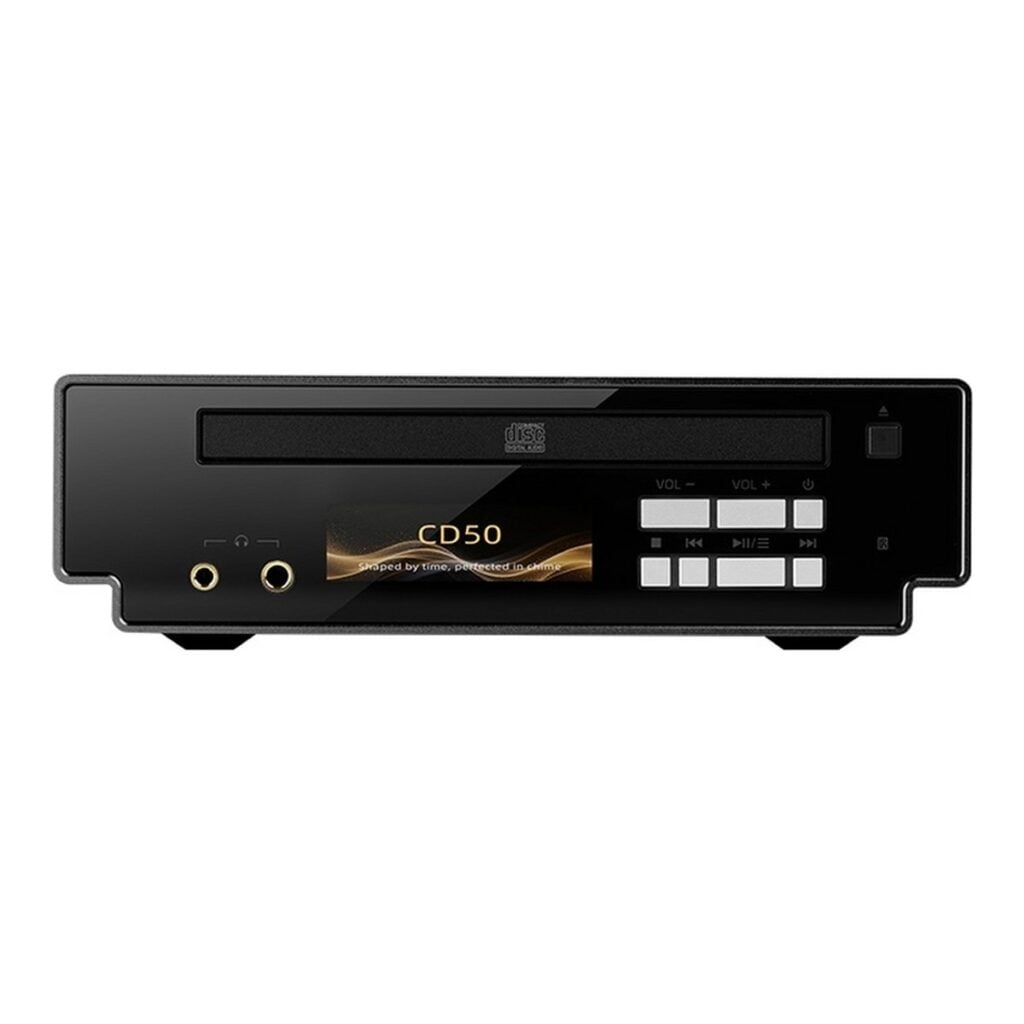
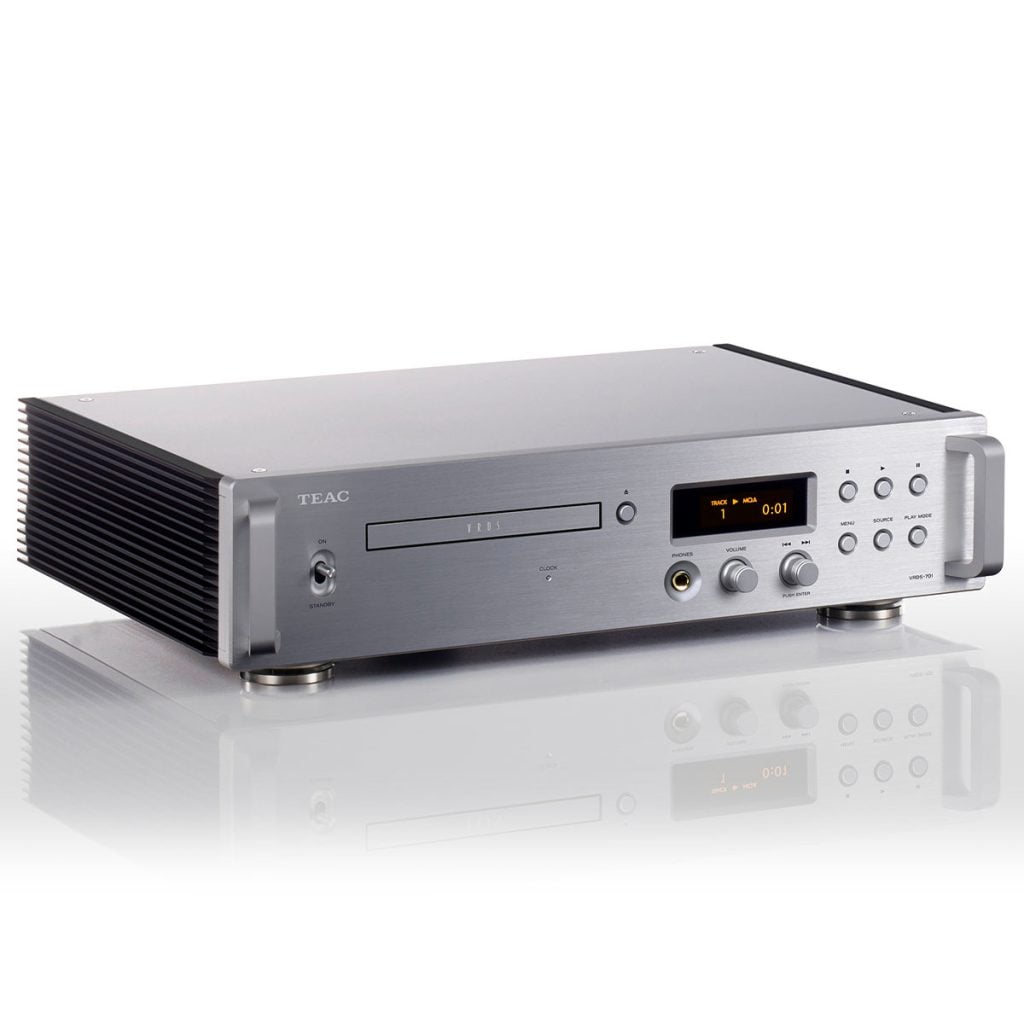
Physically, the unit matches other Accuphase components. It is quite large, rather heavy, and has a strikingly beautiful, champagne-finished front panel. The disc tray is rock solid and opens/closes smoothly and quickly. There are only seven buttons on the front of the unit -- a power switch and disc transport controls. The supplied remote control has many more buttons to control less frequently used functions (direct track access, repeat play, program play, time display, etc.) The remote control can also be used to adjust the volume, which is varied (from 0 to -40 dB in 1-dB steps) in the digital domain using the extra bits of the 20-bit DA converters. (Four DA converters are used in parallel to minimize low-level nonlinearities.) The remote also allows switching among the transport and any other digital sources connected to the digital processor. This means that the DP-65V can actually serve as a digital preamp for an all-digital system (although I prefer to use a preamp), with remote control of volume and source selection. (I have a Sony ES CD player connected to the coax input and a Sony MD deck connected to the optical input. The Sony CDP is also connected directly to the MD deck via a Toslink cable, and finally, the DP-65V is connected to the MD deck via another Toslink cable. This is an extremely flexible setup for digitally dubbing MDs -- from the Sony CD player if I want to dub in the background [with the ability to listen to the CD player or MD deck as desired], or from the Accuphase if I want to dub what I'm listening to.)
I have directly compared the sound of the Accuphase DP-65V against my previous main CD player (a Sony CDP-XA50ES, which is the CDP that I now use for dubbing MDs). I was extremely happy with the sound of the Sony -- until I compared it against the Accuphase. Frankly, I was not expecting to hear a big difference between the two units ("All CD players sound the same", after all ;-), but the Accuphase sounded completely different from the Sony playing the same discs in the same system. The difference was NOT subtle! My initial impression was that the Accuphase had a more subdued or recessed treble response than the Sony, but it soon became apparent that this impression was due to a total absence of high-frequency hash or grundge. The treble of the DP-65V is extremely open, transparent, extended, and airy, but also very liquid and smooth, with no grain or harshness. Instruments and voices appear to be placed in front of a thick black velvet curtain, rather than a sheet of Formica. In comparison, the Sony sounds hard or brittle -- mechanical even. The midrange of the Accuphase has the same clean, detailed, but natural character. Imaging is precise and soundstage width and depth are impressive. The bass is less full-sounding or lush [bloated?] than that of the Sony, but seems more extended and powerful at the extreme low end.
In summary, the Accuphase DP-65V is a beautifully built and very attractive CD player. It provides extremely detailed and transparent sound without any hardness or digital nasties. Its overall sonic character is probably best described as organic or natural, in contrast to mechanical or relentless. It somehow magically combines crystal-clear, high-resolution sound with a relaxed, effortless, and unfatiguing presentation.
Di cosa si tratta: CD Player
Produttore: Accuphase
Specifiche
| DAC integrato | sì |
|---|---|
| Uscite digitali | Toslink, coax |
| Finitura | champagne |
| Ingressi digitali | Toslink, coax, optional BNC, HPC, AES/EBU |
Sul marchio
Accuphase nasce nel 1972 a Tokyo come Kensonic Laboratory, fondata dai fratelli Jiro e Nakaichi Kasuga dopo l'uscita dalla Trio-Kenwood, con l'obiettivo di costruire soltanto apparecchi audio; Jiro Kasuga coinvolse anche tecnici provenienti da Marantz e Luxman. I prodotti uscivano già con il marchio Accuphase, dalle parole «accurate» e «phase», e in occasione del decimo anniversario anche la società ne ha preso il nome, diventando Accuphase Laboratory. La sede è a Yokohama dal 1973; Kenwood ne è rimasta in parte proprietaria fino alla metà degli anni Novanta.
Il catalogo si distingue per una lunga continuità tecnica. Il controllo di volume AAVA sostituisce il potenziometro con una conversione tensione-corrente: il segnale viene suddiviso in 16 correnti pesate, attivate o escluse da un microprocessore secondo la posizione della manopola, così l'impedenza non cambia con il volume e rumore e risposta in frequenza restano costanti. Nei modelli superiori la versione Balanced AAVA lavora in configurazione bilanciata dall'ingresso all'uscita. Molti integrati e preamplificatori hanno alloggiamenti per schede opzionali come il convertitore DAC-60, con ingressi USB, ottico e coassiale, o lo stadio phono AD-60, commutabile tra MM e MC; la gamma di amplificazione è divisa tra classe A e classe AB.
Tra gli integrati abbiamo l'E-800S e l'E-700 in classe A, quest'ultimo da 35 watt su 8 ohm con finali MOS-FET, e la serie in classe AB con E-3000, da 100 watt su 8 ohm, E-4000, E-5000 ed E-6000, il più potente della gamma. Per chi preferisce le elettroniche separate ci sono i preamplificatori C-2300, C-2900 e C-3900S, lo stadio phono bilanciato C-57, i finali in classe A A-48S, A-80 e A-300 e quelli in classe AB P-4600, da 150 watt su 8 ohm, e P-7500, da 300 watt. Le sorgenti sono il lettore CD DP-450, i lettori SACD DP-570S e DP-770 e il convertitore DC-500; completano il catalogo il crossover digitale DF-75, l'equalizzatore DG-68, gli alimentatori di rete Clean Power Supply PS-550 e PS-1250 e le schede DAC-60, AD-60 e Line-10.
La prima scelta è tra classe A e classe AB. Gli integrati E-700 ed E-800S e i finali della serie A erogano meno watt ma lavorano sempre in classe A, e sono indicati con diffusori di buona sensibilità e ascolti a volume domestico; con diffusori più impegnativi o stanze grandi gli E-5000 ed E-6000 o i finali P-4600 e P-7500 offrono una riserva di corrente più ampia. Chi parte da un integrato può aggiungere in seguito le schede DAC-60 o AD-60 invece di comprare un convertitore o uno stadio phono esterno, mentre chi ha una collezione di dischi ibridi deve guardare al DP-570S o al DP-770, perché il DP-450 legge solo CD.
Per impianti già completi l'equalizzatore DG-68 misura l'acustica della stanza e la compensa, in automatico o manualmente; il crossover digitale DF-75 serve invece a chi vuole multiamplificare diffusori a più vie, con un finale per ogni sezione.
Nel nostro showroom di Carpi puoi ascoltare gli apparecchi Accuphase in sala d'ascolto, confrontarli con i tuoi diffusori e ricevere consulenza sull'abbinamento. Gli stessi modelli si possono ordinare online su audiocostruzioni.com con spedizione, chiedendoci prima un consiglio via email se serve.
Domande Frequenti
Questo prodotto si trova nella sezione Archivio, quindi non è più disponibile alla vendita. Visita il nostro catalogo per scoprire i modelli attuali oppure scrivici per ricevere consigli personalizzati su un prodotto equivalente.
Quando un modello esce di produzione, viene venduto definitivamente o non è più reperibile dai nostri fornitori, lo spostiamo nella sezione Archivio. Manteniamo la pagina online a scopo informativo: utenti e collezionisti possono continuare a consultare specifiche, descrizioni e immagini di riferimento.
Probabilmente sì. Visita il nostro catalogo prodotti per scoprire i modelli equivalenti attualmente in vendita: potrai filtrare per categoria, marca e fascia di prezzo per trovare l'alternativa più adatta al tuo impianto.
Non gestiamo prodotti usati o vintage. Per scoprire le alternative attualmente disponibili clicca sul pulsante "Vai al catalogo" in alto a destra della pagina, oppure vai direttamente al nostro catalogo prodotti per sfogliare i modelli in vendita.
Non gestiamo direttamente assistenza tecnica né ricambi. Nella nostra pagina supporto trovi le tabelle con i contatti diretti dei centri di assistenza e dei riparatori specializzati: puoi contattarli senza intermediari per valutare riparazioni o disponibilità ricambi.